
Buying Guide & Top Picks
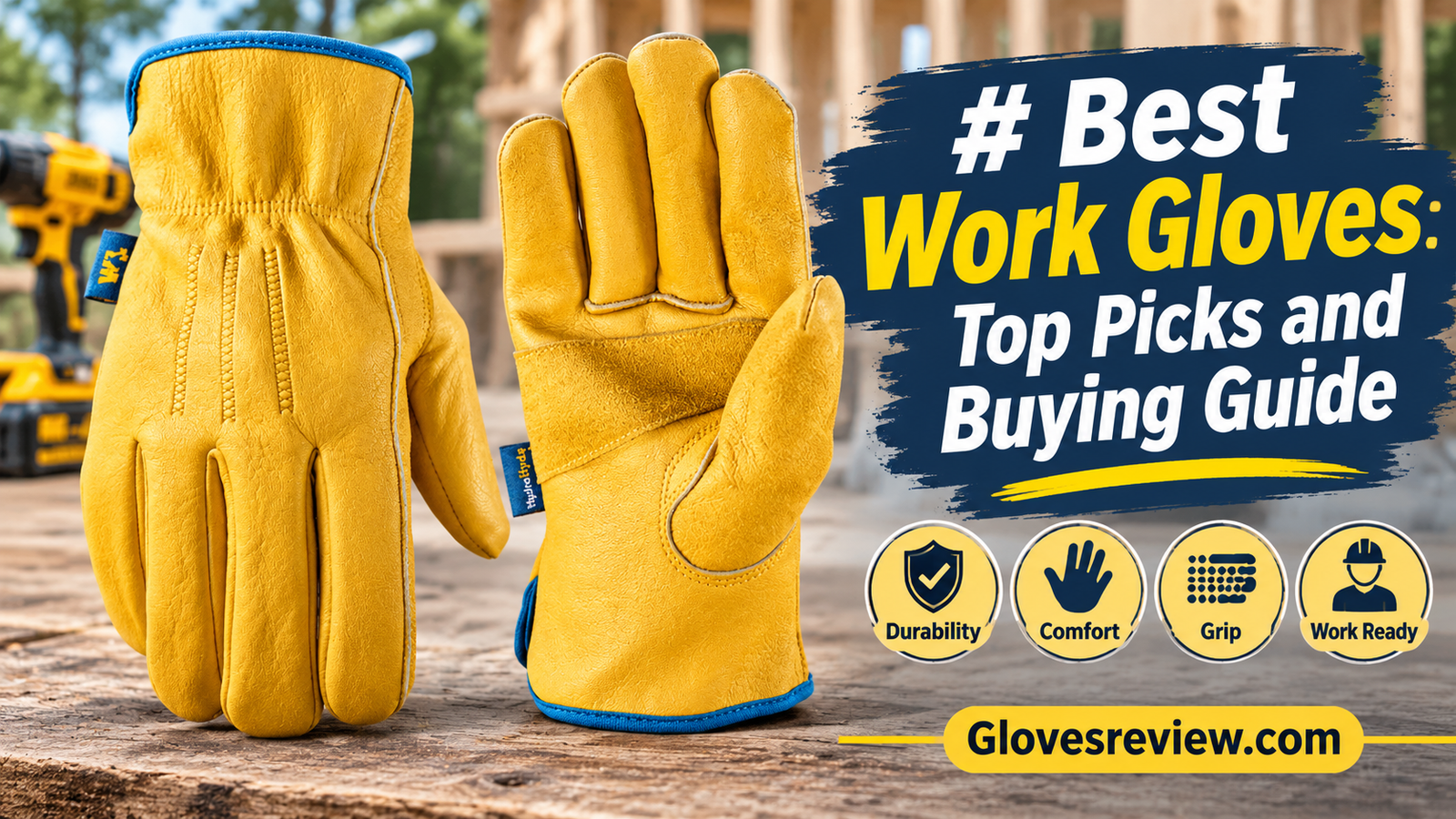
Best Work Gloves: Top Picks and Buying Guide
The right glove depends on the job. We compared leather, synthetic, impact, and insulated work gloves to find the pairs worth wearing — and we explain exactly how to match the glove to the work in front of you.
Why Your Glove Choice Matters More Than You Think
Ask a hundred tradespeople what the best work glove is and you will get a hundred different answers — and almost all of them will be right, for the job they had in mind. The roofer who swears by a thick split-leather driver would hate that same glove while rebuilding a carburetor. The mechanic who lives in a thin synthetic glove would burn through it in a week of fence building. A work glove is not a one-size-fits-all tool; it is a piece of equipment matched to a task, and the mismatch costs you comfort, grip, dexterity, or protection.
That mismatch shows up in predictable ways. Wear a glove that is too bulky and you drop fasteners, fumble with keys, and eventually take the glove off — which is the worst outcome of all. Wear one that is too thin and you feel every splinter and rope burn. Wear an uninsulated glove in freezing weather and your hands stiffen until you cannot safely grip anything. Wear a waterproof shell on a hot day and you end up with hands so sweaty that the glove slips around inside.

Broadly speaking, work gloves fall into four families, and each solves a different problem:
- Leather gloves — cowhide, pigskin, goatskin, or deerskin, in grain or split finishes. They are the durability benchmark: tough against abrasion, naturally tolerant of sparks and rough material, and they mold to your hand over time.
- Synthetic and mechanic-style gloves — usually a knit or spandex back with a synthetic leather or coated palm. They win on dexterity, breathability, and price, and they are what you want when feeling the tool matters more than surviving sparks.
- Impact and specialty protection gloves — built with padding on the back of the hand and fingers to blunt pinches, bumps, and swinging-tool strikes. Common in oilfield, demolition, and heavy rigging work.
- Insulated and waterproof gloves — lined for warmth and often backed with a water barrier. These are the winter and wet-weather specialists, and every layer you add costs you some feel.
This guide covers all four. We start with a quick comparison of twelve gloves we would actually use, then break them into leather, synthetic/mechanic, and impact/winter groups with individual reviews. After that we go deep on the buying decisions — glove types, leather versus synthetic, fit and sizing, protection ratings, weather, care, and the safety mistakes we see most often. If you only read one thing, read the comparison table and the section that matches the work you do most.
Quick answer: for a single pair that handles the widest range of general tasks, a treated leather glove like the Wells Lamont HydraHyde is the safest bet. If your work is mostly repairs and assembly, a mechanic-style synthetic glove will serve you better. Cold or wet conditions change everything — pick for the weather first.
Ready to upgrade your hand protection?
Browse the current selection of leather, synthetic, and winter work gloves.
Check Work Gloves on AmazonQuick Comparison: Our Top Picks
Here are all twelve gloves in one place. The list starts with our overall pick, then moves through leather, mechanic-style, grip, impact, and winter options so you can jump straight to the category that fits your work.
| # | Image | Product | Key Specs | Verdict | Check Price |
|---|---|---|---|---|---|
| 1 |  |
Top Pick Wells Lamont HydraHyde Leather Work Glove Best Overall |
|
The one pair that handles almost everything well. | Check Price on Amazon |
| 2 | |
Carhartt A518 Grain Leather Work Glove with Safety Cuff Best Leather Glove With Safety Cuff |
|
Easy on-off cuff with tough grain leather coverage. | Check Price on Amazon |
| 3 |  |
Ironclad Ranchworx Work Gloves Best Ranch and Outdoor Work Glove |
|
Built for fencing, hauling, and long days outside. | Check Price on Amazon |
| 4 |  |
Kinco Lined HD Grain & Suede Pigskin Driver Glove Best Lined Driver Glove |
|
Warm, soft, and surprisingly dexterous for leather. | Check Price on Amazon |
| 5 |  |
Tillman 1500Y Split Cowhide Cotton Lined Canvas Back Work Gloves Best Budget-Style Leather Glove |
|
Honest, affordable protection for rough material handling. | Check Price on Amazon |
| 6 |  |
Custom Leathercraft Flex Grip Handyman Work Gloves Best for Touchscreen Use |
|
Keeps your phone usable without pulling gloves off. | Check Price on Amazon |
| 7 |  |
Mechanix Wear Original Glove Best Everyday Mechanic-Style Glove |
|
The template every mechanic glove is judged against. | Check Price on Amazon |
| 8 |  |
Dex Fit FN330 Work Gloves Best for Detail Work |
|
Feels almost like bare hands while still protecting them. | Check Price on Amazon |
| 9 |  |
Gorilla Grip Never Slip, Maximum Grip All-Purpose Gloves Best All-Purpose Grip Glove |
|
Affordable grip-first gloves for general and yard work. | Check Price on Amazon |
| 10 |  |
RevHeads Mechanic Gloves Best for Mechanics |
|
Purpose-built for wrenching, not general yard labor. | Check Price on Amazon |
| 11 |  |
Magid T-Rex Flex Series TRX818 Leather Impact Gloves Best Leather Impact Glove |
|
Back-of-hand padding with leather durability up front. | Check Price on Amazon |
| 12 |  |
G&F Products 1628 Waterproof Winter Work Gloves Best Waterproof Winter Glove |
|
Keeps hands dry and warm through snow and slush. | Check Price on Amazon |
Our top pick overall
Wells Lamont HydraHyde leather glove: durable, versatile, and easy to live with.
Check Price on AmazonBest Leather Work Gloves
Leather remains the default answer for general work because it does a rare thing: it protects well, ages gracefully, and gets more comfortable the longer you use it. The five gloves below cover the range from a treated everyday driver to a heavy split-cowhide work glove with a canvas back. If you want the longer version of this comparison, we have a full breakdown of the best leather work gloves by job type.
1. Wells Lamont HydraHyde Leather Work Glove
The best overall work glove for people who only want to own one pair.
If you are not sure what kind of glove you need, start here. The Wells Lamont HydraHyde takes a familiar leather work glove silhouette and treats the hide for added resistance to moisture, which is the detail that pushes it to the top of this list. Leather that shrugs off a bit of dampness instead of soaking it up immediately behaves better in the real world: it stays supple longer, dries faster after a rainy morning, and does not turn stiff and awkward every time the weather changes.
What makes it a true all-rounder is the balance. It is substantial enough for hauling lumber, stacking firewood, and handling rough pallet boards, yet flexible enough that you can still pick up a bolt or work a hand tool without wrestling with your own fingers. That middle ground is exactly what most people need — a glove for Saturday yard work and weekday light construction alike.
- Leather shell that softens and molds to your hand with use
- HydraHyde treatment for better performance around damp materials
- General-purpose fit that suits mixed indoor and outdoor tasks
- Natural abrasion resistance from leather rather than a thin coating
Pros
- Works across a wide range of tasks
- Leather improves with break-in
- Handles damp conditions better than untreated hide
- Comfortable enough for a full day
Cons
- Not a specialty glove for fine assembly
- Leather needs occasional conditioning
Best for: homeowners, general contractors, and anyone who wants one glove that covers yard work, light construction, and material handling.
Check Price on Amazon
2. Carhartt A518 Grain Leather Work Glove with Safety Cuff
A classic grain leather glove with the quick-release cuff jobsites rely on.
Grain leather is the smooth, outer layer of the hide, and it is prized for durability with a little more suppleness than the fibrous split side. The Carhartt A518 pairs that grain leather with a safety cuff — the flared, rigid wrist opening that lets you shake a glove off in one motion without unfastening anything. On a jobsite where you are constantly switching between gloved and bare-hand work, that cuff is not a small convenience.
The safety cuff also covers more of the wrist than a knit wrist does, which helps keep debris out of the glove and adds a bit of protection when you are reaching past rough edges. Grain leather handles abrasion well and stands up to the kind of scraping and dragging that destroys fabric gloves in a week. It is a straightforward, no-nonsense glove built around a design that has worked for decades.
- Grain leather for smooth, long-wearing abrasion resistance
- Safety cuff for fast on-off and added wrist coverage
- Rugged general construction suited to daily site work
Pros
- Safety cuff is quick and convenient
- Grain leather wears slowly
- Good wrist and debris coverage
Cons
- Stiffer feel until broken in
- Bulkier than a driver-style glove
Best for: construction, framing, material handling, and any job where you repeatedly pull gloves on and off.
Check Price on Amazon
3. Ironclad Ranchworx Work Gloves
Built for fence lines, barns, and the long, rough days outside.
Ranch and outdoor work is its own category. You are handling rope, wire, feed bags, and tools in weather that does not care about your schedule, and you are doing it for hours. The Ironclad Ranchworx is designed with that workload in mind — a glove that prioritizes rugged durability and a secure hold on awkward, heavy, or moving objects.
What separates a ranch-oriented glove from a generic work glove is the attention to the parts that fail first: the palm where rope runs through your grip, the fingertips where you pinch wire and hardware, and the closure that has to stay put when the glove is caked in dust and sweat. This is a glove meant to be worked hard and replaced on a schedule, not babied.
- Ranch-oriented design for rope, fencing, and hauling
- Durable construction in the high-wear zones
- Secure hold on tools and material in dusty conditions
Pros
- Excellent for repetitive outdoor labor
- Holds up to rope and wire work
- Stays put during active movement
Cons
- More glove than you need for light tasks
- Not intended for fine mechanical work
Best for: ranch work, fencing, property maintenance, landscaping crews, and heavy outdoor labor.
Check Price on Amazon
4. Kinco Lined HD Grain & Suede Pigskin Driver Glove
A lined pigskin driver that stays soft, warm, and easy to work in.
Pigskin has a loyal following among people who wear gloves all day, and there is a good reason for it: it stays supple even after getting wet and drying out, which stiffer hides often do not. The Kinco driver combines grain and suede pigskin with a lining, giving you warmth and softness without turning the glove into a bulky winter mitten.
The driver style is the key here. It is a pull-on glove with a snug wrist, cut for feel and movement rather than maximum coverage. You can grip a steering wheel, run equipment controls, and handle tools with more natural hand movement than a heavy split-leather work glove allows. Add the lining and you have a genuinely comfortable cool-weather glove that most people forget they are wearing.
- Grain and suede pigskin for softness and resilience
- Insulating lining for cool and cold conditions
- Driver-style cut for natural hand movement
Pros
- Stays flexible after repeated wet-dry cycles
- Lining adds warmth without huge bulk
- Strong feel for a leather glove
Cons
- Lining reduces fine fingertip feel
- Not a waterproof glove
Best for: equipment operation, cool-weather outdoor work, driving, and general property maintenance.
Check Price on Amazon
5. Tillman 1500Y Split Cowhide Cotton Lined Canvas Back Work Gloves
Straightforward, affordable protection that you will not be afraid to abuse.
Some gloves you buy because they will last. Others you buy because the work is going to destroy them anyway, and you want honest protection at a price that makes that acceptable. The Tillman 1500Y is firmly in the second camp: split cowhide where it counts, a cotton lining for comfort, and a canvas back that keeps the glove lighter and more breathable than an all-leather build.
Split cowhide is the fibrous inner side of the hide. It is thicker and grippier than grain leather and absorbs rough handling well, which is why you see it on heavy work gloves and welding gloves alike. The canvas back is the smart design choice — it lets heat and moisture escape from the back of your hand, which is exactly where an all-leather glove can get clammy during sustained work.
- Split cowhide palm for thick, grippy abrasion protection
- Cotton lining for comfort during long wear
- Canvas back for improved airflow and reduced bulk
Pros
- Excellent value for heavy work
- Canvas back breathes well
- Thick protection against splinters and rough edges
Cons
- Less dexterity than grain or pigskin
- Heavier and stiffer at first
Best for: demolition, hauling, firewood, rough carpentry, and any task that eats gloves.
Check Price on AmazonLeather Glove Comparison: At a Glance
| Glove | Material | Lining & Cuff | Best For | Check Price |
|---|---|---|---|---|
| Wells Lamont HydraHyde | Treated leather | General-purpose fit | Mixed everyday tasks | Check Price |
| Carhartt A518 | Grain leather | Safety cuff | Jobsite construction | Check Price |
| Kinco Lined Driver | Grain & suede pigskin | Lined, driver cuff | Cool weather, equipment | Check Price |
| Tillman 1500Y | Split cowhide | Cotton lined, canvas back | Rough, heavy material | Check Price |
Shopping for a leather work glove?
Start with our overall pick and compare it against your task list.
Check Price on AmazonBest Synthetic, Mechanic, and Grip Gloves
When the job rewards feel over brute protection, synthetic gloves win. They are lighter, cooler, more precise, and usually cheaper, and modern palm coatings give them grip that older fabric gloves could never match. The five gloves here cover touchscreen-friendly handyman work, classic mechanic-style use, fine detail work, all-purpose grip, and dedicated garage repair. If you spend most of your day turning wrenches, our dedicated guide to the best mechanic gloves goes deeper on fit and palm construction.
6. Custom Leathercraft Flex Grip Handyman Work Gloves
The glove you keep on when you need to answer a text or check a diagram.
Modern work means phones and tablets on the jobsite. You photograph the wiring before you disconnect it, you pull up the manual for the part you are installing, and you answer the call from the person who hired you. Every one of those moments used to mean yanking off a glove, and the Custom Leathercraft Flex Grip solves it with touchscreen-compatible fingertips.
Outside of that, it is a capable handyman glove: a flex grip palm for holding tools securely and a fit that favors movement. This is the glove for the person whose work swings between light construction, repairs, installation, and the inevitable digital interruptions in between. It is not trying to be a heavy demolition glove, and it should not be used as one.
- Touchscreen-compatible tips for phones, tablets, and displays
- Flex grip palm for confident tool handling
- Movement-friendly fit for repair and installation work
Pros
- Use your phone without removing gloves
- Good balance of grip and flexibility
- Well suited to mixed light-duty work
Cons
- Not designed for heavy abrasion
- Touchscreen tips work best when clean and dry
Best for: handymen, installers, DIY repair work, and anyone who uses a phone or tablet on the job.
Check Price on Amazon
7. Mechanix Wear Original Glove
The everyday mechanic-style glove that defined the category.
There is a reason this design is imitated everywhere. The Mechanix Wear Original is a close-fitting, low-bulk glove that protects against scrapes and grime while leaving your hands free to work. It is the glove most people picture when they think of a modern work glove, and it has earned that status by doing the simple things consistently well.
The appeal is the fit. A mechanic-style glove that fits correctly feels like a second skin — no bunching at the fingertips, no slop in the palm, and no fighting the glove to close your hand around a tool. That precision matters when you are reaching into tight spaces, holding small fasteners, or working around delicate components where a slip costs time.
- Mechanic-style construction with a slim, natural profile
- Close fit for confident, precise hand movement
- Everyday shop versatility across repairs and maintenance
Pros
- Outstanding dexterity and feel
- Light and cool for long shifts
- Works for automotive, home, and shop tasks
Cons
- Less protection against sharp, heavy material
- Not insulated for deep cold
Best for: mechanics, maintenance techs, assembly work, and everyday shop use.
Check Price on Amazon
8. Dex Fit FN330 Work Gloves
For the tasks where a glove that feels like skin is the whole point.
Some work is all fingertips: sorting hardware, handling small parts, wiring, packaging, finishing work. The Dex Fit FN330 is built for that end of the spectrum — a slim, lightweight glove that protects against everyday scrapes and dirt while keeping your hands as close to bare-hand ability as a glove allows.
The trade is obvious and honest: a thin, dexterous glove will not survive heavy demolition or sharp sheet material. But when your work rewards precision, the productivity gain from not fighting your gloves is enormous. Many people who do detail work keep a pair like this as their primary glove and switch to leather only for the rough phases.
- Slim close fit for maximum fingertip control
- Lightweight construction that keeps hands cool
- Detail-work focus for small parts and finishing
Pros
- Exceptional dexterity
- Comfortable for all-day wear
- Easy to work in for fine tasks
Cons
- Not intended for rough, heavy material
- Wears faster under hard abrasion
Best for: assembly, wiring, warehouse picking, finishing work, and any job dominated by small parts.
Check Price on Amazon
9. Gorilla Grip Never Slip, Maximum Grip All-Purpose Gloves
A grip-first all-purpose glove for the jobs where dropping things is the danger.
Plenty of injuries happen not from sharp edges but from losing hold of something heavy, wet, or awkward. The Gorilla Grip all-purpose gloves take grip as the headline feature, and for general use — carrying boxes, moving furniture, working with garden tools, handling wet or slick material — that is exactly the right priority.
As an all-purpose glove it is aimed at the broad middle of household and light work tasks. It is comfortable, easy to live with, and inexpensive enough that keeping a pair by the door for whatever the day brings makes sense. Just recognize what it is: a grip-and-convenience glove, not a heavy industrial protector.
- Maximum grip design for secure handling of awkward items
- All-purpose versatility across household and yard tasks
- Comfortable everyday fit for short and long jobs
Pros
- Confident hold on slick or bulky objects
- Good value for general use
- Comfortable enough for frequent wear
Cons
- Limited heavy-duty protection
- Not a specialty glove for any single trade
Best for: household tasks, moving, yard work, and general grip-focused jobs.
Check Price on Amazon
10. RevHeads Mechanic Gloves
Purpose-built for the garage, not adapted from a general work glove.
Automotive work is a specific environment: grease, tight spaces, sharp edges under the vehicle, small fasteners, and long hours gripping tools. The RevHeads mechanic gloves are designed around that reality rather than being a scaled-down construction glove. That focus shows in the way they handle grip on oily surfaces and the way they fit around knuckles and fingers when you are working in confined areas.
If you wrench regularly — professionally or in your own garage — a dedicated mechanic glove pays for itself quickly. You keep your hands cleaner, you stop nicking your knuckles on every sharp bracket, and you maintain enough feel to tell when a fastener is properly seated instead of over-torqued.
- Mechanic-specific design for automotive repair environments
- Grip-focused palm for oily and greasy conditions
- Repair-friendly fit for tight, awkward spaces
Pros
- Designed for automotive work specifically
- Good control in tight spaces
- Keeps hands cleaner during messy jobs
Cons
- Overkill for light household tasks
- Not intended as a cold-weather glove
Best for: professional mechanics, serious DIY automotive work, and garage maintenance.
Check Price on AmazonSynthetic & Mechanic Glove Comparison
| Glove | Style | Standout Trait | Best For | Check Price |
|---|---|---|---|---|
| Mechanix Wear Original | Mechanic-style | Close, natural fit | Everyday shop work | Check Price |
| Dex Fit FN330 | Lightweight detail | Fingertip dexterity | Fine, precise tasks | Check Price |
| Gorilla Grip All-Purpose | All-purpose grip | Secure hold | Household and yard | Check Price |
| RevHeads Mechanic | Mechanic-specific | Grip in oily conditions | Automotive repair | Check Price |
Need more feel than protection?
A mechanic-style synthetic glove is the right starting point.
Check Price on AmazonBest Impact and Winter Work Gloves
Two very different problems, one section — because both are about handling conditions that a standard glove ignores. Impact gloves protect the back of your hand from crushing and striking injuries that palm-side protection does nothing for. Winter gloves fight cold and moisture, which changes every design decision from insulation to cuff style. For a wider cold-weather roundup, see our guide to the best winter work gloves.
11. Magid T-Rex Flex Series TRX818 Leather Impact Gloves
Leather durability with the back-of-hand protection standard gloves lack.
Most work glove injuries are not palm injuries. They are fingers pinched between two pipes, a knuckle clipped by a swinging hammer, a hand crushed when a load shifts. Standard gloves leave the back of the hand almost entirely exposed, and that is the gap impact gloves fill. The Magid T-Rex TRX818 pairs a leather build with impact protection along the back of the hand and fingers.
Choosing leather for this role is a good call. Leather already handles abrasion, sparks, and rough edges well, so adding impact coverage to it produces a glove that covers more of the risk spectrum than a thin synthetic impact glove does. The Flex Series designation points to what matters most in this category — impact protection only helps if the glove still lets you grip and move, so flexibility is not a luxury here.
- Leather construction for abrasion and heat tolerance
- Impact protection across the back of the hand and fingers
- Flex-oriented design to preserve grip and movement
Pros
- Protects against pinches and strikes
- Leather palm for durability and grip
- Covers risks a standard glove ignores
Cons
- Bulkier than a plain leather glove
- More glove than light work requires
Best for: oilfield and rigging work, demolition, heavy construction, pipe handling, and any task with pinch and crush exposure.
Check Price on Amazon
12. G&F Products 1628 Waterproof Winter Work Gloves
Cold and wet is the worst combination — this glove is built for exactly that.
Working outside in winter is not really about the cold alone. It is about the cold plus wet: snow melting on your gloves, slush soaking in as you shovel, hands that get damp and then lose heat fast. The G&F 1628 waterproof winter work gloves attack that combination directly with a waterproof build and insulation meant for genuine cold-weather work.
Winter work gloves always involve trade-offs. Warmth means layers, layers mean bulk, and bulk costs dexterity — so a good winter glove is one that keeps you warm enough to keep working without turning your hands into oven mitts. This one is aimed at the practical middle: real protection from cold and moisture for people who still need to grip a shovel, a handle, or a tool.
- Waterproof construction for snow, slush, and wet material
- Winter insulation for sustained cold-weather work
- Work-focused design that keeps grip usable in the cold
Pros
- Handles both cold and wet conditions
- Designed for active winter work
- Good all-around cold-weather choice
Cons
- Less dexterity than an uninsulated glove
- Too warm for mild conditions
Best for: snow removal, winter construction, cold storage work, and wet cold-weather chores.
Check Price on AmazonImpact vs. Winter: Which Specialized Glove Do You Need?
| Glove | Primary Hazard | Construction | Best For | Check Price |
|---|---|---|---|---|
| Magid T-Rex TRX818 | Pinches, bumps, strikes | Leather with impact padding | Heavy industrial work | Check Price |
| G&F 1628 Waterproof Winter | Cold and moisture | Waterproof and insulated | Winter and wet work | Check Price |
Working through winter?
Waterproof insulation is the difference between finishing the job and quitting early.
Check Price on AmazonTypes of Work Gloves Explained
Before you compare models, it helps to understand the categories. Most buying mistakes happen because someone bought a glove from the wrong family — a great glove doing a job it was never designed for. Here is how the main types differ and where each one earns its place.
Leather gloves
Leather is the traditional work glove material and still the benchmark for durability and heat tolerance. It is naturally abrasion resistant, it grips well when dry, and it conforms to your hand over time in a way synthetics rarely do. The downsides are weight, longer break-in, slower drying, and reduced feel compared with thin synthetic options. Within leather, the cut matters enormously: a driver-style glove offers movement, a gauntlet-style glove offers coverage, and a heavy split-leather work glove offers sheer toughness. For a full breakdown by job type, see our guide to the best leather work gloves.
Coated and grip gloves
These take a knit or fabric shell and add a palm coating — commonly nitrile, polyurethane, latex, or a foam blend — to create grip and abrasion resistance where the hand contacts material. They are the workhorses of warehouses, landscaping, and general handling because they are inexpensive, breathable, and grippy. The trade is that the coating eventually peels or wears through, and coated gloves offer little protection against crushing, heat, or sharp impacts. They are consumable tools: buy them by the job and replace them when the coating goes.
Mechanic-style synthetic gloves
Mechanic-style gloves pair a flexible synthetic or knit back with a synthetic leather palm, usually with a hook-and-loop wrist closure. The entire point is dexterity with light protection — enough to stop scrapes, grease, and splinters while keeping your hands precise. They dominate automotive, maintenance, and assembly work. They are not cut-proof, not insulated, and not built for heavy abrasion, so treat them as precision gloves rather than general armor.
Impact-protection gloves
Impact gloves add padding or molded thermoplastic rubber along the back of the hand and fingers. That padding is aimed at a specific injury pattern: fingers and knuckles crushed, pinched, or struck by moving material. They are common in oil and gas, mining, demolition, and heavy rigging. Because the padding adds bulk and cost, only choose one if your work actually carries that hazard — otherwise you are trading dexterity for protection you do not need.
Insulated and waterproof gloves
Cold-weather gloves add insulation and, frequently, a water-resistant or waterproof barrier. Every layer you add for warmth reduces feel and increases bulk, so winter glove selection is a constant negotiation between warmth and the ability to actually grip things. The important distinction in this category is between water-resistant and genuinely waterproof, and between insulation styles that breathe and those that trap everything. We cover both in detail in the weather section below.
Comparison Table of Glove Types
| Glove Type | Durability | Dexterity | Grip | Typical Jobs |
|---|---|---|---|---|
| Leather | High | Medium | Good when dry | Construction, yard work, material handling |
| Coated / grip | Medium | High | Excellent | Warehouse, landscaping, general handling |
| Mechanic-style | Medium | Very high | Good | Automotive, maintenance, assembly |
| Impact | High | Medium | Good | Oilfield, demolition, rigging |
| Insulated / waterproof | Medium to high | Lower | Variable | Snow removal, winter construction, cold storage |
Not sure which type fits your work?
Start with the hazard you face most often and match the glove family to it.
Check Work Gloves on AmazonLeather vs. Synthetic vs. Coated Gloves
This is the decision most buyers actually face: do I go leather, a synthetic mechanic-style glove, or a coated knit glove? The honest answer is that none of them is better in the abstract — they are better at different things. Here is how they compare across the criteria that matter in daily use.
Durability and abrasion resistance
Leather wins on raw durability against abrasion, rough edges, sparks, and sustained scraping. A good leather glove will outlast a coated knit glove by a wide margin under heavy use, and it degrades gracefully — thinning and softening rather than suddenly failing. Synthetic mechanic-style gloves land in the middle: the reinforced palm areas hold up well, but the fabric back will eventually pill and tear. Coated gloves are the shortest-lived family, though they are cheap enough that buying them in multiples is a legitimate strategy for the right job.
Grip, dexterity, and feel
Synthetic and coated gloves win here comfortably. A thin coated knit glove gives you fingertip control that no leather glove can match, and a well-fitting mechanic-style glove keeps your hand precise in tight spaces. Leather improves with break-in and eventually feels natural, but it never reaches the sensitivity of a thin synthetic. One nuance: in wet conditions, coated gloves often grip better than leather, which can become slick when saturated.
Breathability and comfort
Synthetics and knits breathe better than leather. Leather is a dense, natural material that retains heat and moisture, which is an advantage in cool weather and a disadvantage on hot days. Canvas-backed leather gloves address this by putting a breathable fabric on the back of the hand, and knit-backed synthetic gloves are the coolest option overall. If your hands overheat easily, breathability deserves more weight in your decision than it usually gets.
Cost and care
Coated gloves are the cheapest to buy and the most disposable. Synthetic mechanic-style gloves sit in the middle and can often be machine washed. Leather costs more per pair but lasts longer — and it asks for a little care: keep it reasonably clean, let it dry slowly, and condition it occasionally so the hide does not crack. The real cost question is cost per week of use, not cost per pair.
Pros and Cons Table
| Material | Pros | Cons |
|---|---|---|
| Leather | Excellent abrasion resistance; heat tolerant; molds to the hand; long service life | Slower break-in; heavier; dries slowly; reduced fingertip feel |
| Synthetic (mechanic-style) | High dexterity; breathable; usually washable; good value | Less protection against sharp and heavy material; back fabric wears first |
| Coated knit | Best grip and feel; very light; inexpensive; cool in warm weather | Coating wears through; minimal impact or heat protection; short lifespan |
Rule of thumb: choose leather for rough, abrasive, or hot work; synthetic mechanic-style for repairs and precision; coated knit for high-volume handling where grip and feel dominate. Many experienced workers own a pair from two of the three categories and switch based on the task.
Compare materials side by side
Browse leather, synthetic, and coated gloves in one search.
Check Prices on AmazonHow to Choose Work Gloves for Your Job
Choosing well is mostly a matter of asking the right questions in the right order. Start with the work, then the hazard, then the fit, and only then the price. That sequence keeps you from buying a beautiful pair of gloves that solves the wrong problem.
Match the glove to the task
Yard work and landscaping need grip, breathability, and moderate abrasion protection. Coated knit gloves or light leather drivers work well here, and for thorny or prickly material a thicker leather or purpose-built garden glove is worth it. Our guide to the best gardening gloves covers the lighter end of that range in detail.
Construction and framing need durability, rough-edge protection, and a glove you can pull on and off quickly. Grain or split leather with a safety cuff is the classic answer, with impact protection added when the material you handle can pinch or crush.
Mechanics and repair need dexterity and grip above all. Mechanic-style synthetic gloves dominate for good reason — they let you feel fasteners and work in tight spaces while keeping grease off your skin.
Warehouse and package handling need grip, breathability, and low cost, because the gloves wear out and you will replace them often. Thin coated gloves are usually ideal.
Protection vs. dexterity
This is the fundamental trade in glove design, and you cannot fully escape it. More protection means more material, which means less feel. The skill is buying only as much protection as the work requires. If you handle sharp sheet goods, puncture and cut resistance matter. If you assemble small components, extra thickness will slow you down all day and increase the chance you take the gloves off entirely. A glove you actually wear is always safer than a “better” glove sitting in your pocket.
Fit, size, and cuff style
Fit is the most underrated factor in glove selection and the most common source of complaints. A glove that is too tight restricts circulation and makes hands cold and tired; too loose and you lose grip, get blisters, and catch material in the extra fabric. Cuff style matters too: knit wrists keep debris out and hold the glove in place, safety cuffs protect the wrist and come off fast, and gauntlet cuffs extend coverage up the forearm. Our section on how to measure hand size for gloves takes the guesswork out of sizing.
Weather and temperature
Weather changes the answer more than almost anything else. A glove that feels perfect at moderate temperatures becomes clammy in summer and useless in winter. Cold hands lose grip and dexterity, which turns into dropped tools and mistakes; overheated hands sweat, and wet gloves slip. If you work outdoors year-round, plan on owning at least one warm-weather pair and one winter pair rather than trying to find a single compromise.
Budget and how long you need them to last
Think in cost per week rather than cost per pair. A cheap glove that lasts two weeks is not cheaper than a durable glove that lasts three months. That said, some work destroys gloves no matter what you spend, and in those cases buying an inexpensive, honest glove in quantity is the sensible approach. Where to spend: on fit, and on the specific protection your hazard requires. Where to save: on branding, extra features you will never use, and over-specifying protection for a job that does not need it.
Start with your most common task
Match the glove to the job you do most often, not the hardest job you do once a year.
Check Work Gloves on AmazonLeather Types and Quality Explained
Leather is not one material. The animal, the part of the hide, and the finishing process all change how a glove feels and how long it lasts — and product listings rarely explain any of it well. Here is the working knowledge that makes you a smarter buyer.
Grain, split, and suede leather
Grain leather is the smooth outer surface of the hide. It is dense, strong, and more resistant to puncture and abrasion than the inner fibers, and it tends to look better as it ages. Grain is common on driver-style gloves and quality general work gloves.
Split leather is the fibrous layer left after the grain is separated. It is thicker, softer, and more porous, with excellent abrasion resistance and a naturally grippy surface. You see it on heavy work gloves and welding gloves because it is tough, forgiving of heat, and inexpensive relative to its durability.
Suede is split leather that has been buffed for a soft, napped finish. It is comfortable and flexible, and it is often combined with grain leather in the same glove so each part of the hand gets the material best suited to it.
Cowhide, pigskin, and goatskin (in general terms)
These three account for the great majority of work gloves, and each has a character. Cowhide is thick, tough, and economical — the default for heavy work. Pigskin is known for staying supple after getting wet and drying out again, which makes it popular for everyday driver gloves. Goatskin is prized for combining strength with a thinner, more flexible feel, so it appears where dexterity matters. There are other leathers on the market with their own followings, but these three are the ones you will encounter most, and any of them can produce an excellent glove when the cut and construction are right. If you want to go deeper, our full guide to leather work gloves covers the differences in more detail.
What lining adds
A lining changes the glove’s personality. Cotton or fleece linings add comfort and warmth, absorb some moisture, and cushion the hand against rough material. Thicker linings give you genuine cold-weather capability at the cost of fingertip feel. Unlined leather, by contrast, gives you the most direct contact with tools and material and breaks in fastest. Choose lining for the season and the task, not as a general upgrade.
Leather care and break-in
New leather gloves are often stiff — that is normal, and it improves. The fastest comfortable break-in is simply wearing them for real work: gripping, flexing, and handling material softens the hide and shapes it to your hand better than any shortcut. Avoid soaking leather to soften it, and never force-dry it on a heater, because rapid drying makes leather brittle. Once broken in, occasional conditioning keeps the hide from cracking. If yours are stubborn, our guide on how to break in leather gloves walks through the process.
Leather Comparison Table
| Leather | Character | Toughness | Commonly Used For |
|---|---|---|---|
| Grain cowhide | Smooth, dense, firm | Very high | General work gloves, driver gloves |
| Split cowhide | Thick, napped, grippy | High | Heavy work, welding, material handling |
| Pigskin | Soft, supple, porous | High | Driver gloves, all-day wear |
| Goatskin | Thin, flexible, strong | High | Dexterity-focused leather gloves |
| Suede / split finish | Soft, textured, cushioned | Medium to high | Palms and backs combined with grain |
Want a glove that improves with age?
Leather rewards a little patience and a little care.
Check Leather Gloves on AmazonFit, Sizing, and Comfort
You can buy the best-made glove in the world and still hate it if it fits badly. Fit affects grip, fatigue, temperature, and whether the glove stays on your hand during a full shift. The good news is that sizing is straightforward once you know what to measure and what a good fit feels like.
Measuring your hand
Hand size is usually described in two ways: around the circumference of the widest part of the palm, and across the width of the dominant hand. Most glove brands publish their own chart with those measurements mapped to their sizes, and those charts differ between brands — the same person can be a large in one line and an extra-large in another. Measure your dominant hand, since it is usually slightly larger, and use soft tape or a strip of paper and a ruler. Our walkthrough on how to measure hand size for gloves covers the exact method. When you are between sizes, consider the use: size down for dexterity work, size up if you wear liners or work in the cold.
What a good fit feels like
A properly fitting glove feels snug across the palm with no excess material bunching in your grip, and the fingertips reach the end of the glove without pressing hard against them. You should be able to make a full fist without the glove binding across the knuckles, and the wrist should feel held without being squeezed. If the fingertips have a centimeter of empty space, the glove is too big — that extra length turns into a clumsy lever every time you try to pick something up.
Cuffs, wrist closures, and ventilation
Cuffs are more than decoration. Knit wrists seal out dirt and keep the glove anchored. Safety cuffs protect the wrist and let you remove the glove instantly. Gauntlet cuffs extend protection up the forearm, which matters around heat, sparks, and brush. Velcro or strap closures let you fine-tune tightness, which is helpful if your hands swell during long work. Ventilation on the back of the glove — mesh, canvas, or perforation — makes a noticeable difference in warm conditions.
Break-in time
Leather gloves start stiff and become yours over days of use; synthetic gloves generally feel right immediately. Expect a break-in period with any thick leather glove and plan accordingly — do not judge a heavy leather glove by how it feels in the first hour on the job. If break-in is a concern for you, thinner hides and pre-softened treatments shorten the process considerably.
Sizing Guide (General Guidance)
| Size | Typical Hand Description | Fit Notes |
|---|---|---|
| Small | Narrow palm and shorter fingers | Prioritize a snug palm so fingertips stay precise |
| Medium | Average adult hand proportions | Most common size; easy to find across brands |
| Large | Broader palm or longer fingers | Check finger length as well as palm width |
| XL | Large palm, often with thicker fingers | Good if you plan to wear thin liners underneath |
| XXL and above | Extra-large palms and hands | Availability varies widely — confirm before ordering |
If you are buying winter gloves specifically, fit behaves a little differently: insulation compresses with use, and cold hands need room for blood flow. Our guide on how winter gloves should fit explains the difference.
Measure first, order second
Two minutes with a tape measure prevents most glove sizing disappointments.
Check Work Gloves on AmazonProtection Features: Impact, Cut, and Puncture
“Protective” is not a single property. A glove can be excellent against abrasion and offer almost nothing against a cut or a puncture, and many buyers discover that distinction the painful way. Understanding what each protection type actually does is the difference between buying for your hazard and buying a marketing label.
What impact padding does
Impact protection is aimed at the back of the hand and fingers. It is designed to absorb and spread out the force of a blow, a pinch, or a crushing load rather than stopping anything sharp. If your work involves heavy material being lifted, clamped, or swung — pipes, chains, sheet stock, rigging — this is the protection most likely to prevent a real injury, because standard gloves protect the palm and leave the back of the hand nearly bare. Padding adds bulk and cost, so it is worth buying deliberately rather than by default.
Cut and puncture resistance (and why many work gloves have neither)
Here is the uncomfortable truth: most standard work gloves, including most leather gloves, are not designed to be cut-proof or puncture-proof. Leather offers meaningful resistance to scraping and incidental sharp contact, but it will not stop a blade, a sharp metal edge under tension, or a needle-like puncture. Gloves that genuinely resist cuts use specialized fibers or engineered constructions and are a distinct product category. If cut hazards are real in your work — glass, sheet metal, blades, cable — do not assume your everyday work glove covers them. Compare purpose-built options in our guide to the best cut-resistant gloves.
Checking for safety standards and ratings
Gloves intended for professional hazard protection are often tested and rated against recognized standards, and the product page should say which. Read the listing carefully, look for the standard referenced, and compare it against what your workplace requires. If a listing makes protection claims without naming a standard or a test method, treat those claims as marketing rather than specification. Your employer or site safety officer is the authority on what is acceptable where you work — product pages are not.
When you need certified safety gloves
As a practical line: if your hands face a hazard that could cause a serious injury — cuts, crushing, chemical exposure, electrical contact, extreme heat — you should be wearing gloves specified and, where applicable, certified for that hazard, not general work gloves. General work gloves protect against the ordinary scrapes, splinters, and dirt of everyday labor. They are excellent at that job. They are not personal protective equipment for severe hazards, and treating them as such is one of the most common and most consequential mistakes we see.
Buy for the hazard you actually face
If sharp edges or blades are in play, choose gloves rated for that risk.
Check Protective Gloves on AmazonWinter, Waterproof, and Hot-Weather Work Gloves
Weather is the variable that most often breaks an otherwise good glove choice. Cold hands fumble and drop tools; wet hands lose heat rapidly and slip; overheated hands sweat until the glove moves independently of your skin. Here is how to think about each condition.
Insulation and keeping dry
Insulation only works when it stays dry. Once insulation gets wet, it loses its ability to trap warm air and can actually pull heat away from your hands — which is why a damp glove in cold weather feels far colder than no glove at all. In practice, keeping dry matters as much as the insulation itself: manage moisture from sweat by venting and layering, and manage external moisture with a water-resistant or waterproof shell. For sustained exposure, a purpose-built winter glove beats a summer glove plus liners. Our roundup of the best winter work gloves and the best gloves for snow shoveling covers specific cold-weather use cases.
Waterproof vs. water-resistant
These two terms are not interchangeable, and the difference decides whether your hands stay dry in a downpour or only through a light drizzle. Water-resistant material repels light moisture and brief contact; waterproof construction is designed to keep water out under sustained exposure. Both have a place — water-resistant gloves breathe better and are more comfortable for everyday work, while genuinely waterproof gloves are the right call for snow, slush, rain, and wet material handling. We compare the two approaches in detail in our waterproof vs. water-resistant gloves guide, and our best waterproof winter gloves picks cover the wet cold specifically.
Lightweight gloves for warm weather
Heat is its own hazard. Thick gloves in summer trap sweat, cause chafing, and get abandoned. For warm conditions, choose the thinnest glove that still covers your hazard — usually a knit or coated glove with a breathable back, or a lightweight unlined leather driver. Ventilation on the back of the hand is worth prioritizing, and it is often worth owning a separate warm-weather pair rather than trying to stretch a winter glove through the year.
Dexterity in the cold
Cold hands are clumsy hands even inside warm gloves, so dexterity in winter is about warmth as much as construction. Common strategies include wearing thin glove liners inside a roomy winter glove so you can shed the outer layer briefly while keeping a layer on, choosing gloves sized to allow circulation rather than squeezing tightly, and taking advantage of the fact that mittens are generally warmer than gloves when fine finger work is not required. For extreme conditions, compare insulation styles in our Thinsulate vs. fleece gloves guide, and see how to keep hands warm in extreme cold for the wider strategy.
For people who work outside all day, active warmth matters more than insulation ratings alone: keep your core warm, keep blood moving, keep spare gloves on hand, and swap out anything damp. Practical steps are covered in how to keep hands warm while working outside. If passive insulation simply is not enough, heated gloves are a real option — see the best heated gloves, plus our explainers on how heated gloves work and whether heated gloves are worth it.
Touchscreen compatibility
Touchscreen-compatible fingertips are now common across glove categories, and they genuinely work — with caveats. Conductive tips work best when clean, dry, and in good condition, and the more insulation between the tip and your finger, the less precise the interaction. For a roundup of gloves built specifically around this feature, see our guide to the best touchscreen gloves. For most people this is a genuine convenience rather than a gimmick: you stop pulling gloves off every time you need to photograph, message, or look something up.
Dress your hands for the forecast
Cold, wet, or hot — there is a glove built for the condition.
Check Weather Gloves on AmazonCare, Cleaning, and Lifespan
Gloves last as long as their care routine. Cleaning them the wrong way can shrink leather, break down coatings, and flatten insulation — and none of those failures show up until you are already on the job with a compromised glove.
Cleaning leather gloves
Leather wants gentle treatment. Brush off dried dirt and dust first, then wipe the surface with a damp cloth and a small amount of mild soap, avoiding saturation. Never machine wash or machine dry leather gloves. Let them air dry slowly at room temperature, away from direct heat and sunlight, and reshape them while damp so they dry in the shape of your hand. Once fully dry, an occasional leather conditioner keeps the hide from drying out and cracking. If yours are heavily soiled or stiff, our guide on breaking in leather gloves also covers restoring suppleness.
Washing synthetic gloves
Most synthetic and mechanic-style gloves handle washing far better than leather does, and many are machine washable — but always check the product’s own care guidance first. Close any hook-and-loop cuffs so they do not snag other items, wash on a gentle cycle with mild detergent, and skip fabric softener, which can reduce grip on coated palms. Coated knit gloves should be washed cool and gently, since aggressive cycles accelerate coating failure. Winter gloves need extra care because trapped moisture damages insulation; see how to wash winter gloves for that process specifically.
Drying and storing
Slow and cool is the rule for drying almost every glove. Direct heater heat, radiators, and hot dryer cycles shrink leather, melt synthetic coatings, and damage waterproof membranes. Instead, open the glove fully, stuff lightly with paper if needed to hold shape, and let it air dry in a ventilated spot. Our tips on how to dry wet gloves cover the details. Store gloves somewhere dry and out of direct sunlight, and do not leave them crumpled in a damp toolbox — that is how mildew starts. If you work in wet conditions regularly, it is worth periodically refreshing the outer treatment; see how to waterproof gloves.
Signs your gloves need replacing
Gloves fail visibly before they fail dangerously, and the warning signs are consistent:
- Thinned or shiny palms — the abrasion layer is gone and protection is dropping fast.
- Coating peeling or flaking — grip becomes inconsistent and the glove sheds material onto your work.
- Torn seams or separated fingertips — once a seam opens, it spreads quickly.
- Hard, cracked leather — leather that has dried out splits rather than flexes.
- Compressed or damp insulation — a winter glove that no longer lofting is no longer warm.
- Loss of fit — gloves that have stretched or packed out no longer give you control.
Rotating two pairs of gloves is one of the simplest lifespan extenders there is: each pair gets a full day to dry and recover between uses.
Keep your gloves working longer
Clean them right, dry them slow, and replace them before they fail on the job.
Check Work Gloves on AmazonSafety Notes and Common Mistakes
Most glove-related problems are avoidable. These are the mistakes that come up again and again, and how to avoid them.
Not wearing gloves around rotating machinery
This is the most serious point in this guide. Gloves and rotating machinery are a dangerous combination: a spinning chuck, shaft, drill bit, or rotating tool can catch loose glove material and pull your hand into the machine faster than you can react. Many workplaces restrict or prohibit gloves around rotating equipment for exactly this reason. Follow your workplace rules and your equipment guidance at all times — and when in doubt, ask your safety officer rather than guessing.
Wrong size or wrong material for the task
An oversized glove is not just clumsy; loose fingertips can catch in moving parts and reduce your control over sharp or heavy material. A too-small glove restricts circulation, tires your hands, and makes cold worse. Likewise, using the wrong material for the job — a thin coated glove where heavy abrasion is present, or a bulky winter glove for fine assembly — creates risk through discomfort and frustration. Match size and material to the work, every time.
Using garden gloves for heavy work
Lightweight garden gloves are designed for soil, plants, and pruning — not for splintered lumber, sharp metal, heavy rope, or demolition debris. People reach for them because they are comfortable and cheap, then discover too late that they offer almost no protection against rough material. If your garden work involves thorns, woody stems, or tools, step up to a tougher glove; our guide to the best gardening gloves explains the line between light and heavy-duty garden work.
Chemicals and heat (follow product guidance)
Standard work gloves are not chemical protection. Solvents, fuels, adhesives, cleaners, and many other substances can pass through leather and fabric, and can cause irritation or injury on contact with skin. If you handle chemicals, use gloves specified for that substance and follow the product’s own guidance and safety documentation. Heat is similar: leather tolerates incidental heat and sparks well, but no general work glove is a substitute for purpose-built heat protection. For chemical handling specifically, see our guide to nitrile gloves, and always defer to the product labeling.
Buying the cheapest pair and replacing it often
There is a difference between buying an inexpensive glove that suits disposable work and buying a cheap glove that fails in the middle of a task. The hidden costs of the wrong cheap pair are dropped tools, blistered hands, injuries, and constant interruptions to change gloves. Spend where it counts — on fit and on the specific protection your hazard demands — and save on features you will never use.
Two habits that prevent most problems: check your glove before every use for thin spots, tears, and dampness, and keep a second pair in your vehicle or toolbox so you never work with a compromised glove because it is the only one you have.
Protect the hands that do the work
Replace worn gloves before they become a hazard on the job.
Check Safety Gloves on AmazonWork Glove FAQs
What are the best work gloves?
There is no single best glove, only the best glove for a specific job. For general all-purpose work, a treated leather glove such as the Wells Lamont HydraHyde is the strongest starting point because it balances durability, comfort, and versatility. For repairs and assembly, a mechanic-style synthetic glove serves better, and for cold or wet conditions an insulated waterproof glove is the right category. Match the glove to the work you do most.
What are the best work gloves for general use?
For a single pair covering yard work, light construction, and material handling, choose a leather glove with a comfortable fit and a general-purpose cut. Leather handles abrasion, rough edges, and varied material far better than a thin glove, and it becomes more comfortable with use. If your general use leans toward small parts and repairs instead, a lightweight mechanic-style glove will feel more natural day to day.
Are leather or synthetic work gloves better?
Neither is universally better. Leather offers superior durability, heat tolerance, and long service life, and it molds to your hand over time. Synthetic gloves offer better dexterity, breathability, and lower cost, and they are usually easier to clean. Choose leather for rough, abrasive, or hot work and synthetics for precision and comfort in moderate conditions. Many people own both and switch by task.
What are the best work gloves for mechanics?
Mechanics need dexterity, grip in oily conditions, and a close fit that lets you feel fasteners — so mechanic-style synthetic gloves are the standard answer. Look for a glove that fits tightly without binding, with a palm that grips when contaminated with grease or fluid. Dedicated mechanic gloves such as the RevHeads or a classic like the Mechanix Wear Original are designed around exactly this environment.
What are the best waterproof winter work gloves?
Choose gloves that combine genuine waterproof construction with real insulation and enough dexterity to grip tools. In practice, the “best” pair depends on how wet and how cold your work is: snow removal and slush work demands waterproofing first, while dry deep cold can be handled with heavy insulation alone. Our picks in the winter section above, including the G&F 1628, are a good starting point.
How do I choose the right size?
Measure your dominant hand around the widest part of the palm and compare it to the brand’s own sizing chart, since sizing varies between manufacturers. A good fit is snug across the palm with fingertips reaching the end of the glove and no binding when you make a fist. If you are between sizes, size down for dexterity work and size up if you plan to wear liners.
Do impact gloves really protect your hands?
Impact gloves protect against a specific set of injuries: blows, pinches, and crushing forces to the back of the hand and fingers. For work involving heavy material, rigging, or swinging tools, they meaningfully reduce risk that standard gloves leave exposed. They do not make your hands invulnerable, and they do not replace attention and safe technique — treat them as one layer of protection, not a guarantee.
Are touchscreen work gloves any good?
Yes, when the conductive tips are clean, dry, and close to your skin. They work well for answering calls, taking photos, and quick lookups, and they save you from pulling gloves off repeatedly. Precision decreases with thicker insulation and worn tips, so expect convenience rather than smartphone-level accuracy.
How long do work gloves last?
It depends entirely on the material and the work. Coated knit gloves under heavy handling may last days to weeks; a good leather glove under general use can last months. The fastest way to shorten a glove’s life is aggressive abrasion, and the fastest way to extend it is rotating two pairs so each has time to dry and recover. Replace gloves when the palm thins, seams tear, or fit breaks down.
How do I clean leather work gloves?
Brush off dirt, wipe with a damp cloth and mild soap, and let them air dry slowly away from heat. Never machine wash or tumble dry leather, which shrinks and hardens it. Once dry, condition occasionally to keep the hide supple and prevent cracking.
Can I wash work gloves in a washing machine?
Many synthetic and mechanic-style gloves are machine washable, but always check the product’s care instructions first. Use a gentle cycle with mild detergent, close hook-and-loop cuffs to prevent snagging, and avoid fabric softener. Never machine wash leather gloves or gloves with delicate waterproof membranes without confirming the manufacturer’s guidance.
Do I need gloves that meet a safety standard?
If your work involves recognized hazards — cuts, crushing, chemicals, heat, electrical exposure — then yes, and your employer or site safety requirements will specify which. Standard work gloves protect against everyday scrapes, splinters, and dirt, not severe hazards. Read the product page for the standards referenced, and defer to your workplace requirements over any marketing claim.
Still deciding?
Start with the task you do most often and pick for that.
Check Work Gloves on AmazonConclusion: The Right Glove Is the One That Matches Your Work
After comparing all twelve gloves and working through the buying decisions behind them, the pattern is clear: there is no universal winner, but there is a right answer for every job. Here is how the picks line up by work type:
Your first action: write down the task you spend the most hours doing each week, then buy the glove designed for that task — not for the hardest job you do once or twice a year. If your needs are genuinely mixed, start with our overall pick and add a specialist second pair as the seasons or the work demand it.
If you want one place to start, the Wells Lamont HydraHyde covers more real-world situations comfortably than anything else on this list. It is the glove we would buy first for a general-purpose kit.
Our top pick: Wells Lamont HydraHyde Leather Work Glove
One pair that handles yard work, construction, and everything in between.
Check Price on AmazonYou May Also Like
Best Ski Gloves
Warmth, waterproofing, and dexterity for a full day on the mountain.
Read the guideHow to Choose Ski Gloves
Insulation, shell, fit, and features — how to match ski gloves to your conditions.
Read the guideBest Golf Gloves
Grip, feel, and fit for every weather condition on the course.
Read the guideBest Workout Gloves
Hand protection and grip support for lifting, cycling, and gym training.
Read the guideBest Cycling Gloves
Padding, grip, and weather protection for every kind of ride.
Read the guide