
How to Keep Hands Warm in Extreme Cold
A practical, step-by-step system that works when the thermometer drops far below freezing and your fingers start to go numb.
Anyone who has stood at a bus stop, a trailhead or a job site in truly brutal weather knows the feeling. First your fingertips ache, then they burn, then they stop feeling like part of you at all. At that point you cannot zip a jacket, operate a phone or grip a tool, and every minute outdoors becomes a negotiation with pain. Learning how to keep hands warm in extreme cold is not about buying one magic glove. It is about building a small system, and every piece of that system has a job.
This guide walks through that system in the order that makes the most difference. We start with the body science, because once you understand why hands cool so quickly, the rest of the advice stops feeling like a list of random tips. Then we work through eight practical steps, each with a simple diagram, followed by a comparison of glove types, a frank look at frostbite warning signs, and a section on real-world scenarios from commuting to ice fishing. Read it once end to end, or jump to the step where you are struggling.
Why Your Hands Freeze First
Your body treats your hands as expendable when the weather turns hostile. That sounds dramatic, but it is simply physiology. When the temperature of your skin and blood drops, the brain’s first priority is protecting the vital organs in your core. To do that, it narrows the blood vessels in your extremities, a process called vasoconstriction. Less warm blood flows to your fingers, so less heat reaches the places that are most exposed to the air.
Your hands are also built in a way that makes heat loss easy. They have a huge surface area compared with their volume, because fingers are thin cylinders with very little mass inside. A thick thigh holds heat for a long time. A finger has almost nothing to hold. Add the fact that fingers contain mostly bone, tendon and skin, with very little insulating fat or muscle, and you can see why a pair of hands loses warmth faster than nearly any other body part.
The Three Ways Heat Escapes
Heat leaves your hands in three main ways. Conduction happens when your skin touches something colder, like a metal handlebar or a steel tool handle. Convection happens when moving air strips away the thin layer of warmth that surrounds your skin, which is why wind makes the same temperature feel far harsher. Evaporation happens when moisture on your skin or inside your glove turns to vapor, pulling heat with it. A good strategy for extreme cold has to address all three.
Why Some People Struggle More Than Others
If your hands always seem colder than everyone else’s, you are not imagining it. Some people naturally have more reactive blood vessels, and conditions that affect circulation can make this more pronounced. Smoking, caffeine, certain medications, low body fat, anxiety and simple fatigue can all contribute. If you suspect something beyond ordinary cold sensitivity, such as fingers turning white or blue repeatedly or becoming painful even in mild weather, it is worth mentioning to a doctor. For everyone else, the good news is that technique and equipment can make a dramatic difference.
Ready to build a warmer setup? Browse top-rated insulated winter gloves.
Shop Insulated Gloves on AmazonWarm Your Core First
The single most overlooked step in keeping hands warm is not about hands at all. It is about the trunk of your body. When your core temperature drops even slightly, your brain clamps down on blood flow to the hands and feet. You can wear the most expensive gloves in the world, but if your chest and torso are cold, your fingers will still go numb because the supply of warm blood has been cut off.
What to Do
- Wear a moisture-wicking base layer next to the skin, never cotton, which holds sweat and chills you.
- Add a fleece or wool mid-layer to trap warm air around the torso.
- Top with a windproof outer shell that blocks convective heat loss.
- Cover your head and neck. A hat and neck gaiter help prevent heat from leaking out where blood vessels run close to the surface.
- Keep your core warm before you leave the house. Starting out cold is much harder to fix than staying warm from the beginning.
Think of it as heating your home. If the furnace is weak, the rooms farthest from it, the hands and feet, are the first to get cold. Strengthen the furnace and the whole house improves. Many people notice an immediate improvement in their fingers simply by adding a vest or a better hat, with no change to their gloves whatsoever.
Pre-warming matters too. Spend ten minutes indoors getting your body properly warm before heading out, and move briskly for the first few minutes outside. Starting with warm hands gives your gloves something to hold onto. Insulation does not create heat, it only slows its loss, so putting insulation around already-cold hands accomplishes very little.
A warm torso keeps your hands supplied. Check out base layers built for deep cold.
Shop Thermal Base Layers on AmazonBuild a Glove System, Not Just a Glove
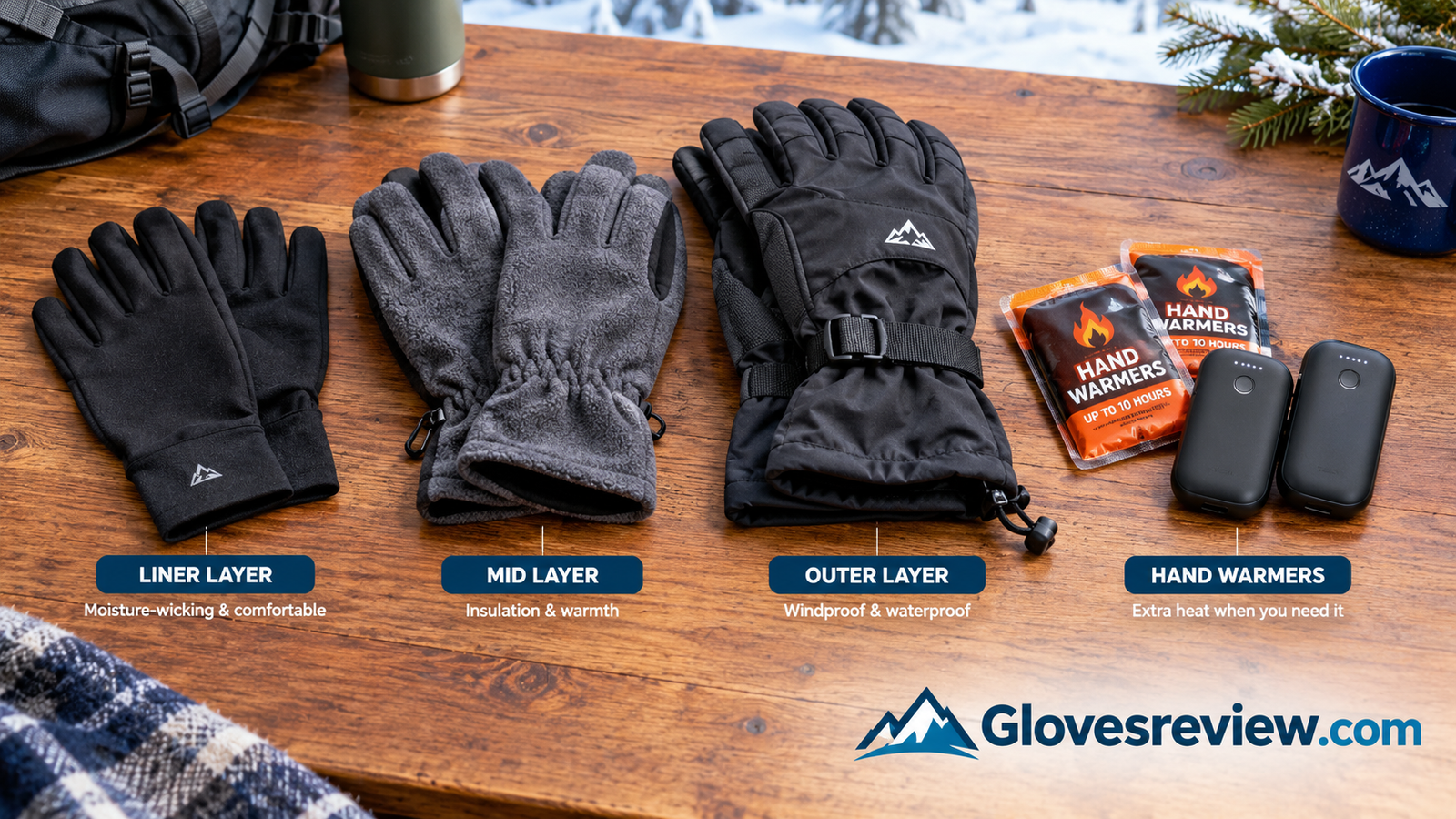
Just like the clothing on your body, the best hand protection uses layers. A single thick glove has limits. It can feel bulky, it traps sweat, and when it gets wet you have nothing to fall back on. A three-part system gives you flexibility, because you can add or remove pieces as conditions and activity levels change.
Layer One: The Liner
A thin liner glove sits against the skin. Its job is to move sweat away from your hand and add a small amount of warmth. Merino wool and synthetic blends both work well. Silk liners are very thin and are a good choice when you need to keep some dexterity for tasks like adjusting a camera or tying a knot. The liner also gives you something to wear alone for a few moments when you must take your outer glove off.
Layer Two: The Insulation
The middle layer is where most of the warmth comes from. Fleece, wool, down and synthetic fills all trap air, and trapped air is what resists heat flow. Fill choice matters more than most buyers realize. If you are weighing options, our breakdown of Thinsulate vs fleece gloves explains how each material behaves when the temperature plunges and when it gets damp.
Layer Three: The Shell
A shell blocks wind and precipitation. Without it, wind strips heat from the insulation and moisture soaks it, and wet insulation loses much of its value. Look for a gauntlet cuff that extends over your sleeve, and a palm made from a durable material. Understanding the difference between treatments can save you money, so read waterproof vs water-resistant gloves before you decide how much protection you really need.
Pair a thin liner under your main glove for an instant warmth upgrade.
Shop Glove Liners on AmazonChoose Mittens When It Gets Truly Brutal
Gloves give each finger its own sleeve. That is great for dexterity and bad for warmth. Every finger has to heat its own small pocket of air, and each one has plenty of exposed surface area. Mittens put all the fingers together in one chamber, so they share warmth. The result is a noticeably warmer hand at the same level of insulation, which is why polar explorers, sled-dog drivers and ice climbers almost always reach for mittens when conditions turn severe.
The Trade-Off
The cost of a mitten is control. You lose the ability to pinch, pull a small zipper or use a phone. The classic compromise is a lobster-style or split-finger mitten, where the index finger separates from the others. A flip-top mitten, which has a fold-back cover over fingerless gloves, gives you a quick way to expose your fingertips for a few seconds without removing the entire thing. For heavy outdoor work where hands are in constant use, you may prefer a rugged glove, and our guide to the best winter work gloves covers options built for exactly that.
When Mittens Win
- Standing still in wind, such as at a bus stop, a sporting event or a deer stand.
- Long, low-activity periods like ice fishing or winter camping.
- Any time temperatures fall well below freezing and wind chill is severe.
- Kids and elders, who tend to lose heat faster and have less tolerance for cold.
A smart habit is to carry both. Wear dexterous gloves for tasks and swap to oversized mittens, which fit over the gloves, whenever you pause. That swap alone often saves your fingers from trouble.
Heavy-duty mittens can mean the difference between comfort and misery.
Shop Extreme Cold Mittens on AmazonAdd Chemical or Electric Heat
When insulation alone is not enough, you add a heat source. Insulation slows heat loss, but it cannot replace heat that your body is unwilling to send. Chemical warmers and battery-powered gloves actively produce warmth, which is why they are so effective when the air is truly bitter.
Chemical Hand Warmers
Disposable air-activated packets are cheap, light and reliable. They work by an oxidation reaction when exposed to air, so they need a little breathing room. If you squeeze one into a very tight glove, the reaction slows. The best placement is on the back of the hand or at the wrist, where blood vessels run close to the surface, rather than in the palm where you may grip and compress it. Many experienced outdoor people also tuck one into a pocket near the core and another at the base of each glove.
Toe-style warmers and reusable gel pouches fill different niches. Reusable click-activated pouches heat when you flex a small disc and can be boiled to reset, which suits people who go through a lot of packets. Charcoal-style warmers burn slowly and last a long time, though they are best for static use and require care with ventilation.
Heated Gloves and Liners
Battery-powered gloves have improved significantly. Most use thin heating elements across the back of the fingers and hand, powered by a rechargeable lithium battery in the cuff. Typical run times range from a couple of hours on high to many hours on low. They shine for riders, skiers and anyone who needs to hold still outside. Their drawbacks are cost, bulk at the cuff and the need to keep batteries charged and warm, since cold drains battery capacity.
Pros of Heated Gloves
- Active heat, not just insulation
- Adjustable temperature settings
- Ideal for long static exposure
- No disposable waste
Cons of Heated Gloves
- Higher upfront cost
- Batteries need charging
- Bulkier at the wrist
- Limited run time on high
Stock up on long-lasting warmers so you never run out mid-trip.
Shop Hand Warmers on AmazonKeep Everything Dry, Inside and Out
Water conducts heat away from the body roughly twenty-five times faster than air. A damp glove is not just uncomfortable, it is a heat sink. Moisture gets into gloves from two directions, rain or snow from outside and sweat from inside. Both have to be managed, and ignoring either one explains most of the situations where someone says their expensive gloves “just did not work.”
Stop Sweat Before It Starts
Hands sweat more than you might expect, especially when you are working or hiking. If your hands get hot, remove a layer or open the cuff to vent before moisture builds. It sounds backwards, but cooling your hands slightly while active prevents the soaked-insulation situation that leaves them freezing during a rest. Choose liners that wick, and consider a light antiperspirant on the palms if you are prone to heavy sweating.
Manage Outside Moisture
For wet snow and slush, waterproof shells are worth the investment. If you are comparing options, our roundup of the best waterproof winter gloves highlights models that keep water out while still allowing some breathability. If your favorite pair has lost its repellency, it may be possible to restore it. Our walkthrough on how to waterproof gloves covers sprays and wax treatments that revive worn materials.
Dry Out Between Outings
Never put damp gloves back on, and never leave them in a heap by the door. Drying them properly between uses matters just as much as buying the right pair. Use the steps in how to dry wet gloves to avoid damaging leather or melting synthetic fabrics with too much heat. If you rotate two pairs, one is always dry and ready when you need it.
Keep a dry backup pair ready. Browse waterproof winter gloves.
Shop Waterproof Gloves on AmazonSeal Wrists and Cuffs Against Drafts
The wrist is a gateway. Large blood vessels pass close to the surface there, carrying warm blood toward your hands. If cold air blows up your sleeve or into the glove opening, you chill that blood before it ever arrives. Many people with an otherwise excellent setup suffer from cold fingers purely because of a gap between jacket and glove.
Wrist Warmers and Gaiters
A pair of knit wrist gaiters, sometimes called wristlets or thumbhole warmers, takes up almost no space and plugs the gap neatly. They are also useful when you want to remove your gloves for a fine task but keep your wrists covered. Cut the thumb end off an old wool sock and you have a quick improvised version.
Cuff Style Matters
Choose the right cuff for conditions. In deep snow or heavy wind, a long gauntlet cuff worn over the jacket sleeve with a cinch closure keeps flakes out. For active use with a close-fitting jacket, a shorter cuff under the sleeve can be less bulky. The key is overlap. If you can see skin or base layer between jacket and glove when you raise your arms, there is a draft path to fix.
Avoid Constriction
One caution runs in the opposite direction. A cuff cinched too hard, or a watch strap worn tight, can restrict blood flow. Snug is good, strangling is not. Move your wrists freely after adjusting and ensure fingers still feel warm and tingly rather than pale and numb.
Close the gap at the wrist with soft, stretchy warmers.
Shop Wrist Warmers on AmazonMove to Restart Blood Flow
Sometimes your hands start to go numb despite everything. In that case, the fastest fix may be motion. Muscle activity generates heat, and certain movements push blood out toward the fingers. A few quick exercises can change how your hands feel in under a minute, with no equipment at all.
Arm Windmills
Swing both arms in large forward circles, as if doing a fast windmill, for about thirty repetitions. The motion pushes blood into the fingers and the warm tingle that follows tells you circulation is returning. Expect some “hot aches” as feeling comes back. That is normal, though it can be uncomfortable.
Other Quick Techniques
- Squeeze and release your fists inside the gloves for a minute, curling the fingers fully each time.
- Tuck your hands into your armpits, where skin is warm and sheltered. A minute is often enough.
- Press your palms against the warm skin of your belly or lower back, taking care to wrap the rest of you as you do it.
- Do jumping jacks or brisk squats. Big-muscle exercise raises core temperature and increases the blood supply to the hands.
- Stretch fingers wide, then fold them into a fist, repeating until warmth builds.
What Not to Do
Do not rub numb hands aggressively on rough surfaces, and do not hold them near an open flame or stove coil. When fingers are numb you can easily burn skin without noticing. Do not bring hands rapidly into very hot water, either. Gentle warming is safer than shock heating.
Workout-style gloves with grip help you stay active while keeping warm.
Shop Active Winter Gloves on AmazonFuel and Hydrate So Your Body Can Make Heat
Your body makes heat by burning fuel. If you head out hungry or dehydrated, your internal furnace has less to work with, and warmth to the extremities is the first thing to go. Many people forget that cold-weather comfort is partly a nutrition problem. Eating well before and during exposure gives your system the raw material it needs.
What to Eat
Aim for a mix of complex carbohydrates, which provide steady energy, and fats, which burn slowly and sustain warmth over many hours. Nuts, cheese, oatmeal, dried fruit, chocolate and nut butter all fit well in a coat pocket. A hot breakfast before a cold day outside is more valuable than most people appreciate.
What to Drink
Hydration affects blood volume, and thin blood flows less easily to the fingertips. In cold weather you often do not feel thirsty, yet you still lose water through breathing and sweating. Sip warm fluids through the day. A thermos of broth, tea or hot cocoa warms you from the inside and gives your hands something to wrap around. Be careful with caffeine, which can narrow blood vessels, and with alcohol, which gives a false sense of warmth while actually increasing heat loss.
Habits That Help
- Do not smoke or vape before heading out, since nicotine tightens blood vessels.
- Take small snack breaks every hour or so on long days.
- Get enough sleep. A tired body regulates temperature poorly.
- Keep a warm drink in an insulated bottle within reach.
An insulated bottle keeps a warm drink within reach all day.
Shop Insulated Thermoses on AmazonGlove Types Compared for Extreme Cold
With the steps behind us, it helps to see how the main options stack up. No single choice wins in every situation, so match the tool to your activity. The table below summarizes typical strengths, followed by a short guide to choosing between them.
| Type | Warmth | Dexterity | Best For | Watch Out For |
|---|---|---|---|---|
| Thin liner gloves | Low | Excellent | Base layer, quick tasks | Not enough alone below freezing |
| Fleece gloves | Moderate | Good | Cool, dry days | Wind passes through |
| Insulated waterproof gloves | High | Moderate | Snow, shoveling, work | Can overheat during effort |
| Insulated mittens | Very high | Low | Static, severe cold | Hard to handle small items |
| Heated gloves | Very high (active) | Moderate | Riding, skiing, long waits | Battery life and cost |
| Expedition overmitts | Extreme | Very low | Polar and alpine use | Bulky, specialized |
How to Choose
Start with your activity level. High-output work like shoveling or cross-country skiing generates its own heat, so you need breathable gloves with moderate insulation and the ability to vent. Low-output activity like standing around or riding a motorcycle needs far more insulation than you think, because you are not producing heat to offset losses. If your plans include clearing driveways, the picks in our guide to the best gloves for snow shoveling are tuned for that exact balance of grip, warmth and moisture control.
Mittens: Advantages
- Warmest option at a given thickness
- Fingers share heat
- Simple, durable construction
Mittens: Drawbacks
- Poor fine-motor control
- Hard to use touchscreens
- Often bulkier to carry
Compare top-rated cold weather gloves side by side.
Shop Cold Weather Gloves on AmazonFrostnip, Frostbite and Warning Signs You Must Not Ignore
Keeping hands warm is about comfort, but at extreme temperatures it is also about safety. Frostbite can happen quickly when skin is exposed to very low temperatures and high wind. Knowing the early signals helps you act before damage occurs. This section is general information, not medical advice, so contact a medical professional if you are concerned about an injury.
Frostnip: The Early Warning
Frostnip is the mildest stage. Skin may look pale or reddish and feel cold, prickly or numb. It does not cause lasting damage, and the skin typically returns to normal once warmed. Treat it as a clear signal to get warmer right away, because ignoring it can lead to something worse.
Frostbite: When It Turns Serious
With frostbite, skin can turn white, grayish-yellow or waxy, and may feel hard or unusually firm. Numbness replaces the earlier pain, which is a dangerous sign because you stop feeling the warning. In more severe cases, blisters can appear after rewarming, and tissue beneath can be affected.
| Stage | What You See | What You Feel | What To Do |
|---|---|---|---|
| Frostnip | Pale or red skin | Cold, tingling, mild numbness | Get inside, warm gently, cover up |
| Superficial frostbite | White or grayish skin, firm surface | Numbness, then stinging on rewarming | Shelter, warm gently, seek medical advice |
| Deep frostbite | Hard, waxy, blotchy or blistered skin | Complete numbness, possible loss of movement | Seek emergency care immediately |
Safe First Steps
- Get out of the cold and remove wet or tight gloves, rings and bracelets.
- Rewarm in warm, not hot, water that is comfortable to a person with normal feeling, or against warm skin.
- Do not rub the area, and do not use direct heat like heaters or hot water bottles on numb skin.
- Do not rewarm if there is a chance the hands will freeze again before you reach safety. Refreezing causes more harm.
- Seek professional medical care for anything beyond mild frostnip.
Keep a compact warming kit in your pack for emergencies.
Shop Winter Safety Gear on AmazonReal-World Situations and Common Mistakes
Theory is helpful, but cold shows up in specific moments. Here is how to apply the system to everyday situations, along with the mistakes that trip people up most often.
Commuting and Waiting Outside
Waiting for transit means standing still in wind, which is exactly when hands lose heat fastest. Wear mittens over thin gloves, keep a warmer in each pocket, and tuck hands into your sleeves or pockets between tasks. Keep a spare pair in your bag in case your first set gets damp from slush.
Work and Outdoor Labor
Hands need grip and protection on a job site, so thick mittens are rarely practical. Choose insulated work gloves with reinforced palms, wear a liner underneath, and take brief warm-up breaks. Keep tools off bare metal surfaces where possible and consider handle wraps. Our comparison of the best winter work gloves is a useful starting point for choosing a pair that tolerates both cold and hard use.
Skiing, Snowboarding and Winter Sports
Downhill sports mix long cold lift rides with periods of exertion. Use a shell with insulation you can swap, and wear mittens on the lift if you wear gloves for the run. Many skiers keep warmers in a small pouch and renew them at lunch. Because falling in snow soaks gloves, keep a dry spare pair in a backpack.
Photography and Fine Tasks
Photographers and anglers need fingertips for controls. A good approach is a thin liner for the work and an oversized mitten that you slide on between shots. Flip-top mittens are popular for exactly this reason. Keep spare batteries warm too, since cold drains them quickly.
Cold Hands in Kids
Children lose heat faster than adults and often will not tell you they are cold until it is bad. Mittens beat gloves for small hands, waterproof shells matter for snow play, and a clip or sleeve loop prevents lost gloves. Check their hands regularly and warm them early.
The Most Common Mistakes
- Buying gloves that are too tight. Compressed insulation and restricted circulation make hands colder.
- Wearing cotton. It holds moisture and loses warmth quickly.
- Ignoring the core. Hands cannot stay warm if the body is chilled.
- Waiting too long to act. Warm up at the first sign of numbness, not after it sets in.
- Skipping care. Dirty, matted insulation performs worse. Learn how to wash winter gloves properly so they keep their loft.
- Relying on one pair. Rotation and spares are what keep you warm after a soaking.
Pick up a spare pair so a surprise soaking never ruins your day.
Shop Winter Work Gloves on AmazonConclusion: Build the System, Then Trust It
Keeping hands warm in extreme cold comes down to a handful of reliable ideas. Protect your core so your body keeps sending warm blood outward. Layer a liner, insulation and a shell so you can adapt. Choose mittens when things turn severe, and add chemical or electric heat when insulation alone is not enough. Keep every layer dry, seal the wrist gap, move to restart circulation, and fuel your body so it has something to burn.
None of these steps is complicated on its own. The magic is in stacking them. A person who does all eight rarely suffers the kind of painful, numb fingers that ruin a winter day, even when the air is brutal. Start with the changes that cost the least, like fitting your gloves properly, drying them well and adding a warmer, then invest in better mittens or heated gloves if your conditions demand it.
Most of all, listen to your hands. Pain is information, and numbness is a warning. Act early, warm up gently and never push through signs of frostbite. With the right gear and habits, you can enjoy the cold instead of just surviving it.
Ready to upgrade your winter hand protection? Explore the best-rated options today.
Find Your Warmest Gloves on AmazonFrequently Asked Questions
Why do my hands get cold so fast even with gloves on?
Usually it is a mix of cold core, poor fit, moisture or wind gaps at the wrist. Your body also narrows blood vessels in the hands when it is chilled, so adding insulation alone does not always help. Warm the torso, use layers, keep hands dry and make sure gloves are not too tight.
Are mittens really warmer than gloves?
Yes, at a similar level of insulation. Mittens keep fingers together so they share heat and have less surface area exposed. The trade-off is reduced dexterity, which is why many people carry both and switch depending on the task.
What is the fastest way to warm up numb hands?
Get out of the wind, then tuck your hands into your armpits or against your warm belly, and do arm windmills or jumping jacks to boost circulation. Avoid hot water or direct heat, which can burn numb skin. Rewarm gently and watch for signs of frostbite.
Do hand warmers work inside gloves?
They do, but air-activated packets need oxygen, so give them some room. Placing one on the back of the hand or at the wrist is usually more effective than gripping it in the palm. Replace them once they cool, and avoid leaving them directly against bare skin for long periods.
Are heated gloves worth the money?
For long static exposure, such as riding, ice fishing or standing at outdoor events, many people find them well worth it. For short trips or high-effort activities, a good layered system and chemical warmers may be enough. Consider battery life, weight and how cold it gets where you live.
Should I wear liner gloves under my main gloves?
Yes, in most cold-weather situations. Liners wick sweat from your skin, add a thin layer of warmth and let you handle small tasks briefly without exposing bare hands. Choose merino wool or synthetic liners rather than cotton.
Is waterproof better than water-resistant for cold weather?
For wet snow, slush and long exposure, waterproof is the safer pick because soaked insulation loses much of its warmth. Water-resistant gloves may be fine for dry cold or light flurries. The breathability of the membrane also matters, so look for something that vents sweat as well as blocking water. See our comparison of waterproof vs water-resistant gloves for more detail.
Can tight gloves make my hands colder?
Absolutely. Tight gloves compress insulation, removing the trapped air that keeps you warm, and can restrict circulation. Choose a size that leaves a small amount of room, and measure your hands properly if you are unsure.
How do I know if my hands have frostbite?
Early signs include pale, waxy or grayish skin, a hard or firm feel and numbness that replaces earlier pain. Blisters after rewarming can indicate deeper damage. If you suspect frostbite, get warm gently and seek medical care, especially if numbness persists.
Does caffeine or alcohol affect cold hands?
Caffeine can narrow blood vessels slightly, which may reduce warm blood flow to the fingers in sensitive people. Alcohol makes you feel warm but actually increases heat loss by widening surface blood vessels. A warm, non-alcoholic drink is a better choice outdoors.
How should I care for gloves so they keep me warm?
Dry them fully after each use, away from direct high heat, and wash them according to the label when they get dirty. Dirty, matted insulation loses loft and warmth. Reapply water repellent when beads stop forming on the surface.
Do kids need different gloves for extreme cold?
Kids generally do better in waterproof mittens with long cuffs, since small hands lose heat quickly and mittens keep fingers together. Add a thin liner, use clips to prevent losing them and check their hands often, because children may not tell you they are cold until it is serious.