
Best Winter Work Gloves: Warm, Tough Picks for Brutal Cold
Ten hard-working pairs, compared on warmth, waterproofing, grip, and durability, plus everything you need to know to buy the right pair the first time.
Anyone who works outside from November through March knows the exact moment a glove fails you. It is usually around the second hour, when your fingertips go from cold to numb, your grip gets sloppy, and every small task like threading a bolt or flipping a latch turns into a chore. Cheap gloves fail quickly. Great gloves disappear on your hands, keeping you warm and dry while you keep working.
This guide is built for people who actually use their hands for a living or for serious projects: contractors, linemen, farmers, landscapers, warehouse crews, mechanics, delivery drivers, and anyone who has spent a winter morning scraping frost off a truck before heading to a site. We looked at ten popular winter work gloves, broke down what each one does well, where each one falls short, and which kinds of work suit them best.
Before we get into the individual pairs, we will walk through the five factors that separate a glove you will love from one that ends up in a junk drawer: insulation, waterproofing, dexterity, fit, and construction quality. Understanding these makes every product description you read afterward more useful. If you only want the shortlist, jump to the product sections using the contents menu. If you want to buy smart, read the whole thing.
| Glove | Best For | Standout Feature |
|---|---|---|
| Carhartt Waterproof Insulated Knit Cuff | All-round job-site use | Waterproof insert with a snug knit cuff |
| Ironclad Tundra | Heavy-duty, extreme cold | Rugged construction built for harsh conditions |
| Wells Lamont 5130L | Value-minded workers | Leather palm durability at an easy price |
| toolant Waterproof | Wet, slushy days | Waterproof protection with insulation |
| Schwer FreezeGuard-X | Deep cold with active work | Cold-focused insulated design |
| HANDLANDY (3M Thinsulate) | Warmth without bulk | Thinsulate lining |
| MOREOK -30°F | Frigid temperatures | Extreme-cold rating |
| Carhartt Vintage Cold Snap | Classic work look and feel | Traditional Carhartt build |
| TRENDOUX (3M Thinsulate) | Budget warmth | Thinsulate insulation at a friendly price |
| LOCCEF Winter Work | Everyday errands and light work | Affordable all-purpose design |

Want to see current prices on top-rated winter work gloves?
Shop Winter Work Gloves on Amazon1. Why Winter Work Gloves Matter More Than You Think
Hands are one of the first places the body gives up heat. When your core temperature drops, your body prioritizes keeping vital organs warm, which means blood flow to fingers and toes gets restricted. That is why your hands can feel freezing even when your jacket and base layers are doing their job. A glove has a harder job than a coat, because it has to insulate tiny, mobile, heavily exposed tissue while still letting you move.
Cold hands are not just uncomfortable. They are slower, weaker, and less coordinated. Research on manual performance in cold conditions consistently shows that grip strength and fine motor control drop as skin and muscle temperatures fall. In practical terms, that means dropped tools, fumbled fasteners, and a higher chance of injury. When your fingers are numb, you also cannot feel a pinch point or a hot surface until it is too late.
The hidden cost of cheap gloves
A discount pair that leaves you shivering costs more than the sticker price suggests. You lose productivity when you have to stop and warm up. You risk frostnip on long exposure days. And a glove that rips at the seams in January means you are buying again in February. Spending a bit more on a pair that is built for the job often works out cheaper per season.
Cold, wet, and windy: the real enemies
Temperature is only one part of the story. Water pulls heat away from skin roughly twenty-five times faster than air, so a wet glove can feel colder than a dry glove at a much lower temperature. Wind strips away the thin layer of warm air near the surface of the glove, which is why a breezy twenty-degree day can feel worse than a still one at ten. The best winter work gloves deal with all three: insulation for the cold, a waterproof or water-resistant layer for moisture, and a tight, wind-blocking weave or membrane.
If you are specifically shoveling for long stretches, our roundup of the best gloves for snow shoveling goes deeper on that exact use case, where moisture and sustained grip matter most.
How we judged these gloves
Every pair in this guide was weighed against the same five questions. How well does the insulation hold heat for the thickness it adds? How does the glove handle moisture, both from outside and from your own sweat? How much feeling and control does it leave you when you grip a tool? How secure and comfortable is the fit, particularly around the cuff? And does the construction look built for the price, with sturdy stitching, reinforced wear points, and a palm that will survive real use? Rather than crowning one winner, we describe where each glove shines so you can match it to your own day.
We also paid attention to how brands describe their products. Specifications on a listing tell you a lot, but the wording matters. A glove that clearly lists a waterproof insert is making a different promise than one that only mentions a water-resistant coating. A glove that names its insulation and weight is easier to evaluate than one that simply says “warm lining.” Whenever details are unclear, check the product page and recent buyer feedback, because manufacturers occasionally update materials and features.
Common mistakes people make when buying winter work gloves
- Buying on warmth alone. A glove that is warm but so bulky you remove it every few minutes does not keep your hands warm. Pick the thinnest glove that does the job.
- Ignoring the cuff. Snow and drafts enter at the wrist. A glove with excellent insulation but a loose cuff can still leave you cold.
- Choosing the wrong size. Too tight compresses insulation and restricts blood flow. Too loose wastes warmth and weakens your grip.
- Skipping a spare pair. Damp gloves are the fastest route to cold hands. A dry backup is worth more than a slightly better primary pair.
- Treating one glove as a cure-all. No single glove is ideal for every temperature and task, so think in terms of a small, flexible kit.
Reading a product listing like a pro
Start with the shell material and palm, since they decide durability and grip. Move to the insulation, looking for named materials and any stated weight. Check for a waterproof membrane or insert, and confirm whether it covers the whole glove or just the back of the hand. Look at the cuff and closure type, and finally scan the size chart. This simple routine takes a couple of minutes and filters out most poor matches before you spend a cent.
Compare insulated, waterproof work gloves from trusted brands.
Check Insulated Work Gloves2. Insulation Types Explained: What Actually Keeps You Warm
Walk through any product listing and you will see a flurry of insulation terms: Thinsulate, fleece, polyester fill, acrylic lining, pile, and more. They are not all equal, and the differences affect how warm you stay, how bulky the glove feels, and how well it handles moisture.
3M Thinsulate
Thinsulate is a synthetic microfiber insulation designed to trap heat using very fine fibers, which creates more tiny air pockets per unit of thickness than traditional fill. That is why gloves like the HANDLANDY and TRENDOUX lean on it. The big advantage is warmth without a marshmallow feel. You can often get a lot of cold protection in a thinner profile, which helps with dexterity. Thinsulate also resists moisture absorption better than natural fibers, though it is not waterproof on its own.
Gloves list Thinsulate in different weights, often shown as grams. A lighter fill is better for cool, active days. A heavier fill suits standing or slow-moving work in deep cold. When a listing shows the brand name without a weight, treat it as a general indicator rather than a guarantee of extreme-cold performance.
Fleece and pile linings
Fleece linings feel soft against the skin and provide solid warmth for the price. Pile, which is a deeper, fluffier relative of fleece, traps more air and is common in the warmest budget gloves. The trade-off is that fleece can compress over time and soak up moisture if it gets wet. If you are comparing materials, our breakdown of Thinsulate vs. fleece gloves explains how each performs in real conditions.
Polyester and synthetic fill
Many mid-priced winter work gloves use polyester batting between the shell and the lining. It behaves similarly to the fill in a puffy jacket: lightweight, reasonably warm, and easy to care for. Quality varies a lot, so it is worth paying attention to construction. Fill that is stitched in channels or quilted stays evenly distributed. Fill that is loosely tucked can bunch up after a few washes and leave cold spots.
Do you need a rated temperature?
Gloves that advertise a temperature rating, like the MOREOK -30°F model, can be a useful starting point, but treat those numbers with caution. There is no universal standard that every manufacturer follows for gloves, and the rating usually assumes certain activity levels. A glove rated for deep cold will still feel cold if you are standing still in wind with damp hands. Use the rating to compare roughly, then read reviews from people who work in conditions similar to yours.
| Insulation | Warmth | Bulk | Moisture Handling |
|---|---|---|---|
| 3M Thinsulate | High for its thickness | Low to medium | Resists absorption |
| Fleece | Moderate | Low | Can hold moisture |
| Pile | High | Medium to high | Can hold moisture |
| Polyester fill | Moderate to high | Medium | Dries fairly quickly |
Looking for Thinsulate-lined gloves that keep bulk down?
Browse Thinsulate Work Gloves3. Waterproofing and Breathability: Staying Dry From Both Sides
The trouble with waterproof gloves is that keeping water out also tends to keep sweat in. A glove can be technically waterproof and still leave you with soaked liners by lunchtime if it does not breathe. The best designs use a waterproof insert or membrane that blocks liquid water while letting some vapor escape.
Waterproof vs. water-resistant
These two terms get used interchangeably, but they mean different things. Water-resistant gloves have a coating or tight weave that sheds light moisture like snow flurries or splashes. They will eventually soak through during sustained contact. Waterproof gloves have a barrier layer that stops water from penetrating even when submerged briefly. We explain the distinction in detail in our guide on waterproof vs. water-resistant gloves, and it is worth a read before you buy.
Where waterproof gloves leak
Even a fully waterproof glove has weak points. The cuff opening is the biggest. Snow and water will find their way in if the glove does not seal over your sleeve or if you are reaching overhead. Seams are the second weak point, particularly around fingertips. Quality gloves use a membrane that is bonded or sewn with sealing in mind, but cheaper versions may leak at stitch holes over time.
Sweat is a moisture source too
If you generate heat while working, your hands sweat inside the glove. That moisture stays trapped, dampens the lining, and then conducts heat away from your skin. The solution is to match the glove to your activity level. For high-exertion jobs like shoveling or hauling, choose a breathable, lightly insulated glove. For standing or low-movement jobs, a heavier, fully sealed glove is better.
Can you re-waterproof a glove?
Surface treatments wear off with use. Leather and fabric shells can often be refreshed with a proofing spray or wax, which restores beading on the outside. This will not fix a failed internal membrane, but it can extend the life of a glove considerably. If you have a favorite pair that has begun to soak through, see how to waterproof gloves for options that fit different materials.
Breathability tips that actually help
If your hands sweat, a few simple habits make a big difference. Take your gloves off during breaks to let steam escape, and wipe out any visible moisture. Choose a glove with a moisture-wicking lining if possible. Avoid over-insulating for the task; wearing a glove that is too warm leads to sweat, and sweat leads to cold once you stop moving. Dry your gloves between shifts, and consider switching to a lighter pair on mild days so you are not working with a heavy-duty glove in conditions that do not need one.
Waterproof inserts versus coated shells
Some gloves use a separate waterproof insert sandwiched between the shell and the lining, while others rely on a coating on the outside. Inserts tend to provide more reliable protection against water that finds its way into seams and fingertips, and they also make the exterior shell easier to dry. Coated shells can be thinner and more flexible but may lose performance as the coating wears. Check which approach the glove uses and match it to your level of exposure.
Need a pair that stays dry in slush and snowmelt?
See Waterproof Work Gloves4. Warmth vs. Dexterity: Finding Your Balance
Every winter work glove sits somewhere on a spectrum between maximum warmth and maximum dexterity. Heavy insulation keeps fingers toasty but makes it tough to pick up a small screw. A thin, flexible glove lets you handle fasteners and tools easily but leaves you cold faster. The right choice depends on what your hands actually do all day.
High-dexterity jobs
If you are running a drill, tying rebar, handling wire, or operating small controls, you need to feel what you are holding. Look for gloves with pre-curved fingers, a close fit through the palm, and thinner insulation like Thinsulate. These designs follow the natural shape of your hand, which reduces fatigue over a long day. Many workers in this category keep a heavier pair in the truck for breaks and drive time.
High-warmth, low-dexterity jobs
Operating heavy equipment, hauling gear, working in cold storage, or standing in a wind-exposed spot for hours calls for the warmest gloves you can find. Here, a bit of bulk is a fair trade for staying comfortable. Look for generous insulation, a long cuff, and reinforced palms that grip bulky handles.
Grip matters as much as feel
Palm material makes a real difference. Leather palms age well and conform to your hand. Synthetic or rubberized palms often grip better on wet surfaces. Textured coatings on the fingers and palms help you hold slick tools. Whichever you pick, test that the palm material stays pliable in the cold, because some coatings stiffen at low temperatures and lose their grip.
Layering as a strategy
One of the smartest ways to solve the warmth-versus-dexterity problem is to layer. A thin liner glove under a looser outer glove lets you slip the outer pair off for fine tasks without exposing bare skin to the cold. Liners also wick sweat and add a layer of trapped air. If you are curious about methods that go beyond gloves, our piece on how to keep hands warm in extreme cold covers layering, circulation habits, and warming tricks that work on the job.
| Task | Priority | What to Look For |
|---|---|---|
| Fine fastening, electrical, wiring | Dexterity | Thin Thinsulate, pre-curved fingers, snug fit |
| General construction | Balance | Reinforced palm, moderate insulation, cuff closure |
| Snow removal, landscaping | Waterproofing | Waterproof insert, breathable shell |
| Heavy equipment, cold storage | Warmth | Thick lining, long cuff, rugged palm |
Thinking about your hands like a system
Your fingers lose heat faster than the rest of your hand because they have a high surface area compared with their volume. That is why mitten-style designs feel warmer than five-finger gloves at the same insulation level: fingers share warmth when they are together. Work gloves obviously need separate fingers, so the insulation, fit, and layering strategy have to compensate. A glove that fits well with a thin layer of trapped air around each finger will beat a thicker glove that squeezes your hand flat.
Choosing the right liner
If you plan to layer, the liner matters. Thin synthetic liners wick moisture and dry quickly, which makes them ideal under waterproof outer gloves. Wool or wool-blend liners add noticeable warmth and stay comfortable even when slightly damp, though they take longer to dry. Avoid cotton liners in cold, wet conditions, because cotton holds water and pulls heat away from your skin. Whatever you choose, make sure the liner fits smoothly with no bunching in the fingertips, since folds create pressure points and cold spots.
Using the whole day, not just the job
Think about the full arc of your workday, including the drive in, breaks, and the end-of-shift commute. Many people find they use two gloves during the day: a thinner pair for detail work and a heavier pair for everything else. Keeping both within reach makes it easy to adapt without tolerating cold fingers for the sake of convenience.
Find gloves that keep your hands warm and still let you work.
Shop Work Gloves With Dexterity5. Fit, Sizing, and Cuffs: Small Details That Make Big Differences
A glove that is too tight restricts circulation, which makes your hands colder, not warmer. A glove that is too loose creates air gaps that let heat escape and reduces your grip. Getting the size right is one of the highest-impact choices you can make, and it costs nothing extra.
How to size correctly
Measure around the widest part of your dominant hand, just below the knuckles and excluding the thumb. Compare that measurement to the manufacturer’s size chart, because sizing varies between brands. Do not assume your size in one brand will match another. If you are between sizes, consider how you plan to wear the glove. Layering a liner underneath often means sizing up. If you want a snug, dexterous feel, size down. Our walkthrough on how to measure hand size for gloves shows exactly where to measure and how to read a size chart.
Cuff styles
The cuff is the part of the glove that deals with the gap between your sleeve and your hand. There are three common types:
- Knit cuff: Stretchy, snug, and easy to tuck under a jacket sleeve. Great for sealing in warmth and keeping out drafts, as seen on the Carhartt knit cuff glove.
- Gauntlet cuff: Extends over the sleeve with a cinch strap or toggle. Best for deep snow and heavy weather, since it blocks snow from entering.
- Short cuff or open cuff: Easy on and off with the most freedom of movement, but offers the least protection against snow and wind.
Closures and wrist security
Hook-and-loop wrist straps let you cinch the glove tight, which prevents cold air from circulating around your wrist and keeps the glove on when you are working overhead. Elastic wrist bands do a similar job without adjustments. Some workers like adjustable closures because they can loosen the strap when they get warm and tighten it when the wind picks up.
Break-in period
Leather gloves in particular need a short break-in. They feel stiffer at first, then soften and mold to your hand. Synthetic gloves usually feel ready out of the box. Give any new pair a full workday before judging it, because fit often improves after the lining settles and the shell relaxes.
Sizing mistakes to avoid
One of the most common sizing errors is picking a glove based on the size you wear in a casual glove. Work gloves often run differently, especially insulated models where the lining takes up room inside the shell. Another frequent mistake is ignoring finger length. If your fingers are long, a glove that fits your palm width may still pinch at the tips, which compresses insulation and chills fingertips quickly. If your fingers are short, extra material at the ends can make it tough to feel what you are holding.
Hand shape matters too. Some people have wide palms and slim fingers, others the opposite. When reading reviews, look for comments from people with similar hand proportions. Reviewers who mention running small, running large, or fitting true to size give you a practical way to adjust your pick.
Working with sleeves and jackets
Your glove cuff has to cooperate with your outer layers. If your jacket has a snug, elasticated cuff, a gauntlet-style glove can be tucked over it to seal out snow. If your sleeves are loose, a knit cuff glove can slide underneath. Overlap the glove and sleeve by a couple of inches so that reaching and lifting does not expose bare wrist, which is one of the quickest ways to lose heat.
Check available sizes and read buyer feedback before you decide.
View Sizes and Styles6. Carhartt Waterproof Insulated Knit Cuff and Ironclad Tundra
These two pairs represent the dependable, job-site-proven end of the lineup. Both are designed with real winter workloads in mind, and both come from brands with a long reputation in the trades.
Carhartt Waterproof Insulated Knit Cuff Glove

Carhartt has spent decades building gear for people who work outdoors, and this glove shows that experience. It combines insulation with a waterproof barrier and finishes with a knit cuff that slides under a jacket sleeve cleanly. The result is a glove that handles snowy mornings, wet equipment, and long days of general work without feeling overbuilt.
The knit cuff is a standout feature in real use. It hugs the wrist, which keeps wind from sneaking up your sleeve and helps trap warmth. For anyone who spends the day moving between tasks, the ease of getting the glove on and off is a quiet convenience that adds up over a shift.
Because the glove is waterproof, it is a particularly good choice for work that involves snow, slush, or damp surfaces. Think landscaping crews, snow removal, outdoor maintenance, and fueling or hose work in cold weather. Pair it with a thin liner if you work in very low temperatures.
Pros
- Waterproof protection for wet jobs
- Insulated for cold-weather comfort
- Knit cuff seals out drafts
- Trusted workwear brand
Cons
- Not the thinnest option for fine tasks
- Knit cuff offers less snow protection than a gauntlet
- Priced above budget picks
Best for: general outdoor work, snow removal, and anyone who wants a single dependable winter glove.
Check Price on AmazonIronclad Tundra Work Glove

Ironclad built its name on gloves that stand up to abuse, and the Tundra applies that approach to cold weather. The name signals the intended use: sustained low temperatures and rough handling. If your job involves lifting, hauling, gripping rough materials, and working in conditions that would punish lighter gloves, the Tundra is aimed squarely at you.
Ironclad’s design philosophy emphasizes durability and protection. Expect reinforced areas where gloves usually wear first, like the palm and fingertips, along with insulation intended to keep hands comfortable in harsh weather. That makes it a natural fit for crews working on construction sites, in oilfields, on docks, and on farms.
As with most heavily built gloves, there is a trade-off in feel. You gain toughness and warmth, and you give up a little of the delicate touch that thinner gloves provide. For many workers that is exactly the right bargain.
Pros
- Built for harsh winter conditions
- Rugged construction resists wear
- Good fit for physical, rough-handling jobs
- Strong brand reputation in work gloves
Cons
- Less nimble for fine work
- Can feel bulky for first-time users
- Premium pricing
Best for: construction, oilfield, dock, and farm work in serious cold.
Check Price on AmazonWhich of the two should you choose?
If your priority is a polished everyday glove that seals out wet and wind, the Carhartt is the easier recommendation. If your priority is toughness under real abuse, the Ironclad Tundra earns a spot on your shortlist. Neither is a bad choice, and many crews keep both: one for light-duty days and one for the hardest weather.
See today’s pricing on the leading winter work glove brands.
Compare Carhartt and Ironclad7. Wells Lamont Heavy Duty and toolant Waterproof: Value With Real Capability
Not everyone wants to spend premium money on gloves that will get scraped, soaked, and eventually worn out. These two options deliver strong performance at friendlier prices, which makes them popular among crews who go through several pairs each season.
Wells Lamont Heavy Duty Leather Palm Winter Work Gloves (5130L)

Wells Lamont is a familiar name in work gloves, and this model brings the classic leather palm design into winter use. Leather has been a go-to palm material for generations, and it is easy to see why. It is durable, grips well, and gradually molds to your hand, so the glove gets more comfortable the longer you wear it.
This glove is a strong choice for dry-cold work, such as handling lumber, working with tools, stacking materials, and general yard work. Leather palms do not love prolonged soaking, so if your days are consistently wet, consider a waterproof option. For dry winter conditions, though, the combination of durability and price is hard to beat.
One practical benefit is replacement cost. When a glove is affordable, you feel free to use it hard without worrying about every scuff. That freedom is valuable on a busy site.
Pros
- Leather palm is tough and grippy
- Gets more comfortable with wear
- Easy on the budget
- Familiar fit and reliable brand
Cons
- Not designed for heavy, constant wetness
- Leather needs a short break-in
- Less wind and water sealing than waterproof models
Best for: dry-cold jobs, general labor, and budget-conscious buyers who still want real durability.
Check Price on Amazontoolant Waterproof Winter Work Gloves

toolant targets the practical middle ground: a waterproof, insulated glove at a price that makes sense for everyday workers. If your winter mostly means wet snow, cold rain, and slushy equipment, a waterproof design addresses your biggest annoyance right away.
Gloves in this category usually pair a gripping palm with an insulated lining and a waterproof layer, which allows them to handle chores like shoveling, cleaning up debris, loading and unloading, and working around vehicles. They are also a handy option for gardeners and homeowners who want something tougher than casual winter gloves without paying for premium workwear.
As with any value-focused glove, results vary based on your usage intensity. Light to moderate use will generally be fine. If you are on a job that grinds through gloves in weeks, a more heavily reinforced design may be a better long-term investment.
Pros
- Waterproof design for wet conditions
- Insulated for cold weather
- Wallet-friendly
- Good for homeowners and light-to-moderate work
Cons
- Less established than major workwear brands
- May wear faster under heavy daily abuse
- Fit can vary, so check the size chart
Best for: shoveling, yard work, wet-weather chores, and budget-conscious shoppers.
Check Price on AmazonWhy value gloves deserve respect
There is a tendency in gear reviews to assume the most expensive item is always the right answer. Real work does not follow that logic. A crew leader who equips five people with dependable, affordable gloves and keeps a stack of spares in the truck often ends up with warmer, happier workers than one who buys a single premium pair and hopes for the best. Affordable gloves also take pressure off. You can use them for greasy, messy, abrasive jobs without worrying about ruining an expensive pair.
The key is to be honest about expectations. Value gloves are a smart match for moderate-duty tasks, and the savings are best spent on a second pair so you always have a dry option ready to go.
Want to browse more budget-friendly insulated work gloves?
Browse Leather and Waterproof Gloves8. Schwer FreezeGuard-X and HANDLANDY Thinsulate: Cold Protection Without the Clumsiness
These two gloves are aimed at people who want serious cold protection but refuse to give up the ability to actually use their hands. Both lean on modern insulation and ergonomic design rather than simply stacking on bulk, which is a smart approach for anyone whose work involves tools, controls, or small parts.
Schwer FreezeGuard-X Winter Work Gloves

The name alone makes the pitch: this glove is designed to fight cold. It is built for people who spend long hours outdoors in low temperatures and need hands that stay functional. The design aims to balance insulation with the flexibility you need for active tasks, which is the sweet spot for a lot of tradespeople.
In practice, gloves of this type work best when you are moving. Activity generates heat, and a well-insulated glove holds that heat in. If you are operating tools, carrying materials, or working a physically active job, the FreezeGuard-X approach lets you stay warm without overheating or feeling restricted.
It also pairs well with a thin liner for the coldest days, since the outer glove provides a protective shell and the liner adds an extra thermal layer. If you are the type of person who adjusts your gear throughout the day, a modular approach like this offers flexibility.
Pros
- Designed specifically around cold conditions
- Good balance of insulation and movement
- Works well with liner gloves
- Suits active, hands-on work
Cons
- Less ideal for standing still in extreme wind
- Brand is less widely known than the big names
- Check sizing carefully before ordering
Best for: tradespeople, mechanics, and warehouse workers who need warmth plus function.
Check Price on AmazonHANDLANDY Winter Work Gloves (3M Thinsulate)

The HANDLANDY glove puts 3M Thinsulate front and center. As we covered earlier, Thinsulate is known for delivering warmth without a thick, puffy feel. That makes this glove a good fit for people whose fingers need to stay nimble, like mechanics, electricians, delivery drivers, and anyone who handles small items frequently.
With Thinsulate, you often get a lower-profile glove that still holds heat reasonably well, particularly in moderate to cold conditions. It is a smart choice for those chilly mornings that do not quite qualify as arctic but still make bare hands miserable. If you find that typical winter gloves are too bulky for the tasks you do, a Thinsulate-lined work glove is often a good fix.
Keep expectations realistic for extreme cold. Thinner gloves have a limit, so if you regularly work in deep freezes or high wind, consider adding a liner or choosing a heavier model for those days.
Pros
- 3M Thinsulate offers warmth without much bulk
- Better dexterity than heavy-pile gloves
- Works for drivers, mechanics, and general labor
- Good value for the feature set
Cons
- May not be enough for sustained extreme cold
- Thinner profile means less protection against heavy impact
- Waterproofing varies, so read the listing details
Best for: moderate-to-cold weather, drivers, mechanics, and light-to-medium duty jobs.
Check Price on AmazonChoosing between these two
Think about how cold your typical day gets and how much precision you need. For colder, more active work where you can tolerate a bit more insulation, the Schwer FreezeGuard-X is a sensible choice. For milder cold with a premium on feel, HANDLANDY’s Thinsulate construction is attractive. Many workers find that one pair of each, rotated according to the forecast, covers almost every winter scenario.
Prefer a warm but nimble glove? See current Thinsulate and cold-weather options.
Shop Cold-Weather Work Gloves9. MOREOK -30°F and Carhartt Vintage Cold Snap: Extreme Cold Meets Classic Style
These two gloves approach the problem from different angles. One advertises extreme cold performance right in the name. The other brings a classic Carhartt look and feel to cold-weather work.
MOREOK -30°F Winter Gloves

The MOREOK glove advertises protection down to minus thirty degrees Fahrenheit, which tells you what kind of cold it was designed for. If you work in northern climates, ice-fishing country, cold-storage facilities, or anywhere the thermometer regularly plunges, a glove built around extreme-cold performance is worth considering.
A word about temperature ratings: they are helpful as a comparison point but should be treated as guidance rather than a guarantee. Your activity level, wind, moisture, and individual circulation all influence how warm you stay. Still, a glove that is built with extreme cold in mind will typically offer thicker insulation and a more protective design than a general-purpose pair.
This type of glove makes the most sense for slow-moving or stationary work: snow-blowing, ice fishing, standing watch, or tending outdoor equipment. Because of the added insulation, expect less dexterity than a thin work glove, so keep a lighter pair handy for detailed tasks.
Pros
- Marketed for extreme-cold conditions
- Heavier insulation for hands that run cold
- Suits stationary or slower-paced work
- Competitive price for the cold rating
Cons
- Bulkier feel reduces fine motor control
- Temperature rating is a guideline, not a promise
- May feel too warm for active work in mild cold
Best for: deep-freeze conditions, snow removal, ice fishing, and cold-storage work.
Check Price on AmazonCarhartt Vintage Cold Snap Glove
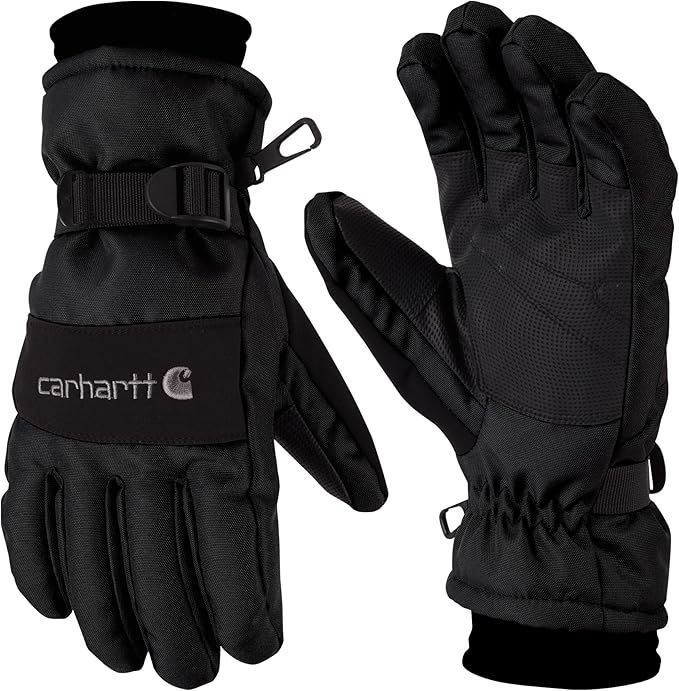
For people who love traditional workwear, the Cold Snap brings a familiar aesthetic and the toughness Carhartt is known for. It is a glove that feels at home on a job site, in a barn, or in a pickup truck on a frosty morning. If you appreciate gear that looks good as it ages, the vintage styling is a nice bonus.
Functionally, it is built for cold-weather work where you want comfort and durability without complicated features. It is a good fit for general labor, farm chores, and everyday winter tasks. If you need a fully waterproof barrier, compare it against the Carhartt Waterproof Insulated model covered earlier, since the two serve somewhat different needs.
One thing worth noting is that classic-style gloves often prioritize feel and longevity over high-tech waterproofing. That is a feature for some buyers, and a limitation for others. Decide whether you spend more time in dry cold or wet snow, and choose accordingly.
Pros
- Classic Carhartt toughness and styling
- Comfortable for everyday cold-weather work
- Good for farm and general labor
- Ages well with regular use
Cons
- Not the best pick for constant wet conditions
- Fewer high-tech features than modern membrane gloves
- Premium brand pricing
Best for: farm chores, general labor, and workers who like traditional gear.
Check Price on AmazonStaying safe in severe cold
Equipment is only half of cold-weather safety. In severe conditions, take warming breaks, drink warm fluids, and keep your core covered, because a cold torso reduces blood flow to your hands. Avoid touching bare metal in freezing temperatures, and never wear damp gloves for long stretches. If you work alone in remote or exposed areas, tell someone your plan and check in regularly. A great pair of gloves makes the job more comfortable, but good habits are what truly prevent injury.
Watch for early signs of trouble, such as tingling, stinging, or fingertips that look pale or waxy. These are signals to warm up immediately. Taking a few minutes to rewarm is far better than pushing through and risking lasting damage.
Need a glove for the deepest freezes? Compare extreme-cold models.
Find Extreme-Cold Gloves10. TRENDOUX Thinsulate and LOCCEF Winter Work Gloves: Budget Picks Worth a Look
Not every pair has to be a long-term investment. Sometimes you need a handful of decent gloves for the truck, the garage, the shed, and the kids’ snow-day chores. These two budget-minded options fit that role well.
TRENDOUX Winter Gloves (3M Thinsulate)

TRENDOUX brings Thinsulate insulation to a friendly price point, which makes it appealing if you want warmth without the premium cost. It is a good fit for commuters, drivers, home projects, and everyday cold-weather chores around the property.
Because it uses Thinsulate, it keeps a relatively slim profile compared with bulkier fleece or pile gloves. That means you can still handle keys, phone screens in some cases, and small tools more easily than you would in a heavy mitt-style glove.
As with any budget glove, think about how hard you will use it. For occasional or moderate use, it is a smart purchase. For daily professional use in harsh conditions, you may want a more reinforced model, but TRENDOUX is a strong second pair or backup.
Pros
- Thinsulate warmth at a low price
- Slim profile aids dexterity
- Great as a backup or truck glove
- Easy to replace
Cons
- Less durable under heavy daily abuse
- Less brand history than major names
- Check listing details for waterproofing
Best for: commuters, home projects, and backup pairs.
Check Price on AmazonLOCCEF Winter Work Gloves

LOCCEF rounds out the list with an affordable, all-purpose winter work glove. It targets people who want a reliable pair for yard work, car maintenance, light construction, and general winter tasks without overspending.
This is the type of glove that shines when you need to equip a family or a small crew on a budget. The price makes it easy to buy multiples, which is useful since having a spare pair is one of the best ways to stay comfortable throughout winter.
Keep expectations aligned with the price. It will handle everyday winter chores well, but if you are working in severe cold or wet conditions all day, look to the premium or waterproof options above.
Pros
- Affordable enough to buy in multiples
- Versatile for household and light work
- Easy to keep a spare in the car or garage
- Simple, practical design
Cons
- Not intended for severe-cold professional use
- May not last as long under heavy abuse
- Limited extra features
Best for: yard work, car maintenance, and light-duty winter tasks.
Check Price on AmazonWhere budget gloves fit in your routine
Think of an inexpensive glove as a tool for a specific role. It might be the pair that lives in your glove box for surprise cold snaps, the pair you hand to a helper or a neighbor, or the pair you wear for messy tasks like cleaning gutters, changing tires, or hauling mulch. Used this way, a budget glove saves your better pairs for the jobs where they matter and still gives you a reliable layer between your skin and the cold.
Because these gloves cost less, you can also experiment. Buying a pair to test a style, like a knit cuff or a Thinsulate lining, tells you what you like before you commit to a pricier version. That kind of low-risk trial is a practical way to learn what works for your hands.
Stock up on affordable pairs for the whole season.
Shop Budget Work Gloves11. Best Winter Work Gloves by Job Type
Now that you have met all ten gloves, let’s match them to the work you actually do. The best glove on paper is not always the best glove for your day, so this section translates features into real-world recommendations. Use it as a decision shortcut, then confirm sizing and details in the product listing before you buy.
| Job or Activity | Top Choice | Runner-Up | Why |
|---|---|---|---|
| General construction | Ironclad Tundra | Carhartt Waterproof Insulated | Durability and protection against rough materials |
| Snow removal and shoveling | Carhartt Waterproof Insulated | toolant Waterproof | Waterproof protection and a cuff that seals |
| Mechanic or auto work | HANDLANDY Thinsulate | Schwer FreezeGuard-X | Dexterity for small parts and tools |
| Farm and ranch chores | Carhartt Vintage Cold Snap | Wells Lamont 5130L | Classic toughness and good feel |
| Extreme cold or ice fishing | MOREOK -30°F | Ironclad Tundra | Heavy insulation for the deepest freezes |
| Warehouse and cold storage | Schwer FreezeGuard-X | MOREOK -30°F | Cold protection that still allows movement |
| Commuting and home projects | TRENDOUX Thinsulate | LOCCEF Winter Work | Affordable warmth for everyday use |
| Wet-weather yard work | toolant Waterproof | Carhartt Waterproof Insulated | Waterproof design at an easier price |
For contractors and tradespeople
Contractors need protection and endurance, and they need it without constantly stopping to take gloves off. The Ironclad Tundra and the waterproof Carhartt are the natural starting points, because both handle rough surfaces and unpredictable weather. If your trade demands finer control, like electrical or finish work, consider pairing a thinner Thinsulate glove with a heavier option for breaks and transit.
For outdoor maintenance and landscaping crews
Crews who plow, shovel, haul debris, and handle wet equipment deal with the one factor that ruins most winter gloves: moisture. Waterproof models are the clear winners here. The Carhartt Waterproof Insulated and toolant Waterproof give you that protection at different price levels, and the knit or fitted cuff helps keep snow from getting in. Providing each crew member with a spare pair for rotation is a small expense that pays off in comfort and productivity.
For drivers and delivery workers
Drivers need warmth and grip, plus enough sensitivity to handle packages, keys, scanners, and straps. A Thinsulate glove like the HANDLANDY or TRENDOUX is a strong fit, because it keeps bulk low while still blocking cold. Keep a second pair in the vehicle so you always have a dry option after loading in wet weather.
For farm, ranch, and rural work
Farm chores are tough on gloves. You are dealing with wet feed, cold metal, rough fencing, and frozen water lines. A leather-palm glove like the Wells Lamont 5130L offers a great cost-to-durability ratio, while the Carhartt Vintage Cold Snap is a dependable all-round option. Many farmers keep a waterproof pair on hand for the messiest days.
For homeowners and weekend warriors
If your winter work involves shoveling the driveway, splitting firewood, scraping the car, and clearing gutters, you do not need top-tier professional gear. A budget-friendly pair like the LOCCEF or TRENDOUX is a smart buy, and a waterproof option makes snow days much less miserable. If you shovel a lot, our guide to the best gloves for snow shoveling can help you narrow the field further.
Budget tiers: what your money gets you
Winter work gloves generally fall into three price tiers, and understanding them helps you spend wisely. Budget gloves like the LOCCEF and TRENDOUX deliver warmth and basic protection, which is perfect for occasional use, backups, and lighter jobs. Mid-range options like the Wells Lamont, toolant, HANDLANDY, and MOREOK add stronger materials, specialized features, or a more targeted cold-weather design. Premium choices like the Carhartt and Ironclad gloves bring established brand quality, reinforced construction, and longer expected lifespans, which can make them cheaper per season if you wear them daily.
A useful way to decide is to estimate how many days you will wear the gloves. If it is a handful of days, a budget pair is hard to argue with. If you will wear them most days from late fall through early spring, the premium tier tends to repay itself through comfort and durability. Keep in mind that a more expensive glove does not automatically suit your work better; a thin, nimble pair at a modest price can outperform a heavy premium glove if dexterity is your top need.
Building a two-glove winter kit
If you want a practical, affordable setup, combine one waterproof insulated glove with one thinner Thinsulate glove. The waterproof pair handles snow, slush, and deep cold. The thin pair covers detailed tasks and milder mornings. Add a spare liner glove and you can adapt to nearly any weather without spending much more than the cost of a single premium pair.
Ready to match a glove to your job? Browse the full selection.
Browse Winter Work Gloves12. Care and Maintenance: Making Your Gloves Last
A good pair of winter work gloves is an investment, and a little care goes a long way. Proper maintenance keeps insulation lofty, preserves waterproofing, extends the life of leather and stitching, and keeps gloves smelling reasonable. None of it takes much time, and most of it is common sense once you know what to do.
Dry them properly after every wear
Moisture is the biggest enemy of insulation and linings. After work, pull your gloves open, turn out any removable liners, and let them dry in a well-ventilated room. Avoid putting gloves directly on a radiator, wood stove, or heater, because intense heat can shrink leather, crack coatings, and damage waterproof membranes. A boot dryer set to low heat or a spot near, but not on, a warm vent works well. Stuffing gloves lightly with crumpled paper can help absorb moisture from the inside, but replace the paper as it dampens.
Clean gloves gently
Check the care label before you wash. Many insulated gloves are best cleaned by hand with lukewarm water and mild soap, followed by a thorough rinse and air-drying. Harsh detergents, bleach, and fabric softeners can break down waterproof coatings and reduce insulation performance. Leather palms should be wiped with a damp cloth and conditioned occasionally to keep them supple.
Refresh water repellency
When water stops beading on the surface and starts soaking into the shell, it is time for a refresh. A proofing spray or wax suited to your glove material can restore surface repellency. Apply it to clean, dry gloves, let it cure fully, and test on a small spot first. This does not repair a damaged internal membrane, but it keeps the outer layer working as designed.
Rotate pairs
If you can afford it, own two pairs and alternate them. Gloves need a full day to dry out and recover their loft. Rotating also spreads wear across two sets of stitching and palms, which can nearly double the working life of each pair. For people who use gloves daily through a long winter, this habit pays for itself.
Know when to replace them
Even great gloves wear out. Replace a pair when you notice thin or torn palms, split seams, insulation that has flattened or bunched, or waterproofing that no longer keeps out moisture despite treatment. Pushing a worn glove further than it should go risks cold injury and hand injuries from lost protection. Cold-weather hand safety is not a place to cut corners.
Storage between seasons
At the end of winter, make sure your gloves are completely dry and clean before you store them. Keep them in a cool, dry, ventilated spot rather than a sealed plastic bag, which can trap moisture and encourage mildew. Leather gloves benefit from a light conditioning before storage so they do not dry out and stiffen over the off-season.
A simple end-of-day routine
Build a thirty-second habit at the end of each shift. Shake out debris, check the palms and fingertips for damage, open the gloves to air out, and place them somewhere warm and dry. Doing this consistently catches small problems, like a loosening stitch, before they become a failed glove in the middle of a cold morning. It also means you always start the next day with dry, comfortable gloves, which is a surprisingly big mood boost when it is dark and freezing outside.
Mid-season check-in
Halfway through winter, take stock. Are your gloves still warm? Does water bead on the shell? Is the palm still gripping well? If the answer to any of these is no, treat the shell, swap in your spare, or plan a replacement before the coldest stretch of the season arrives. A little planning avoids the worst-case scenario of discovering a failing glove on the coldest day of the year.
Pick up a spare pair so you always have a dry glove ready.
Get a Spare PairConclusion: Choosing the Right Winter Work Gloves for You
There is no single best winter work glove for everyone, and that is the honest truth behind every roundup. The right pair depends on how cold your days get, how wet your work is, how much dexterity your tasks demand, and how hard you are on gear. What we can say is that every glove in this guide earns its place for a specific kind of worker.
If you want one dependable glove that handles most winter jobs, start with the Carhartt Waterproof Insulated Knit Cuff Glove. If you work in punishing cold with rough materials, the Ironclad Tundra is built for it. Value-focused buyers will appreciate the Wells Lamont 5130L for dry work and the toolant for wet days. Those who need dexterity should look hard at the HANDLANDY and TRENDOUX Thinsulate options, while workers facing frigid extremes should consider the MOREOK. The Schwer FreezeGuard-X suits active cold-weather work, the Carhartt Vintage Cold Snap fits classic farm and general labor, and the LOCCEF is a sensible everyday backup.
Whatever you choose, get the size right, keep a dry spare on hand, and take care of the gloves you buy. Do those three things and even a modestly priced pair will perform better than a premium glove that is ignored. Warm, dry hands make for safer, faster, more enjoyable work, and that is worth the small effort of choosing well.
Ready to upgrade your winter glove lineup? See today’s best prices.
Shop the Best Winter Work GlovesFrequently Asked Questions
What are the best winter work gloves overall?
For most people, an insulated, waterproof glove with a secure cuff offers the best all-round performance, and the Carhartt Waterproof Insulated Knit Cuff Glove fits that description well. If you need maximum toughness, the Ironclad Tundra is a strong alternative, and if you want a lower-cost option, the Wells Lamont 5130L is a good value pick.
How warm should winter work gloves be?
It depends on your activity level and the temperature you work in. For active work in cool to cold weather, a lightly insulated glove with Thinsulate is often enough. For standing, slow-moving, or deep-freeze conditions, choose heavier insulation or a glove designed for extreme cold, like the MOREOK. Layering a thin liner underneath adds flexibility.
Are waterproof work gloves worth it?
If your work involves snow, slush, wet equipment, or damp surfaces, yes. A waterproof barrier keeps your hands dry, and dry hands stay far warmer. The trade-off is reduced breathability, so for high-exertion work, make sure the glove has some way to vent moisture or plan to rotate pairs. Our article on the best waterproof winter gloves goes deeper on this.
What is the difference between Thinsulate and fleece lining?
Thinsulate is a synthetic microfiber insulation that provides good warmth for its thickness and resists moisture absorption. Fleece is soft and warm but can hold moisture and compress over time. Thinsulate is generally better when you want warmth without bulk, while fleece is often found in budget-friendly designs.
How do I know what size winter work gloves to buy?
Measure around the widest part of your hand below the knuckles, then compare to the brand’s size chart. Sizes vary between manufacturers. If you plan to wear a liner glove underneath, you may want to size up. Your fingertips should not press against the end of the glove and you should be able to make a full fist comfortably.
Can I wear a liner glove under my work gloves?
Yes, and it is a smart cold-weather strategy. Liners add warmth, wick sweat, and let you remove the outer glove for detail tasks without exposing bare skin. Make sure your outer glove has enough room so the liner does not compress insulation, which would reduce warmth.
Should I choose leather or synthetic palms?
Leather palms are durable, grippy, and mold to your hand over time, which makes them great for dry-cold work. Synthetic palms often grip better when wet and dry faster. If your work is wet, lean synthetic or waterproof. If it is dry and rough, leather is a great choice.
How long do winter work gloves last?
Lifespan depends on how hard you use them and how well you care for them. Heavy daily use may wear out a pair in a single season, while moderate use with good care can stretch across multiple winters. Rotating two pairs, drying them properly, and avoiding direct heat all extend their life.
How do I dry wet work gloves without damaging them?
Let them air dry in a ventilated space away from direct heat. Remove liners if possible, open the cuffs, and use a boot dryer on low if you have one. Avoid radiators and heaters, which can damage leather and waterproof layers. Our guide on how to dry wet gloves covers more methods.
Are temperature ratings on gloves reliable?
They are useful for rough comparison but not exact. There is no single standard that every glove maker uses, and real-world warmth depends on activity, wind, moisture, and your own circulation. Treat a rating like -30°F as a sign the glove is built for serious cold, then check reviews from people working in similar conditions.
What should I do if my hands go numb while working in the cold?
Stop, get out of the wind, and warm your hands against your body or in a heated space. Swap damp gloves for dry ones if you can. If numbness persists, or your skin looks pale or waxy, seek medical advice. Preventing it is easier: keep gloves dry, avoid tight fits, and keep your core warm.
Is it worth buying more than one pair of winter work gloves?
Absolutely. A second pair lets one dry while you use the other, and having two different types, such as one waterproof and one thin Thinsulate, covers a wider range of conditions. It is often the cheapest way to improve your winter comfort.