
Waterproof vs Water-Resistant Gloves: What the Labels Really Mean and Which Pair You Need
Two words that look nearly identical on a package can decide whether your hands stay dry or turn numb. Here is how to tell them apart and pick with confidence.
Stand in front of any wall of winter gloves and you will notice the same problem: half of them promise to be waterproof, the other half claim to be water-resistant, and the price tags do not always tell you which is which. The words sound like cousins, and plenty of shoppers assume they are interchangeable. They are not. The gap between the two can be the difference between a pleasant hour in the snow and a miserable one spent flexing stiff, soggy fingers while counting the minutes until you can get inside.
This guide breaks the topic down the way a real person would want it explained, without jargon for its own sake. You will learn what each term actually describes, how the materials differ, where each type shines, and where it quietly fails. We will also cover the trade-offs nobody puts on the packaging, such as breathability, bulk and long-term durability. By the end you will know exactly which category fits your hands, your climate and your daily routine.
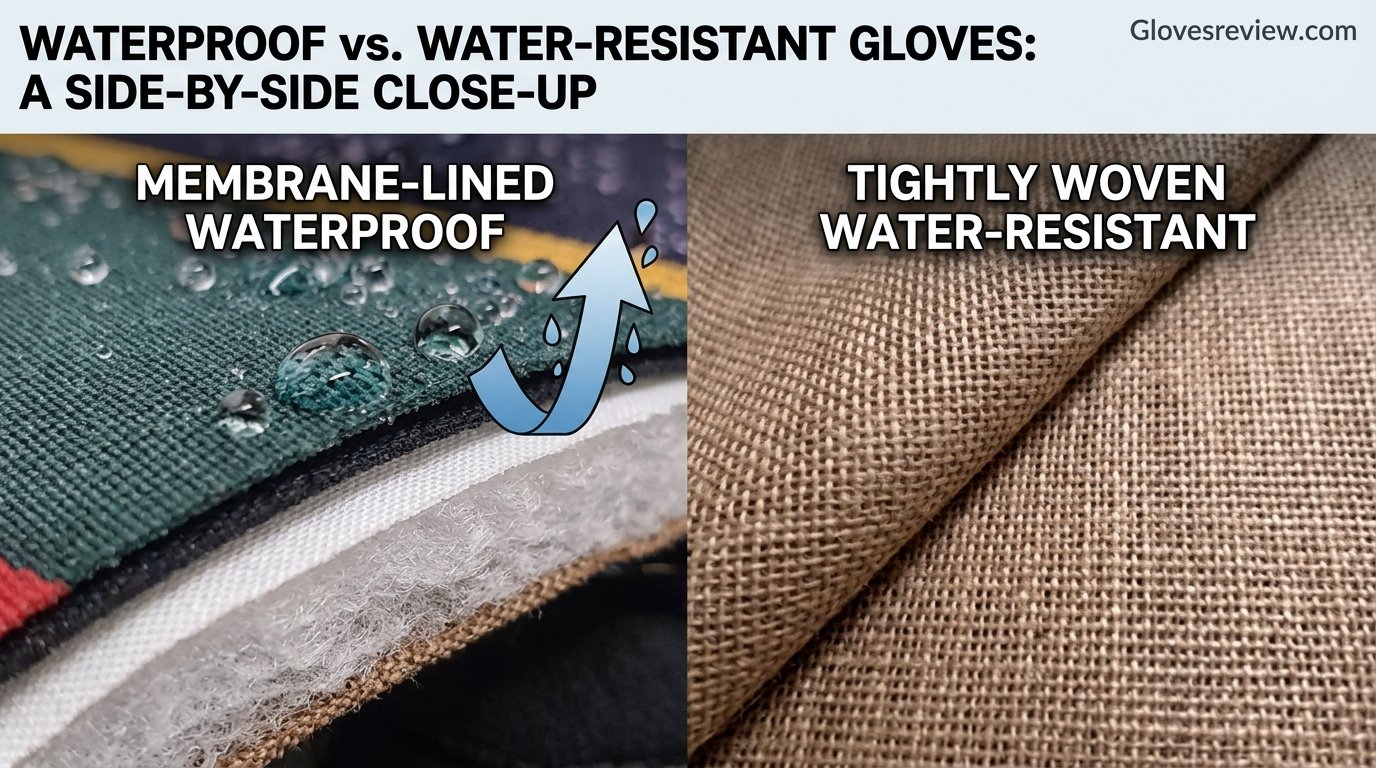
Short answer: waterproof gloves use a sealed barrier (a membrane or a fully coated shell with taped seams) that keeps liquid water out even under pressure and prolonged exposure. Water-resistant gloves use tightly woven fabric or a repellent finish that sheds light moisture for a limited time. Waterproof wins in sustained wet conditions; water-resistant wins for comfort, breathability and dexterity in drier ones.
1. What “Waterproof” and “Water-Resistant” Actually Mean
Start with the plain-language definitions, because everything else builds on them. A waterproof glove is designed so that liquid water cannot pass through the shell, the lining boundary or the seams under normal use. That includes pressure from gripping a wet shovel, kneeling in slush or plunging a hand into a puddle. The key idea is a continuous barrier with no easy path for water to enter.
A water-resistant glove, by contrast, slows water down but does not stop it forever. The fabric might be woven tightly enough that droplets sit on the surface for a while, or it might be treated with a durable water repellent finish that makes liquid bead up and roll away. Under a light drizzle or a brief encounter with wet snow, that is often plenty. Under steady rain, sustained contact or any kind of pressure, the resistance fades and moisture works its way through.
Think of it like two types of jackets. A rain shell with taped seams is waterproof: you can stand in a downpour and stay dry underneath. A tightly woven softshell with a repellent finish is water-resistant: it handles a passing shower, then slowly wets out if the weather keeps going. Gloves follow the same logic, only the stakes are higher because your hands are small, constantly moving and always touching wet things.
Why the terms get blurred
There is no single legal standard in many markets that forces a brand to use “waterproof” only for sealed products. Some manufacturers label a glove waterproof because the palm is coated, even if the back of the hand and the cuff are just fabric. Others say “water repellent” or “weatherproof” or “all-weather,” which are softer, vaguer terms. This marketing fuzz is exactly why understanding construction matters more than trusting a single word on a tag. If you want a deeper look at products that genuinely earn the label, our roundup of the best waterproof winter gloves sorts the real performers from the pretenders.
2. Waterproof vs Water-Resistant: Side-by-Side Comparison
Before we dig into each category, here is the big picture in one place. Use this table as a quick reference, then read the later sections for the reasoning behind each row.
| Feature | Waterproof Gloves | Water-Resistant Gloves |
|---|---|---|
| Protection in steady rain | Excellent, stays dry for hours | Limited, wets through over time |
| Protection in light drizzle or brief snow | Excellent | Good |
| Submersion or pressure contact | Handles it if seams are sealed | Not designed for it |
| Breathability | Moderate (depends on membrane) | Generally higher |
| Dexterity | Often reduced by layers | Usually better |
| Bulk and weight | Heavier | Lighter |
| Typical price | Mid to high | Low to mid |
| Lifespan of protection | Long if membrane stays intact | Fades as the finish wears |
| Best for | Snow work, wet jobs, heavy rain, long exposure | Commuting, light hiking, cool dry days, driving |
The table hints at the central trade-off. Keeping water out completely requires adding barriers, and barriers add bulk, reduce airflow and cost more. Letting a little moisture be a possibility keeps the glove light, flexible and comfortable. Neither approach is simply better. The right answer depends on how long you will be exposed, how wet the conditions really are and how much finger sensitivity your task demands.
3. How Waterproof Gloves Are Built
A truly waterproof glove is a small piece of engineering. Several layers cooperate, and the weak point of any one of them can undo the rest. Understanding the layers helps you spot quality quickly, even when the product description is thin.
The membrane
The heart of most waterproof gloves is a thin membrane sandwiched between the outer shell and the inner lining. The membrane contains microscopic pores that are far too small for liquid water droplets to pass through, yet large enough for individual water vapor molecules from your sweat to escape. Brands use different names for their membranes, and some are proprietary, but the principle is the same. When the membrane is intact and properly bonded, it is the reason a glove can stay dry even when the outside fabric is soaked.
The insert design
Many waterproof gloves use a separate insert, essentially a waterproof liner shaped like a glove inside the glove. This design is effective but has a known quirk: when you pull your hand out quickly, the insert can sometimes get dragged along with it and bunch up, making it awkward to get back on. Better designs bond or anchor the membrane to the lining so it stays put. If you take gloves on and off often, check reviews for comments about this.
Coated and dipped shells
Some waterproof gloves skip the membrane and rely on a fully coated or dipped shell, usually made of rubber, latex or a polymer like polyurethane or PVC. These are common in work and fishing gloves. They are completely waterproof across the coated area and can be very tough, but they trap heat and sweat since nothing lets vapor out. They suit short, wet, messy tasks better than long active sessions.
Seam sealing and cuffs
Water finds the easiest path. On a poorly made glove, that path is the stitching. Needle holes along seams are tiny tunnels, and without tape or welding over them they let water wick inward. Look for taped or welded seams, especially around the thumb and finger joins. The cuff matters just as much. A long gauntlet cuff that cinches over your jacket sleeve keeps snow from falling in from above, which is the most common way “waterproof” gloves end up wet inside. A glove can have a perfect membrane and still fail because snow slid down the wrist.
Pros of Waterproof Gloves
- Keep hands dry through long exposure
- Handle wet snow, slush and rain without wetting out
- Protect insulation, which preserves warmth
- Often include reinforced palms and grippy overlays
- Perform consistently over many wet days
Cons of Waterproof Gloves
- Heavier and bulkier than lighter options
- Can feel clammy if the membrane is mediocre
- Higher price for quality construction
- Reduced fingertip feel
- Insert designs may bunch when removed
If you are shoveling a driveway, clearing sidewalks or working in sleet, this sealed construction is what you are paying for. Our guide to the best gloves for snow shoveling shows how those features translate into real-world choices.
4. How Water-Resistant Gloves Work
Water-resistant gloves take a lighter, simpler route. Rather than building a sealed barrier, they use materials and finishes that discourage water from soaking in. Because there is no membrane to maintain, they tend to be more flexible and more comfortable, but they offer a smaller margin of error when conditions turn wet.
Tight weaves
Fabrics like tightly woven nylon or polyester leave very little room between threads, so water droplets cannot easily slip through. Softshell materials often take this approach. The weave alone slows moisture, but a prolonged soak will eventually saturate it, since fibers themselves can absorb water or let it creep through under pressure.
Durable water repellent finishes
Many water-resistant gloves are treated with a durable water repellent finish, usually shortened to DWR. This is a chemical treatment applied to the outer fabric that lowers its surface energy so water forms beads instead of spreading into a wet patch. When the finish is fresh, rain visibly rolls off. Over time, dirt, abrasion, washing and body oils break it down, and the fabric begins to “wet out,” meaning the surface darkens and clings to moisture. Wetting out does not instantly mean the glove leaks, but the protective margin is gone.
Leather and treated leather
Leather gloves sit in an interesting middle zone. Untreated leather soaks up water, stiffens as it dries and can crack. Leather that has been waxed, oiled or chemically treated resists moisture considerably better and ages gracefully. It still is not waterproof, but it offers excellent durability and a natural feel that many people prefer for work and casual wear.
Where the resistance runs out
The honest limit of a water-resistant glove is time and pressure. Standing in a light mist for twenty minutes is fine. Gripping wet snow, pressing against a soaked surface or staying out in an all-day rain pushes water through the weave. The hand then gets wet from the outside in, and wet insulation can chill you quickly because water conducts heat away from your skin far faster than air does.
Pros of Water-Resistant Gloves
- Lightweight and flexible
- Better breathability for active use
- Great dexterity for tasks and touchscreens
- Typically more affordable
- Easy to wear in changing weather
Cons of Water-Resistant Gloves
- Protection fades with wear and washing
- Soak through in steady rain or wet snow
- Wet insulation loses warmth
- Less reliable under pressure or contact
- Finish needs periodic refreshing
5. Breathability and Sweat: The Hidden Trade-Off
Most people shop for glove protection from the outside world and forget that the inside of a glove is a wet environment too. Your hands have a high density of sweat glands, and during activity they can produce a surprising amount of moisture. If that moisture has nowhere to go, the inside of the glove gets damp, and damp hands feel cold even when the temperature is mild.
Why waterproof can still leave you wet
A waterproof barrier works in both directions. It stops rain from coming in, but it can also trap sweat from going out. A quality membrane is designed to pass vapor, yet it can only move so much, and its performance depends on a temperature and humidity difference between the inside and outside. On a cold, dry day the vapor moves outward well. On a warm, humid day or during intense work, the membrane can fall behind and the lining slowly dampens. Fully coated rubber gloves with no vapor pathway at all feel clammy within minutes.
Why water-resistant fabrics feel more comfortable
Because tightly woven or lightly treated fabrics are not sealed, vapor escapes more freely. For high-output activities like brisk walking, cycling, running or ski touring, that breathability is a real comfort advantage. Your hands stay drier from the inside, which often matters more than keeping a light drizzle out.
Practical ways to manage moisture
- Layer smartly: a thin moisture-wicking liner glove pulls sweat off your skin and keeps the outer glove cleaner and warmer.
- Vent when you can: loosen cuffs or pull gloves off briefly during breaks so vapor can escape.
- Carry a spare pair: a dry swap on long days is the most reliable fix for damp hands.
- Choose wool or synthetic linings: these handle moisture better than cotton, which holds it against the skin.
If you regularly end up with sweaty, cold hands, our article on how to keep hands warm in extreme cold covers layering strategies in more depth.
6. Warmth and Insulation: Why Dry Hands Stay Warmer
Warmth and waterproofing are separate features that depend heavily on each other. Insulation works by trapping air. When insulation gets wet, the trapped air is replaced by water, and water transfers heat roughly twenty-five times faster than still air. That is why a thickly insulated glove that has soaked through can feel colder than a thin dry one.
Insulation types and water
Synthetic insulation like polyester fill keeps much of its warmth when damp, which makes it the standard choice for wet-weather gloves. Down insulation is warm and compressible but loses loft badly when wet unless specially treated. Fleece dries quickly and feels cozy, though it offers little wind or water protection by itself. If you are weighing common insulation choices, our comparison of Thinsulate vs fleece gloves walks through which one handles moisture and cold best.
Waterproofing as insurance for insulation
In a waterproof glove, the barrier protects the insulation from the outside, so warmth remains consistent as the shell gets wet. In a water-resistant glove, you are betting that the weather will not outlast the finish. On cold, dry days that bet pays off. On wet, near-freezing days it often does not, because slush and wet snow are especially good at soaking through fabric while temperatures stay too mild for the moisture to freeze and stay on the surface.
Wind matters too
Wind strips away the thin layer of warm air near your skin. Many waterproof membranes are also windproof, which adds a significant warmth boost. Water-resistant softshells vary: a tight weave blocks a good amount of wind, while a loosely knit glove lets it through. If you will be exposed to wind, factor that in alongside moisture.
| Condition | Waterproof Glove | Water-Resistant Glove |
|---|---|---|
| Cold and dry | Warm, can be more than needed | Warm and comfortable |
| Cold with light flurries | Warm and dry | Usually fine |
| Near freezing, wet snow or slush | Stays warm and dry | Often soaks through, loses warmth |
| Steady cold rain | Stays dry if cuffs are sealed | Wets out, hands chill fast |
| Windy and cold | Usually good if membrane is windproof | Depends on weave tightness |
7. Dexterity, Fit and Feel
Gloves exist to be worn while doing things. If you cannot pick up a coin, thread a zipper or hold a tool, the best waterproofing in the world will not save the day, because you will end up taking the gloves off and exposing your hands anyway. Dexterity is not a luxury feature; it is part of safety.
The cost of layers
Every layer between your skin and the world reduces feel. A waterproof glove can contain a shell, a membrane, insulation and a liner, and each one adds thickness. Fingertip sensitivity drops, and fine tasks like using a phone, handling keys or tying a knot can become frustrating. Water-resistant gloves, with fewer layers, generally keep more of that touch.
Pre-curved fingers and articulated design
Good glove makers reduce the penalty with ergonomic patterns. Pre-curved fingers match the natural resting shape of your hand so you are not fighting stiff material every time you grip. Articulated knuckles and gusseted fingers add range of motion. A well-designed waterproof glove can feel far more nimble than a poorly patterned water-resistant one, so look at construction rather than assuming the category decides everything.
Fit is non-negotiable
A glove that is too tight compresses insulation and restricts circulation, which makes your hands colder. A glove that is too loose creates air gaps, reduces grip and lets cold air circulate. Waterproof gloves with inserts are especially sensitive to fit, since a mismatched insert can bunch at the fingertips. Measuring correctly saves a lot of returns, and our guide on how to measure hand size for gloves makes sizing simple.
Touchscreen compatibility
Many modern gloves of both types include conductive fingertips for phone use. Water-resistant gloves often do this more successfully because thinner fabric transmits touch better. If you rely on your phone outdoors, check that the conductive patches cover both thumb and index finger at least.
8. Durability and Lifespan
A glove is only a good value if it keeps doing its job. Waterproof and water-resistant gloves age differently, and knowing how helps you budget realistically and care for your pair.
How waterproof gloves wear out
Membranes are tough but not indestructible. The common failure points are punctures from sharp objects, abrasion on the palm, and delamination, where the membrane separates from its backing. Repeated wringing, tight stuffing into pockets and high heat from dryers or radiators speed this up. Seams can also let go over time, especially on gloves used for heavy work. A well-made pair that is treated gently can last many seasons, though the protection ends abruptly when the barrier is compromised rather than fading gradually.
How water-resistant gloves wear out
The wearing-out process is slower and more visible. The repellent finish gradually weakens, and you notice water no longer beads. The good news is that this is easy to renew. The bad news is that you must remember to do it. Fabric itself may outlast the finish by years, so refreshing the treatment often brings an older pair back to usable form.
Materials that last
- Full-grain leather palms: excellent abrasion resistance when conditioned.
- Reinforced synthetic overlays: protect high-wear areas like the fingertips and thumb crotch.
- Double-stitched, taped seams: hold up under repeated flexing and moisture.
- Quality zippers or hook-and-loop closures: small parts fail first on cheaper pairs.
Cost per season
A cheap pair that fails halfway through the season costs more in the long run than a solid pair that lasts several. For hard daily use, spending more on genuine waterproof construction usually pays off. For occasional or light-duty wear, a modest water-resistant pair is often the smarter buy. If your use is heavy and work-related, take a look at our picks for the best winter work gloves.
9. Best Choice by Activity
The right answer rarely comes from the glove alone. It comes from matching the glove to what you are about to do. Here is how the two categories line up with common situations.
Snow shoveling and yard work
You are repeatedly gripping wet, heavy snow and pressing it against your palms. Water-resistant fabric will soak through quickly here. Waterproof gloves with grippy palms and a long cuff are the right call.
Skiing and snowboarding
Falls, snow contact and chairlift waits make waterproof gloves or mittens the standard. Breathability still matters on active days, so choose a model with a good membrane and consider carrying a spare liner.
Daily commuting and driving
For most commutes, water-resistant gloves are plenty. You are out in the weather for short stretches, and the dexterity for driving, keys and phones is more valuable than bulletproof waterproofing. Pack waterproof gloves only if your forecast regularly includes steady rain or slush.
Hiking and trail running
Active pursuits create heat, so breathability becomes a priority. Water-resistant, lightweight gloves usually work best, and a packable waterproof shell glove can come out in a real downpour.
Cold-weather work
Construction, landscaping, delivery and similar jobs often mix cold, wet surfaces and tools. Waterproof work gloves with insulation and reinforced palms protect against both moisture and abrasion. When fine motor control is crucial, look for thinner waterproof designs or pair a water-resistant glove with a dry spare.
Hunting, fishing and outdoor sports
Wet hands and cold air are constant companions on the water or in the field. Waterproof gloves keep you functional, while quiet, flexible fabrics help with tasks like handling gear. A fully waterproof coated glove suits wet cleaning jobs, though it will feel warm and sweaty for long wear.
Gardening and light outdoor tasks
For cool-weather gardening, water-resistant gloves are fine for dry soil and light dew. For wet clay, irrigation and muddy work, a waterproof option saves you from cold, soggy fingers.
| Activity | Recommended Type | Why |
|---|---|---|
| Snow shoveling | Waterproof | Constant wet contact and pressure |
| Skiing / snowboarding | Waterproof | Falls, lift lines, deep snow |
| Commuting | Water-resistant | Short exposure, better dexterity |
| Hiking / running | Water-resistant (waterproof spare) | High output needs breathability |
| Winter job sites | Waterproof | Wet surfaces plus tool grip |
| Fishing / hunting | Waterproof | Wet hands and cold air |
| Gardening | Either, based on soil | Dry soil vs mud and irrigation |
10. Reading Labels and Marketing Claims Without Getting Fooled
Gloves are sold with a confusing mix of words, icons and ratings. Learning to decode them takes the guesswork out of buying.
Common terms and what they usually mean
| Label Term | Typical Meaning | Trust Level |
|---|---|---|
| Waterproof | Intended to block liquid water, often with membrane or coating | High if seams are taped and construction is described |
| Water-resistant | Sheds light moisture for a limited time | Moderate, depends on use |
| Water-repellent / DWR | Surface finish that beads water | Fades with wear |
| Weatherproof / all-weather | Marketing blend, loosely defined | Low, verify the details |
| Windproof | Blocks air movement | Check whether it also blocks water |
| Breathable | Allows some vapor to escape | Varies widely |
What to check beyond the headline word
- Where is the waterproofing? A coated palm with a fabric back is only partly waterproof.
- Are the seams taped or sealed? If the description says nothing, be skeptical.
- What is the cuff style? A gauntlet or cinch cuff keeps out snow from above.
- Is the membrane bonded or a loose insert? Bonded designs are easier to use.
- Do real reviews mention hands getting wet? Long-term user reports tell the truth better than the product title.
Beware of the single-word shortcut
A product title packed with every buzzword is a red flag if the details never explain the actual build. Reliable brands describe the layers: the shell fabric, the membrane type, the insulation weight and the seam treatment. If you only see adjectives, dig for specifics before you buy.
Tip: treat “waterproof” as a claim to verify and “water-resistant” as an honest description of limited protection. Honest labeling is a good sign in itself.
11. Care, Drying and Re-Proofing
Good care extends the life of both types and protects your investment. A few small habits make a big difference, and most of them take only minutes.
Dry them properly after every wet day
Never leave wet gloves balled up in a bag or jacket pocket overnight. Moisture left inside breeds odor and breaks down linings. Turn them so the cuffs open, and let them air dry at room temperature away from direct heat. Radiators, hairdryers and dryers can damage membranes, glue and leather. If you are in a hurry or have soaked pairs, our walkthrough on how to dry wet gloves covers quick, safe methods.
Clean gently
Dirt and body oils clog fabric and reduce both breathability and water repellency. Wash according to the care label, typically on a gentle cycle with mild detergent and no fabric softener, which can coat fibers and interfere with performance. For specifics, see our step-by-step on how to wash winter gloves.
Refresh the repellent finish
When water stops beading on a water-resistant glove, it is time to renew the finish. Wash the gloves clean, then apply a spray-on or wash-in repellent product suited to the fabric, following the directions. Many finishes are reactivated with gentle heat, but only use heat if the label allows it. Waterproof gloves benefit from this too, since a fresh outer finish keeps the shell from soaking and helps the membrane breathe.
Treat leather
Leather needs conditioning and wax or specialized proofing products to resist moisture. Apply sparingly, let the product absorb and buff off any excess. Overtreating can make leather stiff and greasy. If you want a deeper walkthrough of DIY methods, read how to waterproof gloves yourself.
Storage
Store gloves completely dry, flat or loosely open, in a cool place. Avoid compressing them under heavy items for months. A little care in the off-season means they come out ready for the first cold snap.
12. How to Choose Your Pair: A Simple Decision Framework
With all the details covered, let us turn them into a clear decision process. Work through these questions in order, and the right type almost chooses itself.
Question 1: How long will you be exposed?
If you will be outside for more than about thirty to forty-five minutes in wet conditions, lean waterproof. For short trips between car and building, water-resistant is typically sufficient.
Question 2: How wet is wet?
Dry cold, light flurries and fine mist point to water-resistant. Slush, steady rain, wet snow and contact with wet objects point to waterproof.
Question 3: How hard will your hands work?
High effort generates heat and sweat, so breathability moves up the priority list. Low effort, like standing at a bus stop or watching an outdoor game, means insulation and waterproofing matter more than airflow.
Question 4: How much dexterity do you need?
If you handle small items or touchscreens all day, prefer thinner, water-resistant gloves, or look for slim waterproof models designed with articulated fingers.
Question 5: What is your budget and how often will you wear them?
Daily wear in wet climates justifies investing in quality waterproof construction. Occasional wear in mild weather does not.
The two-pair strategy
Many experienced outdoor people do not choose one or the other. They own both. A lightweight water-resistant pair handles most of the season, and a waterproof pair waits for storms, shoveling days and serious cold. This approach gives you comfort most of the time and protection when it counts, and it often costs less than buying one expensive do-everything glove that compromises on both ends.
Quick buyer checklist
- Confirm where the waterproofing sits: whole glove or palm only.
- Look for taped or sealed seams on waterproof models.
- Choose synthetic insulation for damp climates.
- Pick a cuff that works with your jacket sleeves.
- Measure your hand and check the brand’s size chart.
- Add a thin liner for sweat management and extra warmth.
- Read recent reviews that mention long-term wet performance.
Conclusion: Match the Glove to the Weather, Not the Word
Waterproof and water-resistant are not marketing synonyms. They describe two genuinely different approaches to dealing with moisture. Waterproof gloves build a barrier and give you dependable dryness through long, wet, demanding conditions, at the cost of some bulk, breathability and money. Water-resistant gloves stay light, flexible and comfortable and handle everyday weather well, but they run out of protection when rain, slush or sustained contact enters the picture.
The smartest move is to be honest about your real conditions. If your winters are cold and dry with the occasional flurry, water-resistant gloves will treat you well. If you shovel, work outdoors, ski or live somewhere that loves slush, invest in a properly sealed waterproof pair. And if you want the best of both, own one of each and reach for the right one each morning. Keep them clean, dry them gently, refresh their finishes and they will keep your hands comfortable season after season.
Frequently Asked Questions
Is waterproof better than water-resistant for gloves?
Neither is better in every situation. Waterproof is better for long exposure to rain, slush or wet snow, while water-resistant is better for light weather, breathability and dexterity. Your conditions and activity decide the winner.
How long do water-resistant gloves stay dry in rain?
It varies with fabric, finish and rain intensity. In a light drizzle, a fresh finish may last a good while. In steady or heavy rain, expect the fabric to start wetting out relatively quickly, often well within an hour.
Can a water-resistant glove be made waterproof?
You can improve its performance with a waterproofing spray or wax, but you cannot turn it into a true sealed waterproof glove. Treatments boost repellency, not the sealed construction that stops water under pressure. Our guide to how to waterproof gloves explains what works.
Why do my waterproof gloves still feel wet inside?
The cause is usually sweat or snow entering from the cuff rather than a leak through the shell. Waterproof gloves can trap perspiration, and loose cuffs let snow slide in. A wicking liner and a secure cuff often solve it, though a punctured membrane or failed seam is possible too.
Are waterproof gloves breathable?
Many are, thanks to membranes that pass water vapor, but breathability varies widely. Coated rubber gloves are not breathable at all. For active use, look for a membrane glove and manage moisture with a thin liner.
Do waterproof gloves keep your hands warmer?
Indirectly, yes. They protect insulation from getting wet, and wet insulation loses warmth fast. The waterproof barrier itself is not a heat source, so you still need proper insulation for cold temperatures.
What does DWR mean on gloves?
DWR stands for durable water repellent, a surface finish that makes water bead and roll off the fabric. It is not a sealed barrier, and it wears down with use, so it can be refreshed with a spray or wash-in product.
Which type is better for snow shoveling?
Waterproof gloves are the better choice because you grip wet snow and press it against the palms repeatedly. Look for a grippy palm and a cuff that keeps snow from falling in. See our list of the best gloves for snow shoveling for ideas.
Is “weatherproof” the same as waterproof?
Not necessarily. Weatherproof is a loosely defined marketing term that may mean protection from wind, light moisture or both. Check the product details for membrane, seam sealing and coverage before assuming it is fully waterproof.
How often should I re-treat my gloves?
Re-treat when water stops beading on the surface or after a few washes. For heavily used pairs, that might be once or twice a season. Clean gloves first, since dirt prevents treatments from bonding properly.
Can I wash waterproof gloves?
Usually yes, if the care label allows it. Use a gentle cycle, mild detergent and no fabric softener, then air dry away from direct heat. Our article on how to wash winter gloves gives detailed steps.
Should I buy waterproof gloves or mittens for extreme cold?
Mittens are warmer because fingers share heat, and waterproof mittens combine that warmth with dryness. Gloves offer better dexterity. Many people carry waterproof mittens for the coldest, wettest conditions and use gloves for lighter days.
You May Also Like
Tough, insulated picks for job sites, cold mornings and demanding tasks.
Get the fit right the first time with simple measuring steps.
Layering tips and gear choices for the harshest winter days.