
Winter Gear Guides · Hands & Dexterity
Best Ski Gloves : 12 Standout Pairs, Ranked for Warmth, Grip and Value
Cold fingers end ski days early. We sorted through the crowded Amazon glove aisle and pulled out the twelve pairs worth owning — from leather-lined alpine workhorses to bargain beaters that punch well above their price — so you can pick the right glove for your mountain, your budget and your hands.


Why your gloves decide how long you last on the hill
Skis get the glory, boots get the blame, but gloves quietly decide whether you are still smiling at three o’clock. The right pair keeps wind and snow out, dumps moisture when you are working hard on the skin track, and lets you feel a buckle, a zipper pull or a phone screen without yanking them off in a blizzard.
The tricky part is that Amazon is full of gloves that look nearly identical in the photos and behave completely differently once the temperature drops. That is exactly why we grouped these twelve pairs by what they are genuinely good at rather than pretending one glove wins for every rider.
The Short Version
Ski gloves are a system, not a single purchase
Ask ten skiers what ruins a day fastest and at least half of them will say “cold hands.” It is a strangely universal complaint, and it has surprisingly little to do with toughness. It has to do with fit, moisture and the way a glove manages the micro-climate around your fingers.
Think about what your hands actually do out there. They grip a cold metal edge while you scrape ice off your skis. They get stuffed into a wet glove after you buckle a boot with bare fingers. They swing a pole, haul a backpack, fish a pass out of a pocket, and occasionally spend twenty minutes helping someone dig out a stuck snowboard. Every one of those moments either adds heat, steals heat, or adds moisture that steals heat later.
That is why the “warmest glove” is rarely the right answer on its own. A heavily insulated gauntlet that roasts your hands on a spring groomer will leave you soaked from sweat by lunchtime, and a soaked glove is a cold glove no matter what the insulation claims. The better question is: what kind of day do you ski?
With that in mind, this guide gives you one glove per brand so you are comparing genuinely different philosophies rather than three near-identical variations from the same manufacturer. You will find premium leather mountain gloves built for guides and patrol, resort-ready all-rounders, budget pairs that genuinely hold up to a season of abuse, and lightweight options for high-output days. Every pair here is available on Amazon, and every product link goes straight to its listing.
We also spent real space on the parts most buying guides skip: how waterproofing actually works, how to size a glove so your fingers are not swimming, how to dry a pair overnight without wrecking the membrane, and when a cheap liner solves more problems than an expensive shell. If you already know exactly what you want, jump to the comparison table below and start there.
How this list is built: one glove per brand, ranked by category rather than by a single meaningless score. “Best overall” means best balance of build quality, weather protection and long-term usefulness — not simply the most expensive glove on the page.
At a Glance
Quick Comparison: Our Top Picks
Here is the whole field in one place. Read the “Best For” label first — it tells you which glove category you are in — then scan the highlights and jump to the full review further down the page.
Swipe to see more →
| # | Image | Product | Key Highlights | Verdict | Where to Buy |
|---|---|---|---|---|---|
| 1 | |
Top PickHestra Army Leather Heli Ski GloveBest Overall |
|
The glove you buy once and keep for years. Worth the investment. | Check Price on Amazon |
| 2 | |
Black Diamond Guide GlovesBest for Extreme Cold |
|
Built for people who work outside all day, not just ride chairlifts. | Check Price on Amazon |
| 3 |  |
Burton Gore-Tex Insulated GlovesBest for Snowboarders |
|
Snowboard-friendly feel with proven waterproofing in the name. | Check Price on Amazon |
| 4 |  |
Dakine Titan Gore-Tex Snow GlovesBest All-Rounder |
|
Does everything well, nothing badly. The safe first choice. | Check Price on Amazon |
| 5 |  |
MCTi Waterproof Men’s Ski GlovesBest Budget Performance |
|
The value sweet spot: real ski-glove features without the premium tag. | Check Price on Amazon |
| 6 | 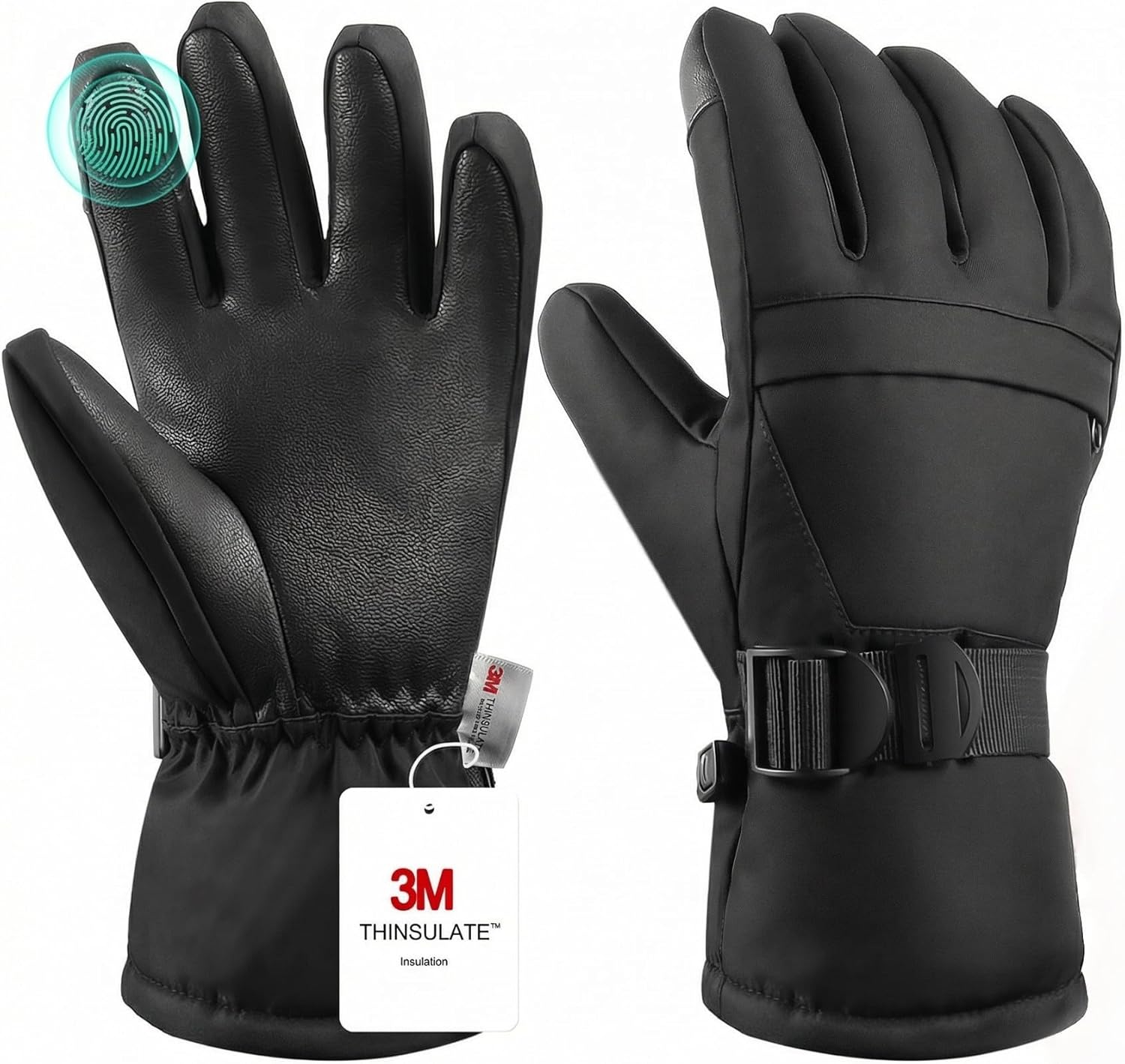 |
Pnosnesy Ski GlovesBest Value Pick |
|
A lot of glove for the money, especially for casual trip skiers. | Check Price on Amazon |
| 7 |  |
ihuan Winter Waterproof Ski GlovesBest Lightweight Option |
|
Great when you want weather protection without bulky mitt-feel. | Check Price on Amazon |
| 8 |  |
rivmount Winter GlovesBest Everyday Winter |
|
The pair that lives in your car door pocket all winter. | Check Price on Amazon |
| 9 |  |
Tough Outdoors Waterproof GlovesBest for Active Days |
|
Ideal for resort laps, snow play and outdoor chores alike. | Check Price on Amazon |
| 10 |  |
anqier Winter GlovesBest Entry-Level Price |
|
Smart as a backup pair or a first glove for occasional skiers. | Check Price on Amazon |
| 11 |  |
LEKI Monterra Prime Ski GlovesBest for Pole Grip |
|
For skiers who want to feel their poles, not just hold them. | Check Price on Amazon |
| 12 |  |
Swany X-Cell Ski GlovesBest for Warmth |
|
A comfort-first choice for cold lift lines and long, slow days. | Check Price on Amazon |
Section 01
How We Chose These Gloves
Amazon glove listings have a pattern: dramatic photography, a temperature claim that usually deserves a raised eyebrow, and a wall of near-identical bullet points. Sorting useful information from marketing noise is most of the work, so before we talk about any specific glove it is worth explaining what actually mattered in our selection.
First, we looked at construction and materials. Where a glove uses leather in the palm, how the seams sit, whether there is reinforcement in the high-wear zones between thumb and forefinger, and how the cuff seals against snow. These are the details that decide whether a glove survives one season or five.
Second, we considered weather protection philosophy. Some gloves rely on a waterproof-breathable membrane sandwiched inside the shell. Others lean on dense woven fabrics, coatings, or leather that gets treated over time. Neither approach is automatically better; they behave differently in wet snow, dry powder and high-output touring, and we say so in each review.
Third, fit and dexterity. A glove that feels perfect standing in a shop can feel clumsy the moment you need to thread a boot buckle or pinch a zipper. We favour gloves with a natural hand curve, a reliable wrist closure, and enough room in the fingers to move without a swimming-pool of dead air that has to be heated by your own body.
Fourth, real-world versatility. Nobody skis in a vacuum. You drive to the mountain, carry gear, load a car, help a kid with bindings, and stand around in a queue. Gloves that only perform on a steep pitch lose points to gloves that work across the whole day.
Finally, we applied a hard rule: one glove per brand. That keeps the list honest and makes each entry a genuinely different option. It also means some excellent gloves from the same manufacturer are not here simply because a sibling product earned the slot. If you want to dig deeper into the rest of the category, our best waterproof winter gloves roundup covers the wider waterproof field beyond ski-specific models.
A note on numbers: we deliberately avoid quoting temperature ratings, insulation weights and review counts here. Those figures vary by testing method, listing revision and hand physiology, and repeating them without context does more harm than good. What we describe instead is how each glove is built and who it suits.
Section 02
Premium Mountain Gloves: Built for Long Days and Hard Weather
If you ski a lot — or you work on the mountain — the premium tier stops being a luxury and starts being an economy. Two gloves in this group have earned their reputations in exactly those conditions, and both take the same broad approach: a durable outer that can be maintained, a liner that manages moisture, and a cuff system that keeps snow where it belongs.
The trade-off is obvious and worth stating up front: these gloves cost more, they can feel stiff for the first few days, and they reward a little care. In exchange, they are the pairs most likely to still be in your gear bag years from now.
Hestra Army Leather Heli Ski Glove
The glove that shows up on guide lists for a reason: leather where it counts, a removable liner you can actually dry, and a cuff long enough to seal over a jacket sleeve.
There is a particular kind of gear that stops being a purchase and becomes a piece of equipment you trust. The Army Leather Heli Ski Glove belongs in that category. It is built around the idea that a ski glove should be serviceable — the liner comes out, the leather takes a beating and can be treated, and the whole thing is designed to be used hard rather than admired on a shelf.
What makes it feel different is the leather palm. It gives you a confident grip on poles, edges and gear without the vague, slippery sensation you get from smooth synthetic palms. It also breaks in. Out of the box it can feel firm; after a handful of days it starts to follow the shape of your hand, and that is when the glove turns into something you forget you are wearing.
Key Features
Leather palm construction
Grippy, abrasion-resistant and repairable. The area that decides how long a glove lasts, done properly.
Removable liner
Pull it out at the end of the day to dry separately — the single biggest upgrade over a bonded glove.
Long gauntlet cuff
Extends over jacket sleeves with a snow lock, which matters more than people expect in deep snow.
Secure hand retention
A wrist strap and retention arrangement that keeps the glove where you left it when you take it off.
Reinforced wear zones
Extra material where gloves normally fail first: between fingers and across the palm.
Proven mountain heritage
Long associated with professionals who need gloves to work every single day, not occasionally.
What We Like
- Outstanding long-term durability for the money
- Leather palm gives genuinely confident grip
- Removable liner makes drying and cleaning simple
- Excellent cuff seal against snow and spindrift
- Improves with use as the leather shapes to your hand
Keep in Mind
- Premium pricing that will not suit every budget
- Leather wants occasional conditioning to stay supple
- Can feel warm on mild spring days
- Short break-in period before peak comfort
Who It Is Best For
Skiers who spend a lot of days on snow and want one pair that will still be going strong later. It is the glove for backcountry days, storm cycles, and anyone who has already learned that buying cheap gloves twice a year is more expensive than buying one good pair once.
It is less compelling if you ski three days a season on groomed runs in mild weather, or if you want something that feels broken-in from the first lift. In that case, the all-rounders further down this page will feel friendlier immediately.
Black Diamond Guide Gloves
Named for the people who are outside long after the lifts close. Substantial, protective and reassuringly over-built for genuinely cold, windy conditions.
Some gloves are designed around how a glove should feel. The Guide glove is designed around what a glove has to survive. Everything about it reads as deliberate: a thick, protective build, a liner system you can separate from the shell, and a wide gauntlet that swallows a jacket cuff so snow cannot find its way in when you are reaching overhead or digging.
That makes it a glove of two speeds. On a cold, windy day at altitude it feels exactly right — you notice the protection immediately and you are grateful for it. On a warm spring afternoon it is a lot of glove, and you will want something lighter in the pack. That is not a flaw; it is the design brief, and knowing which days it belongs on your hands is the key to loving it.
Key Features
Cold-weather construction
Substantial layering and materials chosen for protection first, in line with its professional naming.
Removable insulated liner
Take it out to dry overnight, or swap it when conditions and output change.
Leather palm reinforcement
Durable contact surfaces that resist rope, edges and constant pole use.
Wide gauntlet cuff
Slides over sleeve cuffs and cinches down to lock out snow and wind.
Protective back of hand
Padding and structure where branches, ice and equipment tend to make contact.
Natural hand curve
Pre-shaped construction that reduces grip fatigue over a long day of holding poles.
What We Like
- Excellent protection in genuinely harsh conditions
- Liner system simplifies drying and layering
- Tough, abrasion-resistant contact surfaces
- Strong cuff seal against wind-driven snow
- Feels like equipment, not fashion
Keep in Mind
- More glove than most resort days require
- Bulkier than precision-fit riding gloves
- Premium pricing tier
- Warm-weather output can build moisture inside
Who It Is Best For
Instructors, patrol volunteers, backcountry skiers, snowmakers, parents who stand on frozen sidelines for hours, and anyone whose hands run cold in wind. If your worst-case day is a storm with a long walk in, this is the kind of glove that earns its keep.
If you mostly ski groomers in average temperatures and you value nimble fingers above all else, a lighter all-rounder will probably make you happier. For more on matching warmth to conditions, see our guide to how to keep hands warm in extreme cold.
Section 03
Resort & Snowboard All-Rounders: The Gloves Most People Should Buy
Here is the honest truth about the average ski day: most of it is not extreme. It is a mix of lift rides, groomed runs, a few minutes of standing around, a lot of handling gear, and the occasional powder lap. For that reality, an all-rounder with reliable waterproofing and moderate insulation beats an expedition glove almost every time.
Both gloves in this group carry GORE-TEX in the product name, which tells you a lot about their design intent: weather protection is the priority, with insulation and fit layered on top. That is a sensible formula for one-glove riders who need a single pair to handle everything from a cold January storm to a slushy afternoon.
Burton Gore-Tex Insulated Gloves
Rider-informed fit, proven waterproofing and a balanced warmth profile — a glove that feels at home on a board as much as on skis.
Burton has spent decades listening to people who spend their days strapping in, grabbing rails and sitting in cold snow while they wait for friends. That experience shows in the way these gloves fit. There is a natural curve to the hand shape, a cuff that closes cleanly, and a general sense that the glove was designed around movement rather than around a mannequin.
The headline feature is the GORE-TEX barrier. Waterproof-breathable membranes work by keeping liquid water out while letting water vapour escape, and that combination is what separates a glove you can wear all day from one that feels clammy by mid-morning. Pair that with insulation sized for resort conditions and you have a genuinely dependable one-quiver glove.
Key Features
GORE-TEX waterproof barrier
A recognised waterproof-breathable system that keeps snowmelt out while allowing moisture vapour to escape.
Insulated for resort warmth
Balanced insulation for lift-served days rather than expedition extremes.
Rider-tuned fit
Shaped for a natural grip and easy movement with straps, zippers and bindings.
Durable outer shell
Tough face fabrics that handle chairlift bars, car boots and constant abrasion.
Secure cuff closure
Adjustable seal that keeps snow out on deep days and cinches down in wind.
Board-friendly design language
Details and shape that suit strapping in, grabbing and repeated hand contact with snow.
What We Like
- Trusted waterproof-breathable membrane
- Comfortable, natural fit for everyday riding
- Warm enough for typical resort conditions
- Durable shell that resists wear and tear
- Works equally well for skiers and snowboarders
Keep in Mind
- Not aimed at expedition-level extremes
- Insulated design can feel warm on high-output days
- Priced above basic budget gloves
Who It Is Best For
Resort riders who want one glove that handles cold mornings, wet snow and the occasional storm day without thinking about it. It is an easy recommendation for snowboarders who value dexterity when strapping in and for skiers who simply want dependable waterproofing.
If you are chasing maximum warmth in extreme cold, look at the heavier options above. If you want to understand exactly what that membrane is doing for you, read our breakdown of waterproof vs water-resistant gloves.
Dakine Titan Gore-Tex Snow Gloves
The glove we hand to someone who says “I just want one pair that works”. Waterproof, warm, adjustable and refreshingly unfussy.
There is a category of gear that earns praise precisely because it disappears. You put it on, you stop thinking about it, and at the end of the day your hands are fine. The Titan sits squarely in that category. It combines a GORE-TEX weather barrier with straightforward insulation and a cuff arrangement that seals properly, then stops adding gimmicks.
What we appreciate most is the adaptability. The fit leaves sensible room, which means you can add a thin liner on a bitter morning or ski it bare on a milder one. That kind of flexibility turns a single glove into a small system, and it is the reason all-rounders keep winning for recreational skiers who only want to buy once.
Key Features
GORE-TEX weather protection
Waterproof-breathable construction designed to keep snowmelt out over a full day.
Balanced insulation
Warm enough for lift-served skiing without turning into an oven on active runs.
Adjustable cuff and gauntlet
Dial the seal tighter in storms or loosen it for airflow on warmer laps.
Liner-friendly fit
Room to add a thin liner for cold mornings without making the glove clumsy.
Durable contact surfaces
Reinforced grip areas that cope with edges, straps and everyday mountain handling.
Everyday usability
Easy to get on and off repeatedly, which matters more than most buying guides admit.
What We Like
- Genuinely versatile across conditions and seasons
- Reliable waterproofing with breathable comfort
- Adjustable fit adapts to layering choices
- Simple, durable design with no fragile extras
- Strong option for a single-pair purchase
Keep in Mind
- Not the most precise glove for fine dexterity work
- Insulation is balanced rather than maximum
- Popular sizes can sell out during peak season
Who It Is Best For
Skiers and riders who want a single dependable pair for resort trips, family holidays and the occasional storm day. It is also a strong gift choice because the design is forgiving across different hand shapes and use cases.
Dedicated backcountry skiers who prioritise breathability and packability, and competition-focused riders who want maximum feel, may want something leaner. For dialling in sizing before ordering, see how to measure hand size for gloves.
Swipe to see more →
| Product | Best For | Strengths | Best Suited To | Link |
|---|---|---|---|---|
| Burton Gore-Tex Insulated Gloves | Snowboarders & all-mountain riders | Waterproof barrier, rider-tuned fit, durable shell | Resort days, variable weather | Check Price |
| Dakine Titan Gore-Tex Snow Gloves | All-round one-glove buyers | Weather protection, adjustable fit, versatility | Holidays, family trips, mixed conditions | Check Price |
| Hestra Army Leather Heli Ski Glove | High-mileage skiers | Leather palm, removable liner, longevity | Frequent use, storm days, backcountry | Check Price |
| Black Diamond Guide Gloves | Extreme cold and wind | Protective build, liner system, cuff seal | Long days outside, professional use | Check Price |
Section 04
Performance Value Picks: Where Price Meets Real Capability
Budget gloves used to be a compromise you regretted on day two. That has genuinely changed. The current crop of value-focused ski gloves borrows heavily from premium design — adjustable cuffs, layered linings, reinforced palms, waterproof shells — and packages it at a price that makes sense for occasional skiers, growing kids and anyone who wants a spare pair in the car.
The two gloves below represent the best of that shift. Neither pretends to be a lifetime investment, and both deliver far more than their price suggests. The trick is knowing what to expect: you are trading away some long-term refinement, not basic capability.
MCTi Waterproof Men’s Ski Gloves
The value sweet spot. Real ski-glove construction and genuine weather protection without paying premium-tier money.
What separates these from generic winter gloves is the intent. Everything is arranged like a proper ski glove: a waterproof outer to handle snow and sleet, insulation built for sitting still on cold lifts, a wrist closure to stop the glove sliding around, and grip zones where your hands actually make contact with equipment.
For a lot of skiers, that is genuinely all you need. If you take a couple of trips a season, ski mostly groomed terrain, and want to spend your budget on lift tickets rather than handwear, these make an unusually sensible case for themselves. They are also a great “first real ski glove” for someone moving up from everyday winter gloves.
Key Features
Waterproof outer shell
Designed to keep snowmelt and slush from soaking through during normal resort use.
Thermal insulated lining
Layered warmth sized for cold lift rides and exposed queuing.
Adjustable wrist and cuff
Lets you seal out drafts and lock the glove in place for better control.
Reinforced grip zones
Extra material and texture where poles, edges and straps create wear.
Straightforward sizing
A conventional fit that is easy to order and forgiving across hand shapes.
Everyday winter utility
Equally useful for shovelling, commuting and outdoor work in wet snow.
What We Like
- Excellent capability-to-price ratio
- Proper waterproofing at an entry price
- Adjustable fit improves control and comfort
- Good warmth for typical resort conditions
- Doubles as a hard-working winter glove
Keep in Mind
- Less refinement than premium leather options
- Not aimed at extreme expedition conditions
- Expect a shorter overall lifespan with heavy use
Who It Is Best For
Value-conscious skiers, beginners building a kit, travellers who do not want to pack expensive gloves, and anyone who wants a capable pair without the anxiety of losing or damaging something costly.
Heavy-use professionals and daily mountain workers should still consider the premium tier. But for most recreational days, this is the class of glove where spending more starts to deliver diminishing returns.
Pnosnesy Ski Gloves
Warm, grippy and weather-resistant at a price that makes buying a spare pair entirely reasonable.
This is the glove we recommend to people who ski a week a year and refuse to overthink it. The spec sheet reads like a more expensive product: a waterproof, windproof shell, a warm thermal lining, a grip-enhanced palm and an adjustable closure. What you are really getting is a competent, well-rounded glove at an extremely approachable price.
There is real value in that. A glove you are not precious about gets worn, gets used, and often ends up being the one you actually reach for. And because the price is gentle, pairing them with a thin liner or keeping a second pair as a car backup costs very little in the grand scheme of a ski holiday.
Key Features
Waterproof, windproof shell
Handles wet snow and cold wind, the two biggest threats to hand comfort.
Warm thermal lining
Soft interior that traps heat without feeling stiff or cardboard-like.
Anti-slip palm grip
Texture where it counts for poles, gear and everyday handling.
Secure adjustable closure
Keeps the glove anchored so it does not twist during activity.
Comfortable all-day wear
Flexible construction that does not fight your hand on longer days.
Easy-care materials
Simple to clean and quick to air out between trips.
What We Like
- Very strong value for the capability on offer
- Warm, soft lining that feels good immediately
- Useful grip for real mountain tasks
- Low price makes a backup pair practical
- Straightforward, fuss-free design
Keep in Mind
- Premium gloves will outlast it with heavy use
- Fewer refinements in cuff and liner design
- Best suited to recreational rather than professional use
Who It Is Best For
Holiday skiers, casual riders, families kitting out multiple pairs, and anyone who wants a solid glove for snow days, travel and resort trips without a big commitment. It is also a smart choice for a first pair while you figure out what you actually want from a glove.
If you plan to log dozens of days a season, the durability gap will show over time. Otherwise, this is one of the easiest value recommendations on the list.
Section 05
Lightweight & Everyday Winter Gloves: Less Bulk, More Use
Not every glove needs to be a fortress. For spring laps, high-output touring, travel days, snowball fights and the school run, a lighter glove with a lower profile is often the smarter tool. These three options trade maximum insulation for mobility and value, and they cover a lot of everyday winter ground.
They also solve a specific problem that heavier gloves cannot: dexterity. When you need to handle keys, straps, snacks and zippers repeatedly, a lighter glove with a closer fit wins every time. Pair one of these with a thin liner on colder days and you have an adaptable, low-cost system.
Swipe to see more →
| Product | Best For | Key Strengths | Trade-Off | Link |
|---|---|---|---|---|
| ihuan Winter Waterproof Ski Gloves | Lightweight weather protection | Waterproof shell, low bulk, packable | Less insulation for deep cold | Check Price |
| rivmount Winter Gloves | Everyday winter use | Comfort, flexible fit, everyday grip | Not a storm-day specialist | Check Price |
| anqier Winter Gloves | Entry-level and spares | Affordable, soft, lightweight | Minimal durability features | Check Price |
ihuan Winter Waterproof Ski Gloves
Weather protection without the mitt-like bulk — ideal for active days when you need your fingers to work.
The best glove for a high-output day is rarely the warmest one on the shelf. When you are skinning uphill, carrying gear, or moving between indoors and outdoors all day, what you want is a waterproof shell that blocks wind and snow without turning your hand into a sweat box. That is the design brief these gloves meet.
Because they are lighter and less bulky, they also pack down easily and take up almost no space in a day bag. That makes them a natural companion glove — the pair you wear while moving and swap out when you stop for a long break.
Key Features
Waterproof, windproof build
Blocks wet snow and wind without a heavy, stiff construction.
Lightweight insulation
Warmth scaled for activity rather than standing still for hours.
Low-bulk dexterity
Closer fit that makes zippers, straps and small items manageable.
Compact and packable
Stuffs into a jacket pocket or bag without a fight.
Flexible construction
Moves with the hand instead of resisting it during repeated grip work.
Practical everyday design
Works well beyond skiing: commuting, errands, travel and outdoor chores.
What We Like
- Excellent dexterity for a waterproof glove
- Light and easy to carry as a second pair
- Good wind and wet-snow protection
- Comfortable for active, high-output use
- Very approachable pricing
Keep in Mind
- Not intended for prolonged static cold
- Less insulation than resort-focused gloves
- Lighter materials have a shorter heavy-use lifespan
Who It Is Best For
Touring skiers, spring riders, travellers, dog walkers, and anyone who overheats quickly in heavily insulated gloves. They are also a smart choice for kids and teens who want to feel their gear rather than wrestle with thick padding.
If your priority is maximum warmth on a frozen chairlift, look higher up this list. If it is movement and versatility, these fit the brief nicely.
rivmount Winter Gloves
The glove that lives in your jacket pocket all winter and does a little bit of everything without complaint.
Not every winter glove needs a ski pedigree. Sometimes what you want is a soft, warm, flexible glove that works for driving, walking, shopping, clearing snow off a windscreen and the occasional casual snow day. These fill that role neatly, with a comfortable lining and a fit that stays natural across all those tasks.
They are also a genuinely useful travel glove. Airport queues, cold terminals, rental cars, wandering around a resort village in the evening — all of that is more comfortable with a glove you can pull on and off without a ritual.
Key Features
Warm, soft inner lining
Comfort-first interior that feels good from the first wear.
Flexible, non-bulky fit
Enough feel for driving, phone handling and everyday tasks.
Everyday grip surfaces
Helpful traction for steering wheels, bags and door handles.
Easy on, easy off
Simple cuff design for repeated use throughout the day.
Lightweight warmth
Comfortable indoors and out without constant removal.
Versatile styling
Works with ski kit as easily as with everyday winter clothing.
What We Like
- Comfortable from the first wear
- Excellent everyday versatility
- Good dexterity for driving and errands
- Affordable and easy to replace
- Great travel companion for winter trips
Keep in Mind
- Not designed for deep snow immersion
- Lighter build than dedicated ski gloves
- Limited protection in high-wind mountain conditions
Who It Is Best For
Anyone who wants one glove for all of winter’s small tasks, plus a comfortable off-mountain pair for ski trips. It is the glove for the parts of a winter day that happen before and after the skiing.
For actual snow-sport performance in wet, cold conditions, choose a waterproof ski glove from earlier in this guide and keep these as your second pair. If you are curious about how that layering works, our guide to whether glove liners work is worth a read.
anqier Winter Gloves
Simple, soft, warm and extremely affordable — a smart backup pair or a first glove for occasional winter use.
Sometimes the right answer is the inexpensive one. These gloves cover the basics: warmth, comfort, a light flexible feel and a price that makes buying for a family or a group trip realistic. They are not trying to compete with technical mountain gloves, and they are honest about it.
Where they shine is as a supporting player. Keep a pair in the car, in a suitcase, or in the bottom of a backpack. On the day your good gloves are soaked or lost, having these available turns a ruined afternoon into a minor inconvenience.
Key Features
Ultra-affordable coverage
Priced so that owning several pairs for different bags and vehicles makes sense.
Warm, comfortable lining
Soft interior that feels pleasant against the skin straight away.
Lightweight and flexible
Low bulk makes everyday tasks easy rather than clumsy.
Travel-friendly
Small, light and easy to pack without sacrificing hand coverage.
Simple closure design
Quick to put on and take off, useful for fast-changing conditions.
Great spare-pair logic
Perfect as a backup when your primary gloves are wet, drying or missing.
What We Like
- Extremely budget friendly
- Comfortable and lightweight
- Ideal as a backup or travel pair
- Easy to buy for families and groups
- Low commitment for occasional use
Keep in Mind
- Not built for heavy mountain conditions
- Basic feature set compared with ski-specific gloves
- Shorter lifespan under constant use
Who It Is Best For
Occasional winter users, travellers, families, festival-goers, and anyone assembling a sensible glove stash on a budget. They are also a reasonable first pair for children who outgrow gloves faster than they wear them out.
Serious skiers should treat these as a supplement rather than a main glove. Used that way, they are a genuinely practical buy.
Section 06
Trail-Ready Workhorses: Gloves That Handle More Than Skiing
A lot of winter gloves get bought for skiing and then spend their lives doing everything else: shovelling driveways, hauling firewood, scraping windscreens, walking dogs in sleet, and working outdoors when the weather refuses to cooperate. These two are built for that broader life while still being perfectly capable on snow.
Both sit in that useful middle ground — more protective and durable than an everyday glove, less specialised and less expensive than a premium mountain glove. If your winter is a mix of skiing and general outdoor endurance, this is the section to read closely.
Tough Outdoors Waterproof Gloves
Durable, weather-ready and built for movement — a hard-working glove for resort laps, snow play and outdoor chores alike.
The name tells you the intent, and the construction follows through. These gloves favour toughness and weather protection, with a shell that shrugs off wet snow and materials that cope with rope, shovels, branches and constant abrasion. That makes them unusually versatile for anyone whose winter involves more than chairlifts.
The grip story matters too. When a glove is genuinely grippy, you stop over-squeezing everything you hold, and that alone reduces hand fatigue over a long day. It is a small detail that pays off whether you are carrying skis or working outside for hours.
Key Features
Waterproof outer protection
Keeps wet snow out during active use and outdoor work.
Durable, hard-wearing fabric
Chosen to resist abrasion from tools, gear and rough surfaces.
Active-use grip
Confident handling for poles, shovels, ropes and everyday equipment.
Secure adjustable fit
Stays anchored during movement and blocks out drafts.
Balanced warmth
Insulated for cold days without becoming uncomfortable during activity.
Multi-purpose design
Equally at home on the mountain, in the yard or on a winter walk.
What We Like
- Tough construction that handles real work
- Reliable waterproofing in wet conditions
- Confident grip reduces hand fatigue
- Versatile beyond skiing
- Sensible, mid-range pricing
Keep in Mind
- Less refined fit than precision ski gloves
- Aimed at utility rather than fine dexterity
- Bulkier than lightweight options
Who It Is Best For
Active families, outdoor workers, resort skiers who also need a chore glove, and anyone who wants one pair to cover both snow sports and winter maintenance. If you spend as much time shovelling as you do skiing, this is the right category — and our guide to the best gloves for snow shoveling goes deeper on that exact use case.
Skiers who prioritise pole feel and slim profiles will find better matches higher up the page. For everyone else, these are a rugged, sensible choice.
Swany X-Cell Ski Gloves
Comfort-first construction with generous coverage — designed for people who feel the cold and want to stay out longer.
Some skiers run warm and never think about handwear. The rest of us understand that cold hands shorten the day. The X-Cell is aimed squarely at that second group, with a layered construction and a full-coverage shape that prioritises comfort and warmth without turning the glove into a brick.
What stands out is the sense of coverage. The gauntlet extends properly over your cuff, the back of the hand is well protected, and the overall shape feels plush rather than clinical. For long, slow days with lots of lift time, that comfort becomes the feature you notice most.
Key Features
Warmth-first layering
Multi-layer construction designed to hold heat during low-activity periods.
Protective back of hand
Shields against branches, ice and equipment contact.
Full gauntlet coverage
Seals over jacket cuffs to keep snow and wind out.
All-day comfort
Plush interior and thoughtful shaping for long wear.
Secure closure system
Keeps warmth in and the glove stable during activity.
Established glove craft
From a brand with a long history of building serious winter handwear.
What We Like
- Excellent comfort for long, cold days
- Generous coverage against snow and wind
- Plush interior that feels good all day
- Strong option for cold-handed skiers
- Well-made construction throughout
Keep in Mind
- Warmer than needed for mild conditions
- More bulk than precision-fit gloves
- Comfort-focused rather than minimalist
Who It Is Best For
Cold-handed skiers, older riders, anyone who spends long hours on slow lifts, and people who value comfort and warmth over minimalist feel. It is a natural pairing with the coldest days of the season.
High-output skiers who generate a lot of heat may find them too warm and will prefer something lighter. For broader options in this warmth-first class, see our best winter work gloves guide, which covers similarly protective builds.
Section 07
Pole Grip & Precision Fit: When Feel Matters Most
There is a category of skier who notices everything: the way a pole plant feels, the weight of a glove, the exact moment a cuff starts to interfere with a wrist strap. For that skier, a precision glove is not indulgence — it is feedback. The last glove on our list is built for exactly that mindset.
LEKI Monterra Prime Ski Gloves
Athletic, close-fitting and grip-focused — designed for skiers who want to feel their poles rather than simply hold them.
LEKI has spent its life thinking about the connection between hand and pole, and that thinking shows. The Monterra Prime is shaped for grip and control first: a close, athletic fit, a palm designed for confident pole handling, and a construction that keeps warmth and bulk in balance so your technique is not compromised.
This is a glove that rewards good habits. When your grip is relaxed and precise, your pole plants improve and your hands tire more slowly. That makes it a favourite among skiers who take their technique seriously, and a genuinely premium-feeling option for anyone who values refinement over raw insulation.
Key Features
Grip-focused palm design
Optimised for confident, relaxed handling of poles and equipment.
Athletic, precise fit
Close-to-hand shaping that supports technique and dexterity.
Warmth without bulk
Insulation balanced to keep hands warm while preserving feel.
Premium construction
High-quality materials and finishing throughout the build.
Refined cuff design
Sits cleanly with jacket sleeves and wrist straps.
Technique-friendly shaping
Natural hand curve that reduces fatigue across a full day of turns.
What We Like
- Superb pole feel and grip control
- Close, athletic fit with excellent dexterity
- Warmth-to-bulk ratio is well judged
- Premium look and construction quality
- Great for skiers focused on technique
Keep in Mind
- Precision fit demands correct sizing
- Premium pricing tier
- Less insulation than maximum-warmth gloves
Who It Is Best For
Carvers, instructors, racers at heart, and anyone who cares how a glove communicates what the pole is doing. It is also a strong pick for skiers who find bulky gloves interfere with their movement and want something that feels like an extension of the hand.
Because fit is everything here, measure carefully before ordering and read how winter gloves should fit to make sure you get the intended close feel without restricting circulation.
Section 08
How to Choose Ski Gloves: The Decision Framework
Twelve gloves is a lot of choice, and choice without a framework is just noise. This section turns the reviews into a decision process you can run in five minutes. Work through it in order and the right glove usually becomes obvious.
Start with your coldest realistic day
Not the coldest day imaginable — the coldest day you will actually ski. Gloves sized for that day feel perfect 90% of the time. Gloves sized for an Arctic expedition feel like ovens on ordinary Tuesdays.
Decide between gloves and mittens
Mittens win on raw warmth because fingers share heat. Gloves win on grip and dexterity. If your hands run very cold and you rarely need finger precision, it is worth comparing mittens vs gloves for warmth before committing.
Prioritise waterproofing over insulation
Wet insulation is worthless insulation. A moderately insulated waterproof glove will keep you warmer over a full day than a heavily insulated glove that soaks through by lunchtime.
Get the fit right before anything else
Too tight and you restrict circulation, which is the fastest route to cold fingers. Too loose and you waste energy heating dead air. Our sizing guide on measuring hand size for gloves takes the guesswork out of ordering online.
Think about cuff style
Short under-cuff gloves are neat and low-profile. Gauntlet cuffs seal over sleeves and block snow. Deep days and stormy weather favour gauntlets; spring laps and touring often favour shorter cuffs.
Check the grip story
Leather palms, textured palms and reinforced zones all help you hold things without squeezing. Less grip means more forearm fatigue across a long day, which most people never attribute to their gloves.
Consider the liner situation
Removable liners dry faster, clean easier and can be swapped. Integrated gloves are often sleeker and warmer for their weight. If drying overnight matters to you, removable wins.
Decide if you need touchscreen tips
Taking gloves off repeatedly to use a phone is a genuine heat drain. If you photograph, navigate or message often on the mountain, look at the best touchscreen gloves for compatible options.
The five questions to answer before you buy
- Where do I ski? Resort, backcountry, mixed, or mostly around town and casual snow.
- How cold does it actually get? Typical conditions, not worst-case fantasy.
- Do my hands run cold or warm? This changes insulation choice more than any spec sheet.
- How much dexterity do I need? Constant buckle and zipper work favours a closer, lighter glove.
- How many days will these last? Occasional use favours value; heavy use favours premium construction.
Answer those and the list narrows quickly. High-mileage skiers in harsh conditions land on the premium mountain gloves. Resort riders who want one glove land on the all-rounders. Casual and value-focused skiers land on the budget section. Active users who prioritise movement land on the lightweight and workhorse categories.
For a broader take that covers handwear beyond skiing, our complete guide to how to choose ski gloves walks through the same thinking in more detail.
Section 09
Waterproofing & Breathability: The Science That Actually Keeps Hands Warm
This is the single most misunderstood area of glove buying, so it deserves proper attention. Waterproofing is not one feature — it is a system involving the outer fabric, the barrier or treatment, the seams, the cuff, and how moisture escapes from the inside.
Start with the distinction that matters most. A water-resistant glove repels light moisture and dry snow through tight weave or a surface treatment. A waterproof glove uses a barrier designed to stop liquid water penetrating, even when the outer fabric is wetted out. In slush, wet snow, or any day where you are touching snow repeatedly, that difference decides whether your hands stay warm. Our comparison of waterproof vs water-resistant gloves covers the trade-offs in full.
Breathability is the half people forget
Your hands sweat, and sweat is the hidden enemy. Moisture trapped inside a glove conducts heat away from skin far faster than dry air does. A perfectly waterproof glove with no vapour escape route will keep external water out and then soak you from the inside — a scenario that feels bafflingly cold and is entirely preventable.
Waterproof-breathable membranes address this by allowing water vapour to move outward while blocking liquid water from moving inward. They work best when there is a temperature and humidity difference between the inside and outside of the glove, which is why venting during hard effort and opening cuffs at rest stops makes a real measurable difference.
Why cuffs and seams matter more than marketing
Most “my gloves leaked” stories are actually cuff stories. Snow finds the gap between glove and sleeve, melts against your warm wrist, and the water ends up inside — bypassing every membrane in the glove. A gauntlet cuff that overlaps your jacket and cinches closed solves the vast majority of these problems before they start.
Seams are the other weak point. Every needle hole is a potential entry route, which is why well-made gloves seal or tape seams in critical areas. You cannot always see this from a listing photo, so favour gloves from brands with a reputation to protect and construction described in detail.
How to make any glove more waterproof
If you already own gloves you like, you can improve their weather performance significantly. Refresh DWR treatments on synthetic shells, condition leather so it stays dense and water-shedding, and keep the interior clean so nothing compromises the barrier. Our step-by-step guide to how to waterproof gloves covers the process for different materials.
And when you are ready to replace a pair that has given up the fight entirely, our roundup of the best waterproof winter gloves is the natural next stop.
Quick rule of thumb: if you ski mostly on dry, cold days, water resistance can be enough. If you ski anywhere with wet snow, rain, spring slush or frequent contact with snow, insist on proper waterproof construction. It is the difference between a glove that lasts a day and a glove that lasts a season.
Section 10
Insulation & Warmth Strategy: How to Stay Warm Without Overheating
Warmth is not a single number you can buy. It is a balance between the heat your body produces, the heat your glove retains, and the moisture your hand sheds along the way. Get that balance wrong in either direction and your day suffers.
Insulation types and what they feel like
Synthetic insulation is the standard in ski gloves because it keeps working when damp and dries relatively quickly. Fleece linings add soft comfort and moderate warmth. Wool-based liners handle moisture gracefully and stay comfortable across a wide range of conditions. If you want to understand the practical differences, our comparison of Thinsulate vs fleece gloves breaks down how each behaves in real use.
The pattern to notice: more insulation is not automatically warmer. If a glove is too warm for the conditions, you sweat; the moisture then cools you down faster than the extra insulation warms you up. This is why experienced skiers often choose a moderately insulated glove and adjust with liners.
Fit is a warmth feature
Circulation is warmth. A glove that is tight across the knuckles or too short in the fingers compresses tissue and restricts blood flow, and no amount of insulation will fix cold fingers caused by poor circulation. Always leave a little room around the fingertips and avoid pulling the wrist closure so tight that it acts like a tourniquet.
Layering beats brute force
A thin liner under a well-fitted shell lets you tune warmth on the fly. Cold morning? Wear both. Hard afternoon climb? Drop the liner into a pocket. This flexibility is why removable-liner gloves like the premium picks in this guide remain so popular with people who spend serious time outside.
Other heat sources worth knowing
Chemical warmers are cheap and effective for cold lift days, though they work best in a roomy glove where they do not press against skin. Rechargeable heated gloves go further and are worth considering for chronically cold hands, long outdoor workdays, or conditions where passive insulation simply is not enough. We cover that category in our guide to the best heated gloves.
The broader strategy for staying warm is more than handwear — it involves core temperature, layering and movement. Our article on keeping hands warm in extreme cold pulls those threads together, and it pairs well with everything in this section.
Practical takeaway: choose insulation for the day you actually ski, size up slightly rather than down, and carry a thin liner. That three-part approach handles more conditions than any single heavyweight glove can.
Section 11
Fit, Sizing, Care and Drying: Make Any Glove Last Longer
Buying the right glove is half the job. The other half is fit and care, and it is where most gloves die early — not from wear, but from being dried on a radiator, washed incorrectly, or worn in the wrong size from day one.
Sizing properly when you cannot try before you buy
Measure around your dominant hand at the widest point of the palm, excluding the thumb, and compare against the brand’s own sizing chart rather than assuming a universal size. Fingers vary in length more than palm width, so if you know your fingers run long, lean toward the larger size. Our guide to how to measure hand size for gloves walks through the process with a tape measure in under two minutes.
Then confirm the fit actually works. There should be a small amount of room at the fingertips, no pressure across the knuckles, and the ability to make a fist without the glove riding up your wrist. If you want the detailed checklist, read how winter gloves should fit.
Washing gloves without destroying them
Most people wash gloves too hot, too aggressively, or not at all. The general rules are gentle: use a mild detergent, avoid fabric softener (it coats fibres and kills breathability), close all straps and zippers, and reshape while damp. Leather components need separate treatment and should never go through a hot wash. The full process lives in our guide on how to wash winter gloves.
Drying: the step that saves gloves
Never dry gloves on a radiator, against a heater, or in a tumble dryer on high. Excessive heat warps membranes, hardens leather, and breaks down adhesives and elastic. Instead, pull out removable liners, stuff the shells with dry paper or cloth to absorb moisture and hold their shape, and leave them somewhere warm and ventilated with gentle airflow. That single habit adds seasons to a glove’s life. We detail every method in how to dry wet gloves.
Leather care in brief
If your gloves use leather palms, keep that leather fed. Dry, cracked leather loses its water-shedding properties and its grip, and it will fail at the seams sooner. A light conditioner applied sparingly after cleaning keeps it supple. This is exactly why leather gloves reward maintenance so generously — and why the premium picks in this guide hold their value over time.
When to replace rather than repair
- The inner lining is permanently compressed and no longer traps warmth.
- The waterproof barrier has failed and gloves soak through quickly.
- Stitching is failing across high-stress areas despite repair attempts.
- The fit has changed — stretched out, packed down, or no longer sealing at the cuff.
Glove lifespan depends enormously on use. A pair skiing twenty days a season will age differently from a pair used twice a year and stored properly between trips. Keep them clean, keep them dry, keep them out of direct heat, and most gloves will outlive their welcome.
Section 12
Liners, Layering and Backup Warmth: Build a System, Not Just a Glove
The final piece of this puzzle is the one most people skip: building a small system around your main glove. Do this and a single good pair covers far more conditions than a closet full of specialised handwear ever will.
Why liners are the cheapest upgrade in skiing
A thin liner adds warmth, absorbs moisture before it reaches your shell, and gives you an option to remove a layer without taking your gloves off entirely. On cold mornings you wear both; on warm afternoons you carry the liner in a pocket. This adaptability is genuinely powerful, and it costs almost nothing. Our explainer on whether glove liners work covers the practical details.
Liners also extend glove life. By absorbing sweat and body oils, they keep the interior of your glove cleaner for longer, which means fewer wash cycles and less wear on the lining that actually matters for warmth.
Heated gloves: when passive warmth is not enough
For some people, insulation alone never solves the problem. Circulation issues, long static days outdoors, and genuinely extreme cold can overwhelm even the best passive glove. Rechargeable heated gloves introduce active warmth, and the technology has improved considerably in comfort and battery practicality. If this sounds like your situation, start with our guide to the best heated gloves and then read how heated gloves work to understand the trade-offs before you invest.
Backup pair logic
Always have a second pair available. It does not need to be expensive — one of the budget gloves in this guide works perfectly. The point is that when your main pair is soaked, lost, or still drying from yesterday, you are not choosing between cold hands and cutting the day short.
Keep that spare pair where you will actually need it: in the car, in your travel bag, or in a dry bag inside your pack. This tiny bit of planning prevents more ruined ski days than almost any other gear decision.
Building your own warm-hand routine
Warm gloves before you put them on
Starting warm is far easier than recovering from cold. Keep gloves indoors overnight rather than in a car boot.
Keep your core warm
Your body prioritises vital organs. A cold core means cold hands regardless of what you wear on them.
Move your fingers deliberately
Regularly clenching and spreading your fingers helps circulation on cold lift rides.
Dry everything every night
Even “slightly damp” gloves start the next day colder. Dry liners and shells separately.
Combine these habits with the right glove and cold hands stop being a recurring theme of your winters. That is the real goal of all this analysis: not a perfect spec sheet, but more comfortable hours outside.
Answers
Frequently Asked Questions About Ski Gloves
These are the questions that come up most often when people are choosing between the gloves in this guide. Answers are kept practical rather than theoretical.
What is the difference between ski gloves and ski mittens?
Mittens keep your fingers together in one compartment, which means they share body heat and generally stay warmer in extreme cold. Gloves separate the fingers, which costs a little warmth but gives you far better grip and dexterity. If you need to handle gear constantly, gloves usually make more sense. If your hands run very cold and precision matters less, mittens are worth serious consideration.
How should ski gloves fit?
They should feel snug but never tight, with a small amount of space at the fingertips and no pressure across the knuckles. You should be able to make a fist comfortably and grip a pole without the glove shifting on your hand. Tight gloves restrict circulation and cause cold fingers, which is the opposite of what most people expect.
Are expensive ski gloves worth the money?
If you ski frequently, yes — because premium gloves typically use better leather, better membranes, better construction, and often a removable liner that extends their life. If you ski a handful of days a year, a well-chosen budget or mid-range pair delivers most of the practical benefit for a fraction of the cost. The question is how many days of use you will actually get from them.
How do I know if my gloves are genuinely waterproof?
Look for a named waterproof-breathable membrane or clearly described waterproof construction, sealed seams where possible, and a cuff that closes properly over your sleeve. Water-resistant treatments shed light moisture but eventually wet out under sustained contact. If in doubt, treat water resistance as “splash-proof” rather than “snow-proof” and choose accordingly.
Can I use ski gloves for shovelling snow and outdoor work?
Absolutely, and many people do exactly that. The waterproofing and insulation transfer naturally to winter chores. The main limitation is that heavy shovelling generates heat and sweat quickly, so a lighter, tougher work-focused glove often feels better for sustained physical labour. We cover that specific use case in our guide to the best gloves for snow shoveling.
How do I keep my hands warm in very cold conditions?
Start with correct sizing, keep your core warm, use a liner system, avoid over-tightening wrist closures, and keep your gloves dry between days. Chemical warmers help on static days, and heated gloves help when passive insulation simply is not enough. Small habits like warming gloves indoors before heading out make a surprising difference.
Can ski gloves be washed in a machine?
Many synthetic gloves can be washed gently on a cool cycle with mild detergent, with straps closed and no fabric softener. Leather-trimmed gloves need more careful hand cleaning and conditioning. Always check the specific care label, and never assume a hot wash is safe — heat is what damages membranes and adhesives.
What is the best way to dry wet ski gloves?
Remove liners, stuff shells with dry paper or cloth, and leave them somewhere warm and well ventilated with gentle airflow. Avoid radiators, direct heaters and high tumble-dry heat, all of which warp membranes and harden leather. Drying them properly overnight is the single biggest thing you can do to extend glove life.
Should I wear glove liners with ski gloves?
Usually yes, especially on cold days or when your gloves have a roomy fit. Liners add adjustable warmth, absorb moisture before it reaches your shell, and keep the glove interior cleaner. Thin merino or synthetic liners work best; avoid bulky liners that make the glove feel tight, because tight gloves are cold gloves.
Do I need touchscreen-compatible ski gloves?
Only if you use your phone or a touchscreen device frequently on the mountain. Taking gloves off repeatedly to take photos, check maps or send messages drains heat fast, so compatible fingertips are genuinely useful for some people. For everyone else, it is a nice extra rather than a deciding factor.
How long should a pair of ski gloves last?
It depends almost entirely on use and care. A premium pair used carefully and dried properly can last many seasons; a budget pair used heavily in wet, abrasive conditions may only last one. Cleaning, conditioning leather and drying correctly between days make more difference than almost any other factor.
Is it better to buy a warmer glove or use a liner system?
For most people, a liner system is the smarter approach because it is adjustable. One moderately insulated waterproof glove plus a thin liner covers more conditions than a very heavily insulated glove, and it weighs less in your bag. Save maximum-insulation gloves for genuinely extreme cold and long static periods.
Final Verdict
The Right Ski Glove Is the One That Matches Your Day
There is no universal winner here, and pretending otherwise would be unhelpful. What there is, instead, is a clear best glove for each kind of skier — and once you know which kind you are, the decision becomes genuinely easy.
If you want one glove that will serve you faithfully across seasons of hard use, the Hestra Army Leather Heli Ski Glove remains our top pick. Leather where it matters, a removable liner, and the kind of build quality that improves with age. For professionals and cold-handed skiers who need maximum protection, the Black Diamond Guide Gloves deliver exactly that.
For the majority of recreational skiers and snowboarders who simply want one reliable pair for resort days, the Burton Gore-Tex Insulated Gloves and the Dakine Titan Gore-Tex Snow Gloves are the sensible, confidence-inspiring choices. And if value is the priority, the MCTi and Pnosnesy gloves prove you no longer have to sacrifice genuine weather protection to save money.
Whatever you choose, buy for the conditions you actually ski, size carefully rather than guessing, and dry your gloves properly every single night. Those three habits will make almost any glove perform better and last longer. Cold hands should never be the reason a great day gets cut short.
Product availability, sizing and colour options change frequently on Amazon. Always confirm the current listing details before ordering. This page contains affiliate links, which means we may earn a commission at no additional cost to you if you purchase through them.