
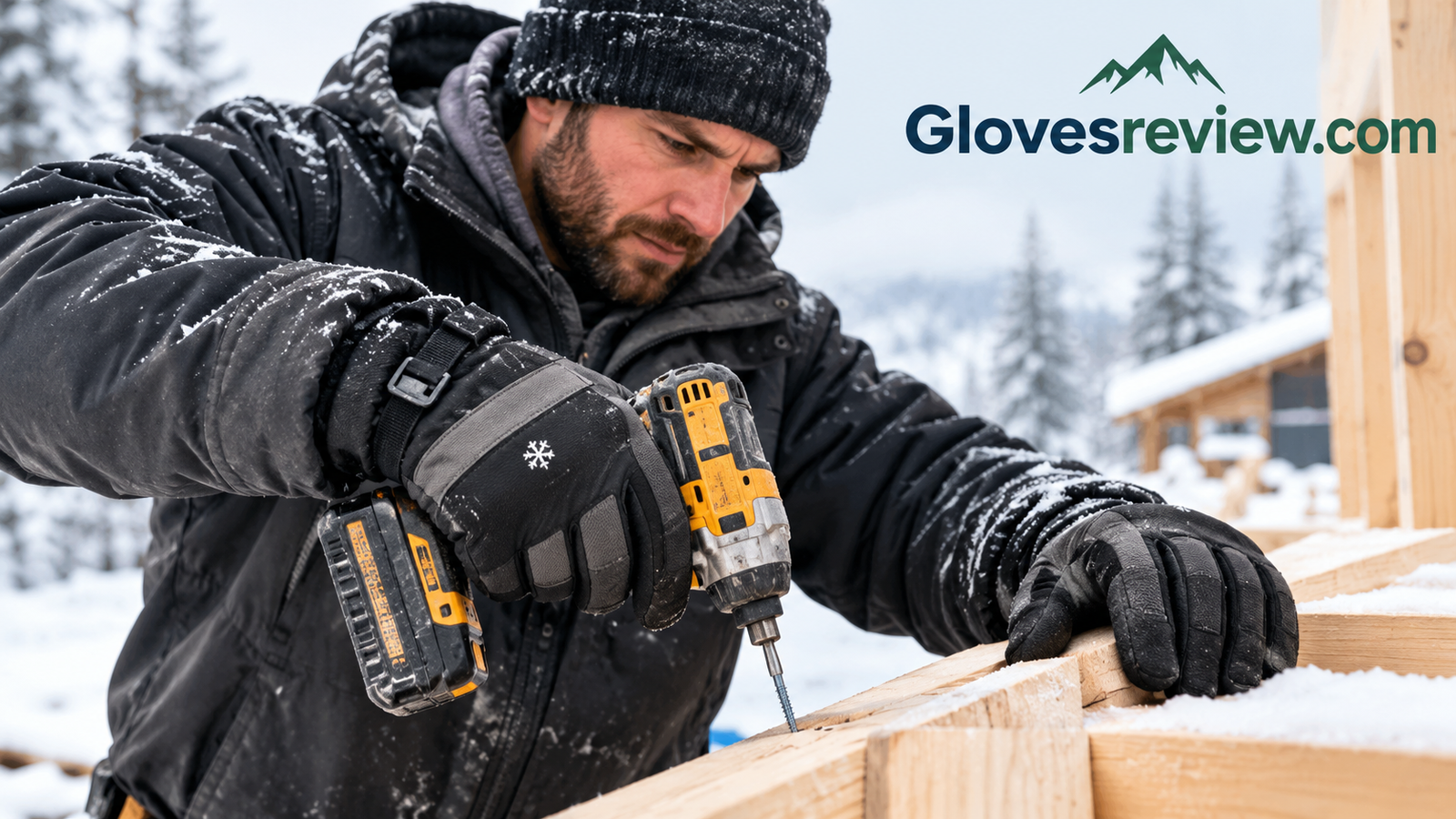
How to Keep Hands Warm While Working Outside: The Complete Cold-Weather System
Cold hands don’t just hurt — they slow your work, wreck your grip and put you at risk. Here is the practical, layered system that actually keeps them warm.
Working Outside Doesn’t Have to Mean Frozen Hands
If you earn your living outdoors, or even spend a few hours a week on winter jobs, you already know the sequence. Your fingers start fine. Twenty minutes in, they get stiff. An hour in, the fine control is gone — you can’t feel the small screw, the trigger, the zip tie. By the time you notice how cold your hands actually are, your work has slowed to a crawl and your grip is unreliable. Then the real problem starts: you take your gloves off to do something fiddly, and everything gets worse.
Cold hands while working outside are rarely about “not tough enough” or “wrong gloves”. They are almost always a systems problem. Your hands are at the far end of your body’s heating circuit, and your body is perfectly willing to turn down the radiator at that end to protect your core. Everything that follows in this guide is about interfering with that process intelligently — trapping the heat you produce, keeping the moisture that destroys insulation away, and giving your hands the breaks and fuel they need to keep functioning.
The good news is that none of this requires expensive gear or an expedition-level budget. It requires a layering strategy, a work rhythm, a bit of attention to fit and moisture, and the discipline to rewarm before your hands reach the point of no return. Get those right and most winter workdays become entirely manageable.
What follows is a ten-step system, in the order it actually works. Each step builds on the one before it, and the later steps only pay off if the earlier ones are in place. Read it through once to see the whole picture, then use it as a checklist when you are prepping for a cold day.
The Short Answer
Keep your hands warm while working outside by insulating your core so your body keeps sending blood to your fingers, layering your hands with a wicking liner, insulating mid-layer and wind- and water-resistant shell, choosing gloves matched to the task rather than just to the temperature, and rewarming deliberately before your hands go numb. Add fuel, hydration and regular movement, and use active heat when passive insulation isn’t enough. Warm hands are a system, not a single purchase.
- Why hands lose heat faster than the rest of you, and how to counter it
- The three-layer hand system and when to drop or add a layer
- How to choose gloves for your actual work, not just the forecast
- Moisture management — the difference between wet-cold and dry-cold survival
- Work-day rhythms, fuel, and the rewarming habits that matter most
- When to reach for heated gear, and when it isn’t worth it
- How to recognise cold injury early and what to do about it
Gear Up Before the Cold Sets In
Start with winter work gloves built for real conditions.
Check Price on AmazonWhy Your Hands Go Cold First While You Work
Before solving anything, it helps to understand what is actually happening. Your hands are unusually good at losing heat and unusually vulnerable when your body decides to cut its losses. Three mechanisms are responsible, and each one has a practical countermeasure.
Mechanism One: Surface Area and Thin Skin
Your hands have a lot of skin relative to how much volume sits behind it, and the skin on the back of the hand is thin. Thin skin plus large relative surface area means heat radiates away quickly. Fingers are also shaped like radiators — lots of edge, very little mass in the middle. This is why a bare hand on a cold tool handle loses heat dramatically faster than the same hand resting against a warm jacket.
Mechanism Two: Your Body Pulls Rank
When your core temperature starts to drop, your body reduces blood flow to the extremities. This is a sensible survival decision — it protects the organs that keep you alive. But it means your fingers are the first thing to lose their heat supply. Everything that keeps your torso warm is therefore also a hand-warming strategy. If your core is cold, no glove on earth will keep your fingertips comfortable.
Mechanism Three: Conduction and Moisture
Work multiplies both problems. Gripping cold steel, kneeling on frozen ground and handling wet materials all drain heat by direct contact. Moisture — from melting snow, from sweat or from a puddle you knelt in — is the accelerator. Wet insulation loses much of its trapped air and starts conducting heat away instead of holding it in. A wet glove in cold wind will chill a hand far faster than a dry glove of the same weight.
Understanding these three mechanisms changes how you evaluate gear. You are not just buying “warmth”; you are buying a barrier against radiation, a way to preserve circulation and a defence against conduction and moisture. Keep that frame in mind as we move through the steps.
Start With a Better Barrier
Shop insulated gloves designed for wind and wet work.
Check Price on AmazonWarm the Core Before You Try to Warm the Hands
This is the step people skip, and it is the one that decides whether everything else works. Insulate your torso properly and your body keeps sending warm blood south. Let your core chill and no amount of glove insulation will fix the result.
What “Insulate the Core” Actually Means
- Wick first. A base layer against the skin that pulls sweat outward. Damp cotton is a heat sink and will undo everything else.
- Trap in the middle. Fleece, pile, down or synthetic insulation over the base layer, sized so it isn’t compressed.
- Block on the outside. A wind-resistant, water-resistant outer shell to stop convection stripping heat from the insulation.
- Cover the neck and head. A neck gaiter and a warm hat cost almost nothing and change how warm the whole system feels.
- Keep your feet and legs warm too. Cold legs mean cold circulation arriving at the hands.
- Loosen up. Tight belts, tight cuffs and tight waistbands all restrict blood flow on its way to the extremities.
Why This Beats Buying Thicker Gloves
Because thicker gloves only address mechanism one. If your core is chilled, your body has already reduced flow to the hands, and a bulky glove simply traps cold fingers inside more material. Meanwhile, a properly insulated torso keeps the heat supply running, which lets you wear a thinner, more dexterous glove and actually get the work done. This is the single biggest efficiency gain in the whole system.
A practical test: if your hands are cold but your chest feels warm and dry, look at your gloves. If your hands are cold and you feel cold through the middle of your back, fix your body layers first. The rest of this guide assumes your core is sorted.
The Two-Minute Pre-Work Check
Before you start the job, stand still for two minutes. If you can feel your fingers clearly and your chest feels warm, you are set up correctly. If you are already losing feeling while standing around, nothing you do in the next hour will be as effective as going back inside and adding a layer.
Sort Out Your Body Layers
Shop thermal base layers and insulated work jackets.
Check Price on AmazonLayer Your Hands, Not Just Your Body
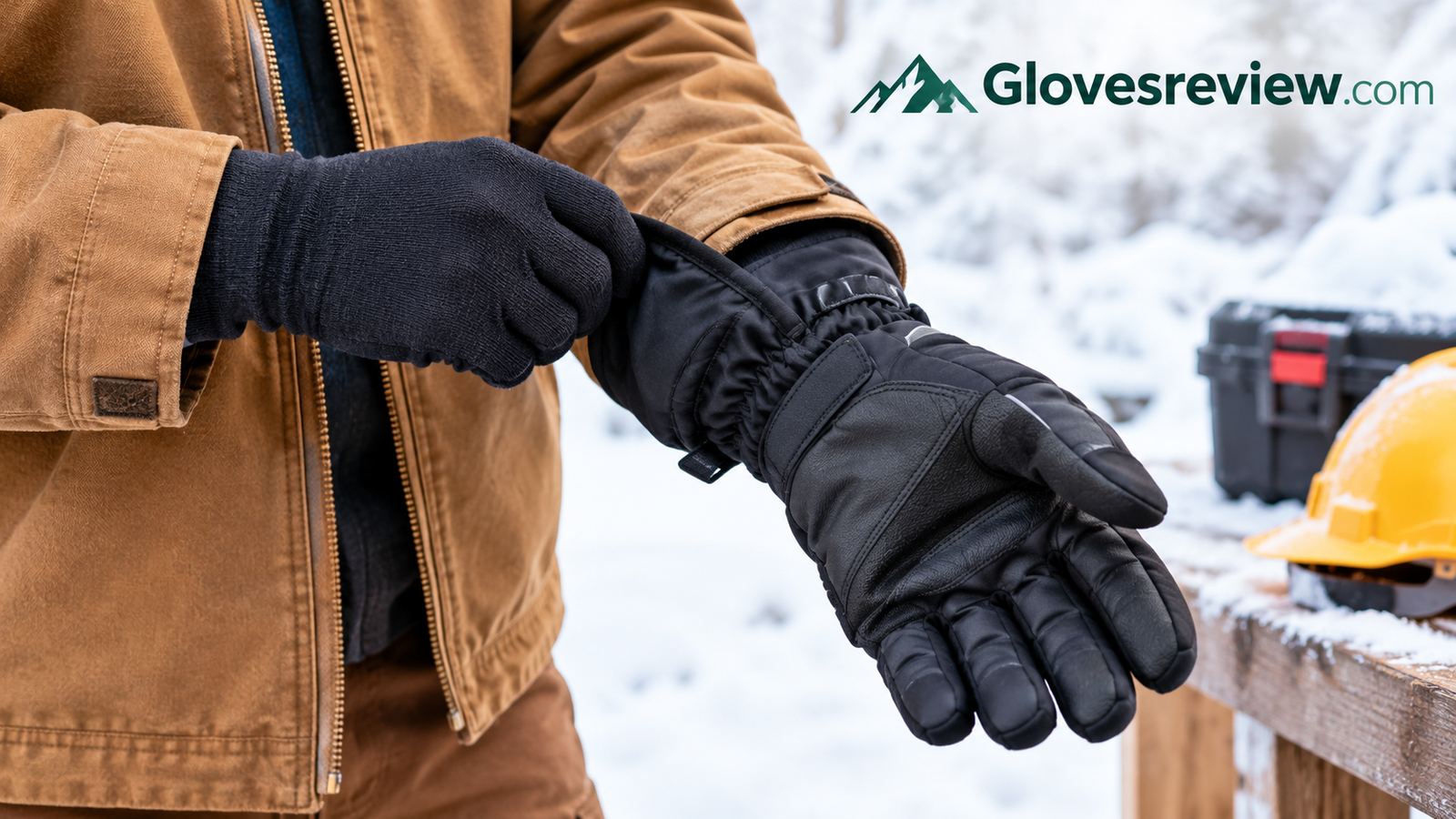
Most people own one pair of winter gloves and hope for the best. The people who stay warm own a system: a thin liner, an insulating layer and a shell, arranged so they can add or remove one part without rebuilding everything. Hand layering gives you the same adaptability as body layering, and it is far more valuable on a day when the temperature swings or the work alternates between heavy and static.
Layer One: The Liner
The liner sits against the skin and does two jobs: it moves sweat outward before it can soak your insulation, and it gives you an option to keep working when the outer glove comes off. Merino liners are warm and comfortable and keep working when slightly damp. Synthetic liners are thinner and dry faster. Either way, the liner should fit like a second skin — any loose fabric bunches, rubs and creates cold spots.
Do liners genuinely make a measurable difference? We tested the idea in detail in our guide to whether glove liners work, and the short version is that they pay for themselves quickly in both warmth and versatility.
Layer Two: Insulation
The insulating layer is where the trapped air lives. In many gloves this is built in; in a layering system it may be a removable mid-layer. The two common families behave differently: microfibre insulations are thin and consistent, while fleece is bulkier for the same warmth but far more breathable during hard work. We compare the trade-offs in Thinsulate vs fleece gloves.
Layer Three: The Shell
The shell blocks wind and water and keeps the insulation intact. This is the layer that decides whether you are fighting dry cold or wet cold. Breathability matters here too — a completely non-breathable shell turns your hand into a sweat box and, paradoxically, makes you colder within an hour.
Pros of a Layered Hand System
- Add or remove a layer as conditions change
- Each layer can be dried separately overnight
- Liner keeps you functional during fine tasks
- Insulation is never compressed by a too-tight glove
- Cheaper to replace one worn layer than the whole glove
Cons of a Layered Hand System
- Requires gloves sized to accommodate the liner
- More pieces to keep track of and to lose
- Slightly reduced feel compared to a single close-fitting glove
- Can be overkill in mild, dry conditions
The practical rule: build the system around the conditions you actually work in, and size the outer glove to fit the liner you plan to wear. Getting that order wrong is one of the most common reasons people end up with cold hands despite owning good gear.
Match the Glove to the Work, Not Just the Temperature
Two workers in identical weather can need completely different gloves, because the deciding factor is not the thermometer — it is what the hands are doing. Grip-heavy work generates heat and demands dexterity. Static work demands insulation and sealing. Wet work demands waterproofing above everything.
Swipe to see more →
| Type of Work | Priority | Glove Construction to Look For | Common Mistake |
|---|---|---|---|
| Tools, ladders, hauling | Grip and durability | Reinforced palm, articulated fingers, secure wrist | Buying maximum insulation and losing grip |
| Driving between jobs | Feel and quick removal | Slim insulated glove, short cuff, good wheel grip | Keeping bulky gloves on at the wheel |
| Snow clearing | Waterproofing and grip | Fully waterproof shell, long cuff, grippy palm | Using absorbent fabric gloves |
| Inspection and paperwork | Dexterity and touch | Close-fitting liner or slim touchscreen glove | Struggling with thick gloves then baring hands |
| Standing, waiting, operating controls | Pure insulation | Mitten or heavily insulated gauntlet | Assuming the glove you used while active will suffice |
| Wet material handling | Waterproofing above all | Waterproof membrane, wipe-clean shell, spare pair | Wearing one pair until it is soaked through |
The Two-Pair Rule
If you take one idea from this section, take this one: carry two pairs of gloves for any job longer than a couple of hours. A primary pair for the main work and a heavier pair for static periods, breaks and travel. Rotation is not a luxury — it is how you avoid the slow slide into working in damp gloves, which is the fastest route to cold hands there is.
For heavy-duty options built around real work rather than general winter wear, our roundup of the best winter work gloves is a good place to start. If your job is mostly clearing snow and dealing with slush, see the best gloves for snow shoveling. And if you are on and off a phone or tablet all day, a close-fitting pair from the best touchscreen gloves will save you from constantly stripping gloves off.
Choose Gloves Built for the Job
Shop rugged, grippy gloves made for outdoor work.
Check Price on AmazonGet the Fit Right — It Changes Everything
Fit is the difference between gloves that work and gloves that quietly fail. Too tight and you compress the insulation and squeeze the circulation that delivers warmth to your fingers. Too loose and cold air moves freely inside while your grip turns clumsy. Either way, you end up colder than the glove’s rating suggests you should be.
The Three Checkpoints
- Fingertips. Your fingers should reach close to the ends with a small, soft pinch of fabric beyond each tip. Nothing more, nothing less.
- Palm. Contact without compression. You should be able to close your fist smoothly and feel objects through the material.
- Wrist. Closes firmly with roughly one finger of ease underneath. Tight enough to stop warm air escaping, loose enough to keep circulation intact.
Size for the System, Not the Hand
If you plan to wear a liner, measure and size with that layer in mind. A glove that fits perfectly on a bare hand will be too tight over a liner — and that compression is exactly what destroys the insulation you paid for. Measure both hands, use the larger measurement, and follow the brand’s own chart rather than guessing.
We go deep on both topics elsewhere: the complete fit guide is in how winter gloves should fit, and the measuring method is laid out step by step in how to measure hand size for gloves.
Quick test before you commit: put the gloves on and do ten minutes of real work — grip a tool, fasten a buckle, use a phone. Anything that bothers you at ten minutes will be unbearable at hour three.
Get the Fit Right the First Time
Shop gloves with accurate sizing and adjustable cuffs.
Check Price on AmazonWin the Moisture Battle — It Decides Who Stays Warm
Ask an experienced outdoor worker what actually makes them cold and the answer is almost never temperature. It is moisture. A damp glove in mild cold is worse than a dry glove in severe cold, because wet insulation stops trapping air and starts pulling heat out of your skin.
Keep Water Out
- Use a waterproof or water-resistant shell matched to how wet the job actually gets
- Seal the cuff against the sleeve so melting snow cannot run inside
- Choose gloves with a wipe-clean or treated outer that sheds slush
- Carry a dry spare pair in a sealed bag — this alone is worth the effort
- Re-proof the shell before it starts absorbing water instead of beading it
Let Sweat Out
Sweat is the moisture people forget, and during hard work it does more damage than weather. Overdressing for the hardest part of the job guarantees a damp mid-layer by the time you stop moving — and stopping is when you feel it. Dress for the pause, not the push: slightly cool while you work hard, comfortable when you stop.
Breathable membranes help here, but nothing beats managing effort and venting deliberately. Push your cuffs back during hard effort. Loosen the gauntlet when you are sheltered. Take the outer glove off and work in the liner during the heaviest phases.
Waterproof or Water-Resistant?
The distinction matters more than marketing suggests. Water-resistant shells shed light moisture and breathe better; waterproof constructions block sustained contact with wet snow but trap more vapour. Which you need depends entirely on whether your hands are in slush all day or just meeting the occasional squall. We lay out the trade-offs in waterproof vs water-resistant gloves, and our shortlist of the best waterproof winter gloves covers the constructions that hold up to sustained wet work.
Signs Your Moisture Strategy Is Working
- Insulation still feels lofty at the end of the shift
- Liner is damp but not soaked
- Shell still beads water instead of darkening
- Your hands feel warm when you stop moving
Signs It Is Failing
- Gloves feel heavy and clammy by mid-morning
- Insulation is packed flat at the fingertips
- Hands get cold the moment activity drops
- You notice a chill while sitting still after hard work
And when the shell has stopped performing, restoring the finish is far cheaper than replacing the gloves. How to waterproof gloves walks through re-treating them properly so you get another season out of gear that is otherwise fine.
Beat the Wet Before It Beats You
Shop waterproof gloves and re-proofing treatments.
Check Price on AmazonStructure Your Work Day Around Heat Cycles
Gear is only half the equation. The other half is rhythm — how you organise effort, rest and rewarming across the day. Workers who stay warm tend to work in cycles rather than pushing until they are frozen, and they rewarm deliberately rather than hoping for the best.
The Cycle, Practically
- Work while your hands are warm. Use the early, warm part of the cycle for the hardest and most dexterous tasks.
- Break before you need to. Stop on a schedule rather than waiting for pain. Once fingers go numb, rewarming takes much longer.
- Use breaks to dry out. Swap to your spare pair, wring out or air the damp one, eat and drink something warm.
- Rewarm actively. Hands under your arms, around a warm flask, or into a room for a few minutes. Swing the arms to encourage blood flow.
- Repeat. Two or three cycles before lunch makes the whole day manageable.
Rewarming Methods Compared
Swipe to see more →
| Method | Best For | Watch Out For |
|---|---|---|
| Hands under the arms | Anywhere, immediately, no gear needed | Slower if you are already deeply chilled |
| Warm shelter for a few minutes | Most effective overall rewarming | Do not overheat and then sweat going back out |
| Warm drink held in both hands | Comfort plus warming from the inside | A hot mug against frozen skin can cause injury — test carefully |
| Arm swings and hand pumps | Getting circulation moving again | Not enough on its own in severe cold |
| Chemical warmers | Static work and long outdoor waits | Needs loose space inside the glove to work |
Never Do This
Do not rewarm frozen or numb hands against an engine block, a heater, hot water or a fire. Numb tissue cannot feel the damage being done, and burns or tissue injury can result. Rewarm gradually with body heat or comfortably warm water, and get medical help if feeling does not return normally.
For situations where the cold is genuinely extreme rather than merely uncomfortable, the strategies escalate — see our guide to how to keep hands warm in extreme cold.
Be Ready for the Long Shift
Shop spare glove pairs and on-site warming accessories.
Check Price on AmazonFeed the Furnace: Fuel, Hydration and Circulation
Your body is a heater, and heaters need fuel. Cold-weather work burns far more energy than people expect, and running low on calories or fluids shows up in your hands surprisingly quickly. So does inactivity — the delivery system needs to be kept moving.
Fuel
Staying warm takes calories. If you eat lightly on a cold workday, your body has less to burn and your peripheral circulation suffers for it. Aim for regular, easy-to-eat food rather than one big meal — a few hundred calories every couple of hours keeps the furnace steady. Foods with some fat and carbohydrate in them are practical because they are energy-dense and easy to carry.
Hydration
Dehydration is far more common in winter than people think. Cold air suppresses thirst, dry air pulls moisture from your lungs, and heavy work gear increases fluid loss. Blood volume drops when you are dehydrated, and blood volume is what carries heat to your fingers. Keep a warm drink within reach and drink on a schedule rather than waiting for thirst.
Keep the Delivery System Moving
- Shake out and pump your hands regularly to drive blood into the fingers
- Rotate your arms in big circles during static tasks and waits
- Keep your shoulders moving — tension there restricts flow down the arms
- Wiggle fingers deliberately before they stiffen rather than after
- Avoid tight cuffs, tight belts and anything else that constricts the route
- Do not stand perfectly still when you can pace, stamp or shift weight
The Little Things That Compound
None of these habits is dramatic on its own. Together, over a full shift, they are often the difference between functional hands and hands you cannot feel. Warmth is cumulative — every small gain stacks on top of the last one.
Keep Fuel and Warm Drinks On Site
Shop insulated flasks and cold-weather workday essentials.
Check Price on AmazonAdd Active Heat When Passive Insulation Isn’t Enough
There is a point at which insulation stops being the answer. Very cold, very static work — operating controls, waiting on site, long shifts outdoors — can overwhelm even good gear. That is when active heat earns its place: heated gloves or chemical warmers.
Swipe to see more →
| Option | Strengths | Limitations | Best Suited To |
|---|---|---|---|
| Heated gloves | Consistent, controllable warmth focused at the fingers | Higher cost, needs charging, depends on battery performance in cold | Long static shifts, very cold conditions, repeated exposure |
| Chemical warmers | Cheap, simple, no charging, great as a backup | Single-use, needs air and space to work, warmth is not adjustable | Occasional use, emergencies, static waits |
| Insulated mittens | Maximum passive warmth, no running cost | Reduced dexterity, not suitable for tool work | Breaks, waiting, static observation |
How Heated Gloves Work
Battery-powered gloves use thin heating elements routed along the back of the hand and through the fingers, distributing warmth to the areas that lose heat fastest. Understanding how that heat is distributed — and where the elements sit — makes a real difference when choosing a pair. We explain the mechanics in how do heated gloves work.
Are They Worth It?
For occasional cold-weather work, probably not — a good passive system will serve you better and cost less. For people who spend long hours outside in genuinely harsh conditions, heated gloves can be the difference between finishing the shift comfortably and struggling through it. Our take on the trade-offs is in are heated gloves worth it, and the models we would actually rely on are covered in the best heated gloves.
Pros of Active Heat
- Warmth on demand regardless of activity level
- Particularly effective at the fingertips
- Reduces the need for bulky layering
- Restores dexterity quickly after exposure
Cons of Active Heat
- Upfront cost and ongoing charging
- Extra bulk from elements and battery pockets
- Cold batteries deliver less heat than warm ones
- Can mask the early warning signs of cold injury
One Important Warning
Active heat can disguise how cold you are getting. Keep judging your condition by how your fingers actually feel and look, not by how warm the gloves claim to be. If fingertips go pale, waxy or numb, stop and rewarm properly.
Look Beyond the Hands: The Rest of the System Matters
It is tempting to treat hand warmth as a hand-only problem. It is not. Your hands are downstream of everything else, and the rest of your kit has to be working before your gloves can do their job.
The Supporting Cast
- Hat. A large share of your heat loss happens at the head. A warm hat is the cheapest hand-warming accessory you will ever buy.
- Neck gaiter or collar seal. A gap at the neck is a chimney for warm air. Seal it and the whole system works better.
- Insulated, windproof jacket. Protects the core so the body keeps sending warm blood outward.
- Warm legs and feet. Cold feet mean your circulation is compromised before it ever reaches your fingers.
- Cuff overlap. Glove cuff over jacket sleeve, or sleeve over cuff — but never a gap between them.
- Good socks and dry boots. Standing on frozen ground drains heat relentlessly through the feet.
The Format Question: Gloves or Mittens?
When the work allows it, mittens are warmer than gloves for the simple reason that fingers share one chamber and keep each other warm. The trade-off is dexterity, which is why most workers end up using both — gloves for active work, mittens for breaks and static periods. The full comparison is in mittens vs gloves for warmth.
When the Job Is Specific
Some work has its own gear culture and its own fit demands. Mountain and resort work has a whole subcategory of handwear built for wind, snow and pole grip — see how to choose ski gloves and the best ski gloves if that describes your role.
Fix the Rest of the System
Shop hats, gaiters and insulated boots for winter work.
Check Price on AmazonDry, Care For and Troubleshoot Your Gear
The final step is the unglamorous one that separates people who are always cold from people who never seem to be. Gear that is dried properly and maintained on a simple schedule performs night and day differently from gear that is thrown in a bag damp and pulled on again at dawn.
Drying, Properly
Drying gloves the wrong way is the fastest route to ruining them. Direct heat shrinks leather, stiffens seams and can damage membranes. The correct method is patience: moderate warmth, good airflow and time. Open the gloves fully, turn them so air reaches the inside, and reshape the fingers while the material is still damp.
The full method, including what to do with soaked gloves in a hurry, is covered in how to dry wet gloves.
Washing and Care
Gloves do not need frequent washing, but when they do, the method matters. Technical fabrics and membranes can be damaged by ordinary detergent and fabric softener, and leather needs its own treatment entirely. Clean gloves breathe better and wick better, which directly affects warmth. The step-by-step is in how to wash winter gloves.
Troubleshooting Guide
Swipe to see more →
| Problem | Likely Cause | The Fix |
|---|---|---|
| Fingertips cold, palm warm | Tight fit at the fingers or poor circulation | Size up, loosen the wrist slightly, add a thin liner |
| Hands cold all over | Core is chilled | Add body layers before touching the gloves |
| Hands get cold when work stops | Insulation is damp from sweat | Swap to spare pair, vent during heavy effort, rewarm early |
| Wet hands at the end of the day | Water entering at the cuff or shell soaked through | Seal cuffs over sleeves, re-proof the shell, use a waterproof outer |
| Stiff fingers, poor grip | Glove too bulky for the task | Use a closer-fitting pair for fine work, keep bulky pair for static |
| Insulation packed flat | Over-compression from tight gloves or poor storage | Size up, store uncompressed, replace worn gloves |
| Chafing at the thumb or knuckles | Poor fit or a seam that does not suit your hand shape | Change construction, add a liner, try a different brand cut |
The Overnight Routine That Takes Five Minutes
- Empty both gloves and shake out any grit or ice.
- Hang or stand them somewhere warm with air moving through.
- Swap in your second pair so neither set is worn damp two days running.
- Check liners and dry them separately.
- Give them a quick inspection — loose seams and worn palms are worth fixing early.
Keep Your Gear in Fighting Shape
Shop glove care products and technical cleaners.
Check Price on AmazonCold Injury: Prevention, Recognition and What to Do
Everything in this guide is about prevention, but prevention depends on recognising when things have gone past the point of simply being uncomfortable. Cold injury is a real occupational risk in outdoor work, and it is far easier to stop early than to treat late.
Know the Signs
- Pins and needles and stiffness. Early warning. Rewarm now, not later.
- Pale, white or waxy fingertips. Blood flow is severely restricted. Stop work and get warm.
- Numbness or loss of dexterity. The point at which you can no longer judge the damage being done.
- Skin that feels unusually firm or hard. A serious sign — seek medical attention.
- Pain on rewarming. Common and expected, but severe or persistent pain deserves professional assessment.
- Blisters or swelling after exposure. Get medical help; do not burst or rub the area.
What To Do
Get out of the cold, remove wet gloves and anything constricting, and rewarm gradually. Body heat — hands under the arms or against a warm part of the torso — is the safest first move. Comfortably warm water is acceptable; hot water, heaters, fires and direct contact with engine blocks are not, because numb tissue cannot protect itself from burns. Do not rub or massage frozen tissue. Do not rewarm if there is any chance of refreezing before you reach shelter, as refreezing causes far worse injury.
People at Higher Risk
Some conditions make hands more vulnerable to cold, including circulation disorders such as Raynaud’s phenomenon, previous frostbite, smoking, and certain medications. If you know you are susceptible, plan more conservatively: more frequent rewarming, active heat, and a lower threshold for stopping. It is worth discussing with a healthcare professional if you work outdoors regularly.
Set a Personal Rule Before the Shift Starts
Decide in advance what your stop signal is — for example, “if my fingertips lose feeling, I go warm up immediately.” Making the decision when you are warm and clear-headed is far more reliable than making it when you are cold, tired and focused on finishing the task.
For the most severe conditions, where the risk of injury is genuinely elevated rather than just uncomfortable, the strategies step up considerably — see our guide to how to keep hands warm in extreme cold for that level of preparation.
Frequently Asked Questions
How do I keep my hands warm while working outside in very cold weather?
Insulate your core first so your body keeps sending warm blood to your fingers, then layer your hands with a wicking liner, insulation and a wind- and water-resistant shell. Size the gloves so they fit over the liner without compressing it, keep your wrists sealed, and rewarm deliberately before your hands go numb rather than after.
Why are my hands colder when I am working than when I am resting?
Usually moisture. Hard work produces sweat, which soaks the liner and insulation and turns them from insulators into heat sinks. Once you stop generating heat, that damp layer chills you fast. Vent during the heaviest effort, use a spare pair, and dry gear every night.
Are mittens warmer than gloves for outdoor work?
Generally yes, because fingers share one chamber and keep each other warm. The trade-off is dexterity, so most people use gloves for active work and mittens for breaks and static periods. If you can bring both, do — it is one of the most effective adjustments you can make.
Should winter work gloves be tight or loose?
Neither. They should fit snugly enough to grip properly, with a small pinch of fabric beyond your fingertips and a firm but not constricting seal at the wrist. Tight gloves crush the insulation and restrict circulation; loose gloves let cold air move around and make tools harder to handle.
Do glove liners really make a difference?
Yes. A good liner wicks moisture away from your skin, adds a meaningful extra layer of insulation, and lets you keep working when the outer glove comes off. They also cost very little and weigh almost nothing, which makes them one of the highest-value additions to a winter work kit.
How often should I rewarm my hands during a cold shift?
On a schedule, before you feel you need to. Once fingers go numb, rewarming takes much longer and the risk of injury rises sharply. A short break every hour or so to move, eat, drink and rewarm is a reasonable starting point for most cold work — adjust to the conditions and to how you are feeling.
Are heated gloves worth it for outdoor work?
They are for people who spend long hours in genuinely cold, static conditions, and less necessary for those doing active work in moderate cold. Heated gloves deliver controllable warmth at the fingers where you need it most, but they depend on batteries and cost more. The rest of the system still needs to be right.
How do I stop my gloves getting wet from sweat?
Layer with a wicking liner, vent during heavy effort, and avoid over-insulating for the hardest part of the job. Dress slightly cool while working hard so you are comfortable when you stop. Carrying a spare pair to rotate through is the most reliable fix of all.
What should I do if my fingers go numb while working?
Stop immediately, get out of the wind, remove anything tight and rewarm gradually using body heat or comfortably warm water. Do not use direct heat, fires, heaters or hot water, and do not rub frozen tissue. If colour and sensation do not return normally, seek medical attention.
Can I dry wet gloves on a radiator or in a dryer?
Direct heat is one of the fastest ways to damage gloves. It shrinks leather, stiffens seams and can ruin membranes. Dry them instead with moderate warmth and good airflow, opened up so air circulates inside, and reshape the fingers while the material is still damp.
Does what I eat and drink affect how warm my hands are?
More than people expect. Staying warm burns calories, and dehydration reduces blood volume — which is exactly what carries heat to your fingers. Eat and drink regularly rather than waiting for hunger or thirst, and keep a warm drink within reach on site.
What type of glove is best for working with tools in the cold?
A close-fitting, well-articulated glove with a reinforced palm and a secure wrist. Grip and dexterity matter more than maximum insulation during tool work, because your hands generate their own heat when they are active. Save the heavily insulated pair for breaks and static tasks.
Your Warm Hands Checklist
If you have read this far, you have the complete picture. Warm hands while working outside are not a matter of buying the most expensive glove — they are the result of a system applied consistently. Insulate your core so blood keeps flowing outward. Layer your hands so you can adapt to the day. Match the glove to the task rather than the thermometer. Get the fit right. Beat moisture at both ends — weather out, sweat out. Structure your day around rewarming cycles. Fuel and hydrate deliberately. Reach for active heat when the conditions demand it. Keep the rest of your kit working. And maintain the gear so it keeps performing.
The Ten Steps, in Order
- Warm the core first — body layers before glove shopping.
- Layer your hands: liner, insulation, shell.
- Match glove construction to the work you actually do.
- Get the fit right at the fingertips, palm and wrist.
- Keep water out and let sweat vapour escape.
- Work in cycles and rewarm before you go numb.
- Fuel the furnace — eat, drink and keep moving.
- Add active heat when passive gear reaches its limit.
- Fix the rest of the system: hat, neck, feet, cuffs.
- Dry and care for your gear every single night.
None of this is complicated, and almost all of it costs very little once you have the basic kit in place. The workers who never seem to suffer in winter are not tougher — they are simply consistent about the small things. Start with whichever step above is currently missing from your routine, and build from there.
And when the day does go wrong — because occasionally it will — you now know the warning signs and exactly how to respond. That confidence is worth as much as any pair of gloves.
Build Your Winter Work Kit Today
Shop gloves, liners and warming gear for outdoor work.
Check Price on AmazonYou May Also Like
More on choosing, sizing and getting the best from your winter handwear.
Best Ski Gloves
Handwear built for wind, snow, lift lines and pole grip.
Buying GuideHow to Choose Ski Gloves
Fit, insulation, cuff style and waterproofing — what actually matters.
How-ToHow to Measure Hand Size for Gloves
Get your measurements right so you stop guessing at the size chart.
RoundupBest Waterproof Winter Gloves
Pairs that keep slush out without turning your hands clammy.