
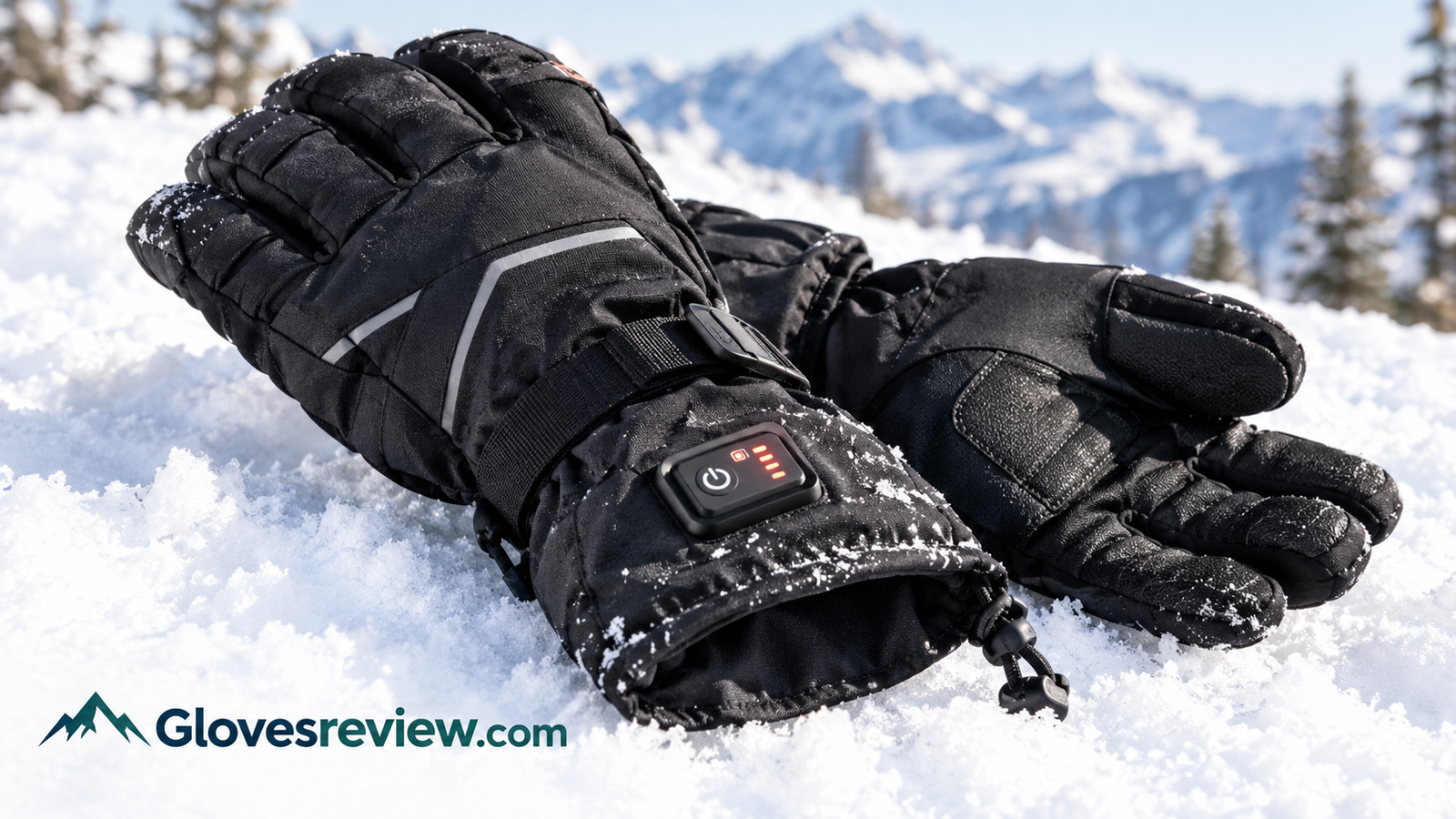
Are Heated Gloves Worth It? An Honest, Experience-First Answer
Battery-powered gloves promise warm fingers in brutal cold — but they also cost more, weigh more, and need charging. Here’s a clear-eyed breakdown of when heated gloves are genuinely worth the money, when they’re overkill, and how to decide for your own hands.
Ask ten people whether heated gloves are worth the money and you’ll get ten different answers — and that’s the honest starting point for this whole article. The skier who rides lift lines in biting wind will say they’re life-changing. The person who shovels a driveway twice a month will tell you they’re an expensive gadget gathering dust in a closet. Both are right, for their own situation.
The real question isn’t “are heated gloves good?” It’s “are heated gloves worth it for me, given how cold I get, how long I stay outside, what my hands need to do while I’m out there, and what I’m willing to spend?” Heated gloves solve a very specific problem — cold that passive insulation alone can’t defeat — and they solve it by adding complexity: batteries to charge, electronics to protect, weight to carry, and a higher price tag than a standard winter glove.
Over the rest of this guide, we’ll take that question apart layer by layer. We’ll look at how heated gloves actually generate and hold warmth, where the genuine benefits show up in real use, where the technology runs out of road, how they compare to conventional insulated gloves, mittens, and liner systems, and what the true cost of ownership looks like beyond the sticker price. By the end, you’ll be able to answer the question for your own hands with real confidence instead of marketing copy.
If you already know you want a pair and you’re just hunting for the right model, our best heated gloves roundup covers the styles worth considering. If you’re still on the fence, keep reading — the decision gets much clearer once you see what these gloves can and can’t do.
Heated gloves are worth it when you spend extended time in serious cold and your hands are the first thing to quit. They’re rarely worth it for brief, mild-weather errands, for people who run warm, or for anyone expecting them to replace proper layering and waterproofing. Everything below helps you work out which side of that line you’re on.
What “Worth It” Really Means When You’re Buying Gloves
Value isn’t a price tag. It’s what a product lets you do, feel, and endure that you couldn’t before — divided by what it costs you in money, hassle, and weight.
When people ask “are heated gloves worth it,” they’re usually comparing two completely different things in their head without realizing it. On one side is the cost of a pair of heated gloves. On the other is… well, nothing specific. A vague sense that gloves should cost a certain amount. That comparison almost always ends with “too expensive,” because there’s no benefit on the other side of the scale to weigh against the money.
A more useful comparison puts the actual benefit on the scale. Think about what cold hands cost you right now: the outing you cut short, the job you finished badly because your fingers stopped cooperating, the photos you didn’t take, the numb commute that ruined the rest of your afternoon, the day on the hill you spent in the lodge warming up instead of skiing. For people in that category, heated gloves aren’t competing with a cheap pair of knit gloves. They’re competing with time, comfort, and performance they’re currently losing.
Four questions that decide the answer for you
Before you look at a single product, sit with these four questions. Your honest answers will tell you more than any review ever could.
- How cold is your cold? Mild winter days with occasional wind are a very different problem from sub-freezing shifts, high-altitude riding, or long exposure on a machine. The harsher the conditions, the more the “worth it” side grows.
- How long are you outside at once? Insulation is a battery of its own — it runs down over time. Passive gloves are fine for a fifteen-minute walk. For four or five hours outdoors, the equation shifts dramatically.
- How much do your hands need to work? Dexterity matters enormously. If you need to grip, buckle, sort tools, or operate controls, warmth that makes your hands clumsy can be its own problem.
- How quickly do your hands give up? People differ wildly. Some hands stay warm in a light glove. Others go cold and stiff in good conditions due to circulation, body composition, or conditions like Raynaud’s phenomenon. If your hands are the weak link in every cold-weather plan, that’s the strongest argument for heated gloves.
The cost-per-use test
Here’s a framing that tends to cut through the debate: think in cost per outing rather than cost per pair. A pair of heated gloves used three or four times a week through a long winter spreads its cost across a huge number of comfortable days. The same pair used twice a season for a short walk doesn’t. Neither purchase is morally right or wrong — but only one of them delivers value relative to what it costs.
It also helps to remember that heated gloves are an upgrade path, not a first step. If your current gloves are thin, wet out easily, or don’t fit, fix that first — a well-fitting, properly insulated glove solves more cold problems than most people realize. We’ve covered that foundation in our guide to the best winter work gloves, and it’s worth a read before you add electronics to the mix.
Quick Self-Test: Are Heated Gloves a Good Fit for You?
- You spend long stretches outdoors in genuinely cold or windy conditions.
- Your hands get cold before the rest of your body does.
- You’ve already tried good insulation, layering, and proper fit — and your hands still go cold.
- You need working fingers (tools, controls, a camera, ski poles) while you’re out.
- You’re willing to charge and care for a piece of gear with electronics in it.
- Cold hands are actively cutting short activities you’d otherwise enjoy.
If you ticked four or more, heated gloves are very likely worth it for you. If you ticked one or two, a good insulated glove — possibly paired with a liner — will probably serve you better for far less money.
How Heated Gloves Actually Work
Understanding the mechanism takes about two minutes — and it instantly explains both why these gloves are impressive and why they have limits.
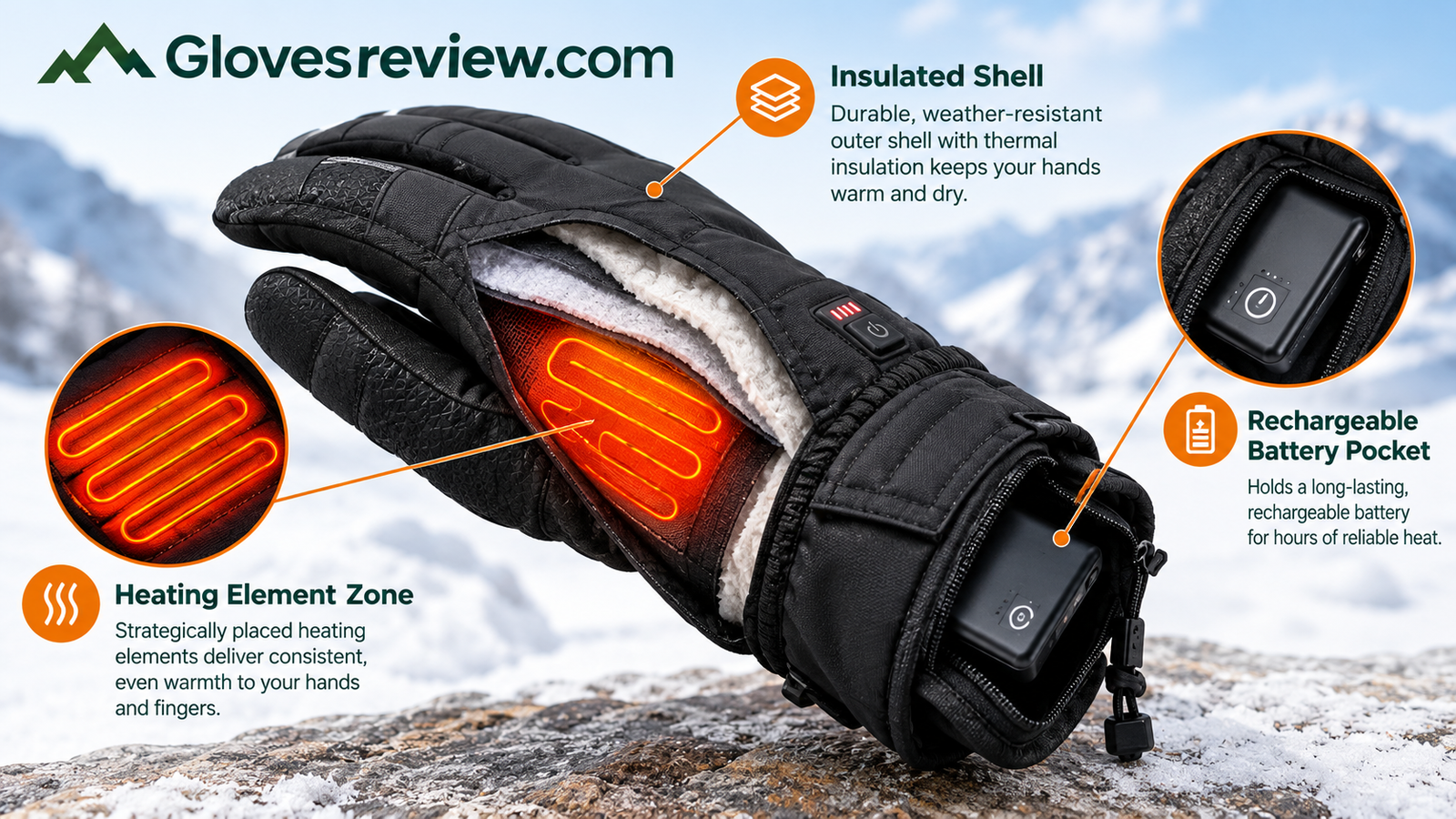
A heated glove is a normal winter glove with three additions: a heating element woven into the fabric, a rechargeable battery that feeds it, and a small controller that lets you turn the heat up or down. That’s the whole architecture. Everything else — the shell, the insulation, the lining, the cuff — is doing exactly the same job it does in a conventional glove.
The heating element is typically a thin, flexible wire or carbon-fiber ribbon laid out in a loop pattern across the zones that lose heat fastest: the back of the hand, the fingers, and often the thumb. Flexible is the key word here. A good element bends thousands of times without breaking, and it’s thin enough that you don’t feel a wire pressing into your hand.
Why heating the back of the hand matters so much
One detail surprises most people: many heated gloves concentrate heat on the back of the hand rather than filling every fingertip with wire. There’s good reason for that. The back of the hand is where the blood vessels run close to the surface, and warming that area helps warm the blood circulating into your fingers. Fingertips themselves have very little mass and a lot of exposed surface area, so they’re the first to lose heat and the hardest to keep warm — which is exactly why they’re usually the complaint.
The insulation around the element is doing real work too. Heat generated by the element can only help if it stays inside the glove. Strip the insulation away and the element would be fighting a losing battle against the cold — it would warm your skin briefly and then bleed that warmth straight into the air. This is why a cheap heated glove with poor insulation underperforms a well-insulated glove with a modest heating system.
The battery and controller
Batteries usually live in a pocket at the cuff or along the wrist — close enough to the hand for wiring simplicity, out of the way of grip and movement. Most gloves offer a small number of heat settings (commonly low, medium, and high) controlled by a button on the cuff, sometimes with an indicator showing the current level or remaining charge. Higher settings draw more power and generate more heat; lower settings run longer.
That trade-off is the central mechanic of owning heated gloves: heat output and runtime are always pulling against each other. Understanding that relationship is the single biggest thing you can do to get good results — and we’ll dig into it properly in the section on batteries and runtime.
For a deeper look at the engineering — element types, zone layouts, and how heat actually transfers to your skin — we have a full explainer on how heated gloves work that’s worth reading alongside this guide.
Heated gloves warm the glove environment around your hand. They don’t pump heat into your bloodstream, and they can’t rescue hands that are soaking wet from sweat or snow. Dry hands inside a dry glove is still the foundation — the heating element is an upgrade on top of that, not a replacement for it.
The Real-World Benefits: What Actually Improves
Strip away the marketing and there are four genuine, repeatable benefits. Each one is strongest for a specific type of person.
1. Warmth that keeps coming
The defining benefit is simple and rarely overstated: heated gloves keep producing warmth after an ordinary glove has stopped. Insulation doesn’t create heat — it only slows down the loss of the heat your body makes. Once your hands have cooled past a certain point, insulation alone can’t bring them back. An active heating element keeps feeding warmth into the glove, which is exactly what long exposure demands.
2. Comfort for chronically cold hands
Some people’s hands run cold no matter what they wear. Circulation, body composition, recent exertion, and individual physiology all play a part. For people with Raynaud’s phenomenon or generally poor circulation, cold fingers aren’t an inconvenience — they can be painful, disabling, and slow to recover. A gentle, adjustable heat source in the glove can make an enormous difference to comfort.
Important caveat: heated gloves are not a medical device. If you have a circulatory condition, reduced sensation in your hands, diabetes, or nerve damage, talk to a clinician before relying on any product that applies heat to your skin — and pay close attention to the safety notes later in this guide.
3. Longer sessions, better performance
This is the benefit active people notice first. Cold hands degrade grip strength, fine motor control, and reaction time long before they become painful. When your hands stay warm, you hold ski poles properly, you buckle bindings without fumbling, you operate tools safely, and you can actually work the dials on a camera instead of stabbing at them with numb fingers. Warmth isn’t comfort here — it’s capability.
4. Fewer disposable warmers, less fuss
Anyone who has run chemical hand warmers all winter knows the routine: buy them, remember to bring them, shake them, stash them, throw them away, repeat. Heated gloves replace that ritual with a rechargeable system. There’s an upfront cost and a charging habit, but over a long season of heavy use the convenience — and the reduction in waste — is real.
Where the benefits show up most clearly
| Activity | Why Heat Helps | Verdict |
|---|---|---|
| Skiing & snowboarding | Long exposure, wind on the lift, cold starts in the morning | Strong benefit |
| Snowmobiling & riding | Wind chill from speed, hours of exposure, grip on controls | Strong benefit |
| Outdoor work shifts | Extended duration, tool handling, safety-critical dexterity | Strong benefit |
| Photography & hunting | Long stationary periods punctuated by fine motor tasks | Strong benefit |
| Short commutes & errands | Brief exposure, gloves go on and off constantly | Moderate benefit |
| Occasional snow shoveling | Short bursts of exertion generate plenty of body heat | Limited benefit |
Notice the pattern: benefit scales with exposure time and stillness, not with how cold the thermometer reads. A long, quiet wait in freezing conditions is far harder on hands than an hour of vigorous shoveling. If your winter life skews toward the top half of that table, heated gloves earn their keep quickly.
For shorter, high-exertion jobs like clearing a driveway, a well-insulated pair is usually plenty — see our guide to the best gloves for snow shoveling before spending on electronics you may not need.
Where Heated Gloves Fall Short (The Honest Part)
No gear is a magic wand. These are the limitations that real owners run into — and the ones sales pages tend to leave out.
Heated gloves are genuinely excellent at one job. They are not excellent at everything, and the disappointment people report almost always comes from expecting them to be. Here’s where the technology runs out of road.
They add bulk
Adding an element, wiring, and a battery pocket means more material between your hand and the world. Even slim designs are bulkier than a comparable non-heated glove. If your priority is maximum dexterity — threading a small zipper, sorting screws, handling delicate equipment — you’ll feel the difference.
Batteries are a chore you accept
Every outing starts with a charge level question. Forget to plug them in and you’re wearing an expensive ordinary glove. Batteries age over time and hold less charge, and eventually they need replacing — which is a cost and a compatibility headache. For some people this is trivial; for others it’s enough to abandon the whole idea.
Cold reduces what batteries can give
Lithium-ion batteries perform worse in the cold. That’s physics, not a flaw in a specific brand. On the coldest days — exactly when you want the most heat — your battery will deliver less than it does on the kitchen counter. Realistic expectations matter here: treat runtime figures as optimistic rather than guaranteed.
Wet still beats heat
If moisture gets inside — melted snow, sweat, rain driving up a cuff — the heating element is fighting a much bigger problem. Wet insulation is compromised insulation, and heat applied to wet hands is far less pleasant than it sounds. Heated gloves without proper waterproofing are a frustrating combination. Understanding the difference between water-resistant and genuinely waterproof construction is essential reading: waterproof vs. water-resistant gloves.
They can’t fix a bad fit
Too tight and you restrict circulation — the fastest route to cold fingers there is. Too loose and you lose heat to dead air space and fumble everything you touch. Heated or not, fit is the variable that makes or breaks the experience. We cover how gloves should sit on your hand in how should winter gloves fit.
What They Do Well
- Sustained warmth on long, cold outings
- Adjustable heat you can tune to conditions
- Real help for chronically cold hands
- Better finger function late into a session
- Rechargeable instead of disposable warmers
Where They Struggle
- Added bulk and weight on the hand
- Charging logistics and battery aging
- Reduced output in extreme cold
- Higher upfront cost and repair complexity
- Weakness if moisture gets inside
None of those drawbacks are fatal. They are, however, the reason heated gloves remain a specialist tool rather than the default for everyone. If two or three of those limitations would genuinely irritate you, that’s meaningful information — act on it.
Heated Gloves vs. Regular Insulated Gloves
This is the comparison that matters most — because for most people, these are the two options actually on the table.
A high-quality insulated winter glove is a mature, refined product. Modern insulation traps warm air efficiently, good shells block wind, and well-designed cuffs keep the elements out. For a huge number of winter situations, that’s all you need. The question is what happens when it isn’t.
| Factor | Heated Gloves | Regular Insulated Gloves |
|---|---|---|
| Warmth source | Body heat retained plus active heating element | Body heat retained by insulation only |
| Long-duration warmth | Continues producing warmth for hours | Gradually fades as body heat is lost |
| Weight & bulk | Heavier, more padding, battery pockets | Lighter and slimmer overall |
| Dexterity | Good, but slightly reduced | Generally better for fine tasks |
| Maintenance | Charging, battery care, careful washing | Wash, dry, done |
| Upfront cost | Higher | Lower to mid range |
| Failure modes | Dead battery, damaged element, worn cells | Worn insulation, wet-out, seam wear |
| Best for | Long exposure, stillness, cold-sensitive hands | Everyday winter use, short outings, active jobs |
The honest crossover point
For short exposure and high activity, a good insulated glove wins — it’s lighter, cheaper, simpler, and your own working muscles generate plenty of heat. For long exposure and low activity, the equation flips: passive insulation only slows the loss of heat you have, and when that reserve runs out, you’re done. Heated gloves keep topping up the tank.
Insulation type matters here as well. The fill inside your glove determines how much heat it traps per millimetre of thickness, and different fills behave differently when damp. If you’re comparing heated gloves against conventional options on paper, it’s worth knowing what’s actually inside: Thinsulate vs. fleece gloves breaks down the main insulation types and where each one excels.
Choose regular insulated gloves if you’re outdoors for under an hour, moving actively, or on a tighter budget. Choose heated gloves if you’re outdoors for hours, standing or sitting still for long stretches, or your hands get cold regardless of what you wear.
Heated Gloves vs. Mittens and Liner Systems
Before you reach for a battery, it’s worth knowing that two low-tech strategies solve a surprising amount of the cold-hands problem.
Mittens are the classic answer to cold hands, and they work for a simple reason: fingers share a pocket of warm air instead of each radiating heat through its own surface. It’s a passive trick, but it’s effective — a well-insulated mitten often outperforms a well-insulated glove of the same thickness.
Liners are the other quiet hero. A thin liner under a main glove adds a layer of trapped air, manages moisture against your skin, and gives you a usable “indoor layer” when you step inside and take the outer glove off. They also fine-tune fit. Many people who think they need heat actually need a better layering strategy.
| Approach | Warmth | Dexterity | Cost & Complexity | Best Use Case |
|---|---|---|---|---|
| Heated gloves | Highest sustained warmth | Good, slightly reduced | Higher cost, more maintenance | Long cold exposure, sensitive hands |
| Insulated mittens | Excellent passive warmth | Reduced — fingers share a pocket | Low cost, no upkeep | Extreme cold when grip isn’t critical |
| Glove + liner system | Good, adaptable layering | Very good | Modest cost, very flexible | Variable conditions, mixed indoor/outdoor days |
| Heated liners | Good, added to any outer shell | Very good | Mid cost, adds charging | People who love their existing outer glove |
Why the layered approach is underrated
A thin liner plus a quality outer glove gives you something a single glove can’t: adaptability. Cold morning, hard work? Wear both. Sun comes out, you’re generating heat? Drop the outer for a while. Hands damp from sweat? Swap the liner and keep going. That flexibility is worth a great deal on changeable days, and it costs a fraction of a heated system.
Whether liners genuinely deliver on the promise depends heavily on material and fit — a liner that’s too tight will make your hands colder, not warmer. Our breakdown of whether glove liners work covers what to look for and when they’re a better investment than heat.
And if you go the mitten route, the trade-off is real: you gain warmth and give up the ability to pinch, grip small objects, and work a phone easily. The classic comparison is laid out in mittens vs. gloves for warmth — it’s a genuinely close contest depending on what your hands need to do.
Who Should Buy Heated Gloves — and Who Shouldn’t
The clearest way to answer “are they worth it” is to look at specific people and specific use cases. Here’s where the answer turns to a confident yes.
The strongest cases for heated gloves
Skiing and snowboarding regulars
A day on the mountain is hours of exposure with plenty of stillness built in — lift rides, queue lines, sitting for lunch. Cold fingers are the single most common complaint among skiers, and they get worse as the day wears on. If you ski often and your hands suffer, heated gloves change the day rather than just decorating it. Choose a style with real dexterity and a cuff that seals well; our best ski gloves guide covers the design details that matter on the mountain.
Outdoor workers on long shifts
If you’re outside all day in the cold, warmth isn’t comfort — it’s productivity and safety. Cold-stiff fingers are slower and clumsier, which around tools and machinery is a genuine hazard. Heated gloves sized for work use, with durable palms and a rugged shell, pay for themselves in better output and fewer breaks to thaw out.
Riders — snowmobile, ATV, and motorcycle in cold weather
Speed multiplies wind chill dramatically, and holding onto bars or a throttle for hours is brutal on hands. This is arguably the single best use case for heated gloves, since the wind-chill load is constant and the session is long.
Photographers, birders, and hunters
Long stationary waits punctuated by precise finger work is exactly the pattern heated gloves are designed for. A glove that stays warm while you stand still, then lets you actually operate a shutter and dials, is a huge quality-of-life upgrade.
People with cold-sensitive hands
If your hands go cold and stiff while everyone else’s stay fine, no amount of marketing copy about insulation will help you. Adjustable active heat addresses the actual problem. Just read the safety notes carefully — particularly if you have reduced sensation in your hands.
When heated gloves are probably overkill
- Short, active outings. A brisk walk or a half hour of shoveling generates plenty of body heat. A good insulated glove is simpler and cheaper.
- Mild winter climates. If your winters hover around freezing with occasional cold snaps, you’ll rarely use the heat setting.
- People who run warm. If your hands overheat easily, an active heat source will make you sweat — and sweat leads to cold later.
- Anyone unwilling to charge gear. Honestly assessed: if you never remember to charge anything, you’ll end up wearing a heavy glove with a dead battery.
For trades and outdoor labour, heated gloves shine brightest when paired with a durable, well-fitting shell. If warmth while working is your priority, our guide to keeping hands warm while working outside covers the full system — clothing, breaks, layering, and where heat fits into it.
Batteries, Heat Settings, and the Reality of Runtime
This is the area where expectations and reality diverge most. Understanding why saves you from disappointment in the field.
Every heated glove owner eventually learns the same lesson: runtime claims are a starting point, not a promise. The number of hours you actually get depends on a stack of variables, and only some of them are under your control.
What actually shortens runtime
- Heat setting. The biggest factor by far. High settings draw significantly more power than low ones. If you run on maximum the entire time, expect far less runtime than the same gloves on low.
- Ambient temperature. Batteries produce less usable energy when they’re cold. On the harshest days, both the cold and your desire for maximum heat arrive at once.
- Wind. Wind strips heat away from the glove surface, so the element works harder to maintain temperature.
- Fit and layers. A snug glove holds heat efficiently. A loose glove lets warmth escape and forces the element to keep compensating.
- Moisture. Damp gloves lose heat far faster, and wet hands feel cold regardless of what the element is doing.
- Battery age. Cells hold less capacity after repeated charge cycles. Older batteries feel weaker — that’s normal wear, not a defect in the glove.
The practical runtime strategy
The approach experienced users settle on is simple: run low and adjust up. Start on a low setting to keep your hands in a good place, and only dial up when conditions demand it. Maximum heat is a rescue setting, not a cruising setting. People who treat it that way get dramatically more usable time out of every charge.
Carrying a spare battery is the other upgrade that changes the experience. For full-day outings — a long ride, a shift, a full day on the mountain — a second set of cells in a pocket turns a marginal product into a reliable one. It’s the single most common piece of advice from anyone who uses heated gloves seriously.
Charging and battery care that actually extends life
- Use the charger supplied with the gloves. Mismatched chargers risk damaging cells or creating a safety hazard.
- Don’t store batteries fully drained for long periods, and don’t leave them baking on a hot charger indefinitely.
- Let cold batteries warm up before charging — charging frozen cells stresses them.
- Inspect batteries regularly. Swelling, damage, or unusual heat means stop using them immediately.
- Keep batteries away from sharp objects, punctures, and crushing weight in a bag.
Travel note
If you travel with heated gloves, remember that lithium batteries generally belong in carry-on baggage rather than checked bags, and airlines may have limits on spare battery capacity. Check your carrier’s current rules before you fly — policies change and vary between operators.
Charge your gloves at the same time you charge your phone — every evening, regardless of remaining charge. Then they’re always ready, and you never face a cold morning with a half-dead battery.
Waterproofing, Durability, and How to Look After Them
The fastest way to waste money on heated gloves is to let them get soaked and then wash them wrong. Care is where the value is protected.
Moisture is the enemy of every winter glove, and heated gloves add a complication: electronics inside a wet environment. The good news is that careful design handles this well. The better news is that a few simple habits make your gloves last far longer than most people expect.
Waterproofing is not optional
Heated gloves that aren’t properly waterproof are a frustrating combination. Snow melts, rain drives in at the cuff, and sweat builds up from the inside. Any of these will defeat insulation long before the battery runs out. Look for a construction that treats water resistance as a system: a water-repellent outer, a waterproof membrane, sealed seams, and a cuff design that closes the gap at the wrist.
The terminology is confusing enough to trip up experienced buyers. Water-resistant and waterproof are genuinely different claims with different real-world performance, and it’s worth knowing exactly what you’re buying: waterproof vs. water-resistant gloves.
Keeping water out of the glove in the first place
Even excellent waterproofing can be overwhelmed by water running down your sleeve into the cuff. Gauntlet-style cuffs worn over your jacket sleeve stop that. So does a snug wrist closure on shorter cuffs worn under. If you spend time in wet snow or rain, this small design detail matters more than almost anything else.
And if your gloves aren’t as waterproof as you need, you can improve them. We’ve written a practical walkthrough on how to waterproof gloves using treatments and techniques that work on both leather and synthetic shells. If you’re shopping for wet conditions specifically, our guide to the best waterproof winter gloves is a useful filter.
Drying them properly
Wet gloves need to dry thoroughly — not just surface dry — before they go back into service. Damp insulation is compromised insulation, and damp electronics are unhappy electronics. Avoid the temptation of a hot radiator or a dryer on high, which can damage membranes, adhesives, and wiring. Gentle airflow at room temperature is the right answer.
There’s a full method in our guide to how to dry wet gloves without shrinking them, cracking leather, or cooking the internals.
Washing heated gloves safely
This is where many owners damage a good pair. Batteries come out first — always. Then check the care label, use a gentle cycle or hand wash, avoid fabric softener (it coats fibres and reduces wicking), and never wring them out. Heat is the enemy of membranes and adhesives, so air drying is almost always the right call.
Step-by-step instructions, including what to do with leather palms and what to avoid entirely, are in how to wash winter gloves.
Care Routine That Adds Seasons to a Pair
- Remove batteries before any washing, and store them separately.
- Shake out grit and dirt regularly — abrasion is what kills shells.
- Dry fully after every wet outing, away from direct heat.
- Re-apply durable water repellent treatment when water stops beading.
- Store in a cool, dry place — not crammed in a damp garage bin.
- Inspect seams, cuffs, and element wiring each season for wear.
Fit, Sizing, and the Dexterity Trade-Off
Fit is the variable that decides whether any glove — heated or not — performs the way it was designed to.
It’s remarkable how often an expensive pair of gloves disappoints for a completely mundane reason: they don’t fit. Too tight and you compress the insulation and restrict circulation, which makes your hands colder than a cheap pair that fits properly. Too loose and you lose heat to gaps, fumble everything you touch, and end up gripping harder to compensate — which also restricts circulation.
How heated gloves should feel
- Snug, not tight. You should be able to make a fist comfortably and feel your fingertips reach the ends of the fingers without pressing.
- Room for a liner. If you plan to layer, size with that in mind rather than squeezing a liner into a snug glove.
- Free wrist movement. Your wrist should flex without the glove binding or the battery pocket digging in.
- Secure cuff. A cuff that closes properly keeps warmth in and snow out — a bigger deal than most people expect.
- Even finger length. Fingers that are too long make fine work clumsy; fingers that are too short pull your fingertips against cold seams.
Measure before you buy
Glove sizing isn’t consistent between brands, and “medium” can mean different things to different manufacturers. Measuring your hand properly removes the guesswork and saves you a return. We’ve put together a simple, accurate method in how to measure hand size for gloves — it takes two minutes and it’s the highest-value two minutes in this whole process.
Once you have a measurement, use the general fit principles in how should winter gloves fit to translate it into a real decision. And if you ski, the fit considerations shift slightly because of pole grip and cuff overlap — how to choose ski gloves covers those specifics.
The dexterity question
Heated gloves will always be slightly bulkier than a non-heated glove of equivalent warmth, because there’s more material in them. Whether that matters depends entirely on what your hands do outdoors. If you need to sort small hardware, work a touchscreen, or handle delicate equipment, look for designs that prioritize slim construction and articulated fingers — and consider whether a heated liner under a dexterous outer glove might suit you better.
Touchscreen use deserves a special mention. Most people need to use a phone outdoors constantly — navigation, messages, photos — and taking gloves off in bitter cold to answer a text is a fast route to frozen fingers. Many gloves now include touchscreen-compatible fingertips, though performance varies widely. If phone use is a priority, our guide to the best touchscreen gloves is a good place to start.
Try gloves on later in the day, when your hands are at their warmest and slightly larger than first thing in the morning. And if you can, try them with the liner you actually intend to use rather than bare-handed.
Cost Analysis: What You Really Pay Over Time
The purchase price is only part of the story. Total cost of ownership is what decides whether a pair feels like good value two winters from now.
It’s easy to compare the price of heated gloves against the price of ordinary gloves and stop there. That comparison is incomplete in both directions. Heated gloves cost more to buy and more to maintain, but they also replace a recurring spend on disposable warmers and they can extend the usable part of your winter — which has value most people don’t quantify.
Costs beyond the purchase
- Replacement batteries. Cells degrade with use. Budget for a replacement at some point in the glove’s life rather than treating it as a surprise.
- Spare batteries. Not required, but strongly recommended for long outings — and it’s an added cost.
- Care products. Waterproofing treatments, gentle wash products, and proper drying time.
- Repairs. Zippers, seams, and cuffs wear on any glove. Well-made gloves can be repaired; cheap ones are usually replaced.
What heated gloves replace
Run the numbers on your own habits rather than abstract averages. If you buy disposable hand warmers regularly through a long winter, that spend adds up quietly across a season and then repeats every year. A rechargeable glove front-loads that cost. If you also count the outings you currently abandon early because your hands gave out, the case strengthens further.
Three value tiers, described honestly
| Tier | What You Typically Get | What to Watch For | Best For |
|---|---|---|---|
| Entry tier | Basic heating element, simpler materials, fewer heat zones | Uneven heat distribution, weaker waterproofing, shorter battery life | Casual users testing whether heated gloves suit them |
| Mid tier | Better shells, more even heating, improved cuffs and fit | Still check waterproofing and spare battery availability | Regular users who need reliable performance |
| Premium tier | Refined construction, strong weather protection, better battery systems | Diminishing returns if your use is occasional | Daily, long-duration, or demanding use |
When spending more is justified
Pay for build quality, waterproofing, and battery reliability before you pay for extra features. A simpler glove with excellent construction and dependable power will outperform a feature-laden glove with poor sealing and weak cells every time. If you’re choosing between tiers, put the money into the fundamentals.
When the cheaper alternative is the smarter buy
If your cold exposure is occasional and short, buy a good insulated glove and pocket the difference. Add a quality liner system for flexibility. If your hands still get cold in those conditions, that’s the point at which heated gloves become a rational purchase rather than an aspirational one.
If you want to see how the mid-range and premium options compare in practice, our best heated gloves guide walks through what separates a good pair from a mediocre one.
The Buying Checklist and Safety Notes
Everything above condenses into one practical checklist — plus a few safety points that are genuinely non-negotiable.
What to look for, in priority order
- Waterproofing that holds up. Sealed construction, water-repellent shell, and a cuff that actually closes. This is the difference between a glove that works and one that fails in wet snow.
- Even heat distribution. Heating that covers the back of the hand and fingers consistently beats a hot patch in one spot.
- Reliable battery system. A secure battery pocket, a straightforward charging method, and ideally the option to buy spares.
- Usable heat settings. A simple, glove-friendly control you can operate while wearing the gloves.
- Fit and dexterity. Articulated fingers, a shape that matches your hand, and enough feel to grip properly.
- Durable outer materials. Reinforced palms and quality stitching where wear concentrates.
- Touchscreen capability if you use a phone outdoors regularly.
- Warranty and support. Electronics can fail; a manufacturer who stands behind the product matters.
Safety points worth taking seriously
Heated gloves are low-risk when used correctly, but they do apply heat to your skin, and that deserves respect.
- Reduced sensation is a real risk factor. If you have neuropathy, diabetes, circulatory conditions, or any reason you might not feel excessive heat, speak with a clinician before using heated gloves.
- Don’t sleep in heated gloves. Prolonged contact with a heat source against bedding or skin is a burn risk.
- Stop at the first sign of battery trouble. Swelling, unusual heat, damage, or a strange smell means remove and discontinue use immediately.
- Use the supplied charger. Mismatched charging equipment is a genuine hazard with lithium batteries.
- Keep batteries dry and intact. Never use a punctured or crushed battery.
- Follow the manufacturer’s instructions. Washing, charging, and storage guidance exists for good reasons.
- Watch children carefully. Supervise use and make sure fit is correct so heat is distributed properly.
Layering still matters
One last point that gets overlooked: heated gloves work best as part of a system, not as a standalone fix. If your core is cold, your body restricts blood flow to your extremities — and no glove can fully compensate for that. Warm your core, keep your hands dry, and then add heat. For a complete approach to extreme conditions, read how to keep hands warm in extreme cold.
Final Pre-Purchase Checklist
- I’ve measured my hand and checked the brand’s sizing guidance.
- The gloves are genuinely waterproof, not just water-resistant.
- Heat covers the back of the hand and the fingers evenly.
- Batteries are secure, charge easily, and spares are available.
- I can work the controls with the gloves on.
- I understand runtime depends heavily on heat setting and conditions.
- I have a care plan: proper drying, careful washing, correct storage.
Frequently Asked Questions About Heated Gloves
Straight answers to the questions people ask before buying — and right after they start using them.
Are heated gloves really worth the money?
For people who spend long hours in genuine cold — skiers, riders, outdoor workers, photographers, or anyone whose hands get cold quickly — yes, they deliver real value because they keep producing warmth after passive insulation has run out. For short, active outings in mild winter conditions, a good insulated glove is usually the smarter purchase. The deciding factors are exposure time, how still you are outdoors, and how sensitive your own hands are to cold.
How long do heated gloves stay warm on one charge?
It varies a lot, and it depends mainly on the heat setting you use, how cold and windy it is outside, and how well the gloves fit. Maximum heat drains batteries far faster than a low setting, and batteries deliver less in extreme cold. The practical approach is to run low and only dial up when you need to, and to carry spare batteries for full-day outings.
Can heated gloves keep my hands warm in extreme cold?
They make a substantial difference, but they work best as part of a wider system. Keeping your core warm, staying dry, wearing a proper liner, and choosing a glove with real insulation all matter as much as the heating element. For a complete approach to severe conditions, see our guide on keeping hands warm in extreme cold.
Are heated gloves safe to use every day?
Yes, when used as directed. The main cautions are to avoid sleeping in them, to stop using any battery that swells or gets unusually hot, to use the supplied charger, and to be careful if you have reduced sensation in your hands from a medical condition. If that applies to you, talk to a clinician first.
Do heated gloves work when the batteries run out?
They do — they simply behave like an ordinary insulated glove once the power is gone. That’s one of the nice things about the design: there’s no downside beyond losing the active heat. It does mean that fit and insulation quality still matter enormously, since that’s your fallback performance.
Can I wash heated gloves in a washing machine?
Always remove the batteries first, then follow the care label. Many pairs tolerate a gentle cycle or hand washing with mild detergent, but fabric softener and high heat are bad news for membranes and wiring. Air drying is almost always the right method. Full instructions are in how to wash winter gloves.
Are heated gloves waterproof?
Some are genuinely waterproof and others are only water-resistant — the two terms are not interchangeable, and the difference matters enormously in wet snow. Check the construction carefully before buying. Our comparison of waterproof vs. water-resistant gloves explains exactly what to look for.
Are heated gloves better than mittens for warmth?
It depends on what your hands need to do. Mittens are warmer passively because fingers share a pocket of warm air, and they’re a great low-tech option when grip isn’t critical. Heated gloves give you dexterity plus adjustable warmth. For the full trade-off, see mittens vs. gloves for warmth.
Can I use heated gloves for skiing and snowboarding?
Absolutely — this is one of the best use cases there is, since a day on the mountain involves hours of exposure and plenty of time standing still. Look for a design with good dexterity for poles and bindings, a secure cuff, and solid waterproofing. Our guide to the best ski gloves covers the design details that matter most.
Do glove liners work with heated gloves?
They can, provided there’s room in the glove for both layers without compressing the insulation. A liner adds warmth, manages moisture, and lets you remove the outer glove indoors while keeping your hands covered. Fit is the deciding factor — a liner that’s too tight will make your hands colder. More on that in do glove liners work.
How should heated gloves fit compared to normal gloves?
They should feel snug but never tight, with your fingertips reaching the ends of the fingers and enough room in the palm to make a fist comfortably. Allow space if you plan to wear a liner. Tight gloves restrict circulation and make your hands colder; loose gloves leak heat and make everything harder to grip. Measure properly with how to measure hand size for gloves.
How long do heated gloves last?
With reasonable care — proper drying, gentle washing, correct storage — the shell and heating elements can last many seasons. Batteries are the part that ages first, since rechargeable cells gradually hold less capacity over time. Buying from a brand that sells replacement batteries extends the useful life of the whole glove considerably.
So, Are Heated Gloves Worth It?
The single most useful thing you can do before spending anything is answer the four questions in the first section honestly. Cold severity, exposure time, hand sensitivity, and how much dexterity you need will tell you far more than any review, spec sheet, or sales page. Once you know your own use case, the decision stops being difficult.
And whichever route you take, get the fundamentals right first. A glove that fits properly, keeps water out, and layers well will outperform a more expensive glove that does none of those things. Warmth is a system, not a single product — and the heating element is the last layer of that system, not the first.
Ready to start looking? Explore the range of heated gloves available, measure your hand first, and compare models against the checklist above. If you want help narrowing it down, our best heated gloves guide is built to make that comparison quick and painless.
You May Also Like
More hand-warmth guides from our winter glove series — pick whichever matches your next question.
Best Touchscreen Gloves
Gloves that actually let you use a phone without freezing your fingers.
How to Choose Ski Gloves
Insulation, cuff styles, and grip — what really matters on the mountain.
Best Winter Work Gloves
Rugged, warm, and built to survive real jobs in freezing conditions.
Keeping Hands Warm While Working Outside
The full system for long shifts in the cold — layering, breaks, and gear.
Do Glove Liners Work?
When a thin extra layer beats an expensive glove upgrade.
How to Waterproof Gloves
Simple treatments and techniques that keep wet snow out for good.