
Cold-Weather Gear Guides
Best Heated Gloves: 9 Battery-Powered Picks That Actually Keep Your Hands Warm
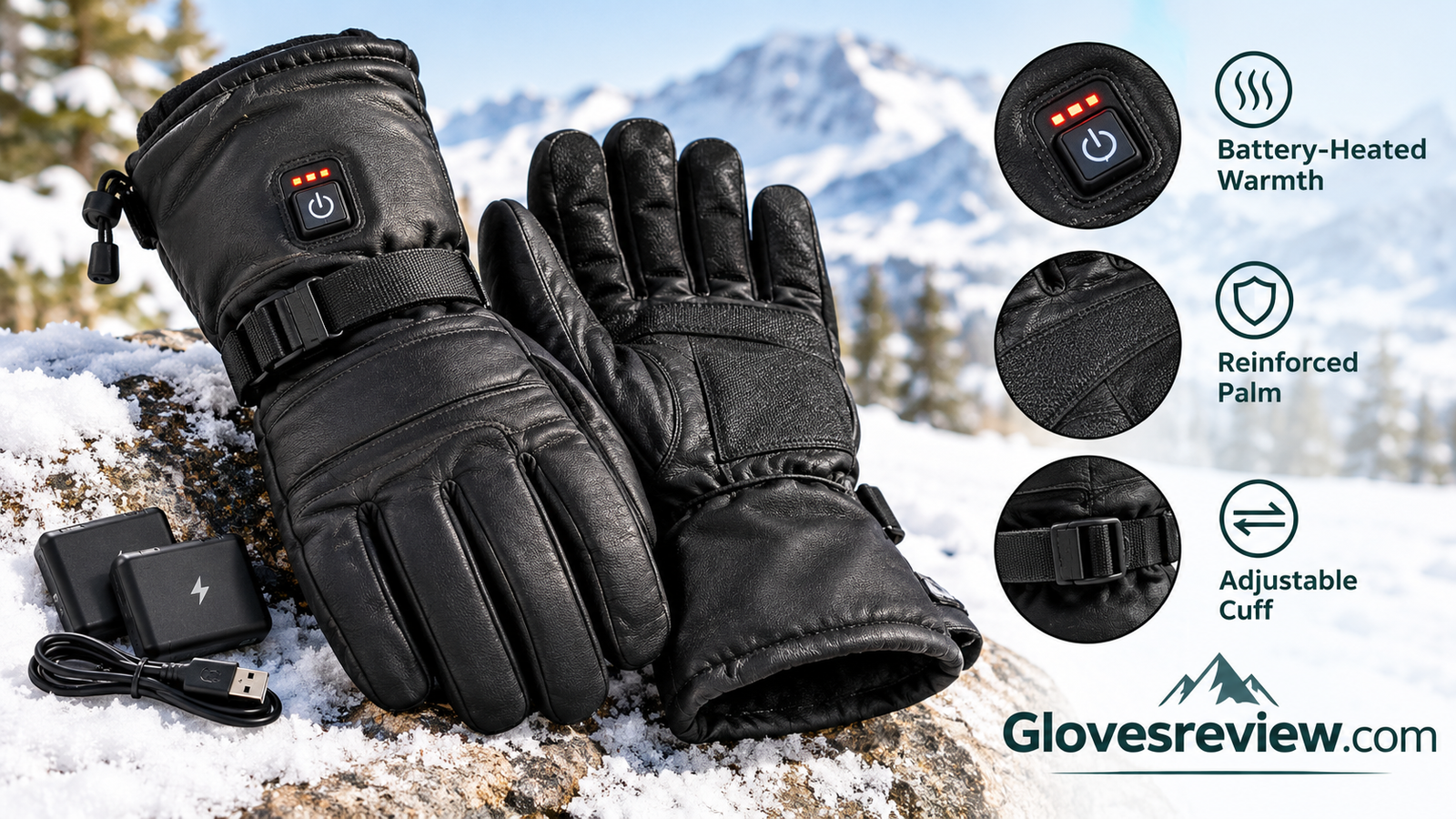
From leather gloves built for everyday winter life to mittens that trap more heat than anything else in your gear closet, these are the heated gloves worth plugging in this season.
- 9 gloves compared
- Gloves, mittens & liners
- Buying guide included
- 12 reader questions answered
Introduction
Cold hands have a way of ruining a perfectly good day
You can have the warmest coat in the world and the best boots money can buy, but if your fingers go numb halfway through a snowstorm, none of it matters. That is the problem heated gloves were invented to solve, and it is why they have quietly moved from a niche gadget for motorcyclists into a genuinely useful piece of everyday winter kit.
Traditional gloves and mittens do one thing: they trap the heat your body already produces. That works beautifully right up until the moment your circulation slows down, the wind cuts through the shell, or you have been standing still at a cold bus stop for twenty minutes. Passive insulation has a ceiling. Heated gloves push past it by adding an active heat source — thin, flexible heating elements woven into the fabric and powered by small rechargeable batteries that sit in a pocket at the wrist.
The difference is hard to overstate. Instead of merely holding onto warmth, these gloves create it. That means you can wear a thinner, more dexterous glove and still feel warmer than you would in a bulky, heavily insulated one. For anyone who works outdoors, rides through winter, walks dogs before sunrise, skates, photographs wildlife, shovels driveways, or simply has circulation that gives up before the day does, that trade-off is transformative.
The category is also more varied than most people expect. Some heated gloves are rugged leather shells built for daily wear. Some are technical softshells designed for movement and grip. Some are mittens, which almost always win on raw warmth. Some are slim liners you can slide under gloves you already own. And some are convertible or fingerless designs for people who need to use their hands constantly throughout the day.
In this guide we compare nine heated gloves and mittens across that entire spectrum. We look at how they are built, how the heating systems are laid out, how they handle wind and moisture, how they fit, and who each design genuinely suits. We also dig into the practical questions that come up once you own a pair — sizing, washing, drying, battery care, and whether heated gloves are truly worth the money over a good pair of passive winter gloves.
If you are still on the fence about the whole category, our detailed look at whether heated gloves are worth it walks through the cost-benefit side in more depth. For everyone else, let’s get straight into the picks.

At a Glance
Quick Comparison: Our Top Picks
Nine heated gloves and mittens, side by side. Every product in this guide appears in the table below, so you can scan the differences in under a minute and then read the full review for whichever design catches your eye.
Swipe to see more →
| # | Image | Product | Key Specs | Verdict | Where to Buy |
|---|---|---|---|---|---|
| 1 |  |
Top Pick Savior Heat Battery-Heated Leather Gloves Best Overall |
|
The do-everything heated glove — tough, warm, and refined enough for daily wear. | Check Price on Amazon |
| 2 |  |
Gerbing G4 Heated Gloves Best for Extreme Cold |
|
Built for serious cold and long days outside when stopping is not an option. | Check Price on Amazon |
| 3 |  |
Outdoor Research Sureshot Heated Softshell Gloves Best for Dexterity |
|
For people who need their fingers more than they need maximum bulk. | Check Price on Amazon |
| 4 | 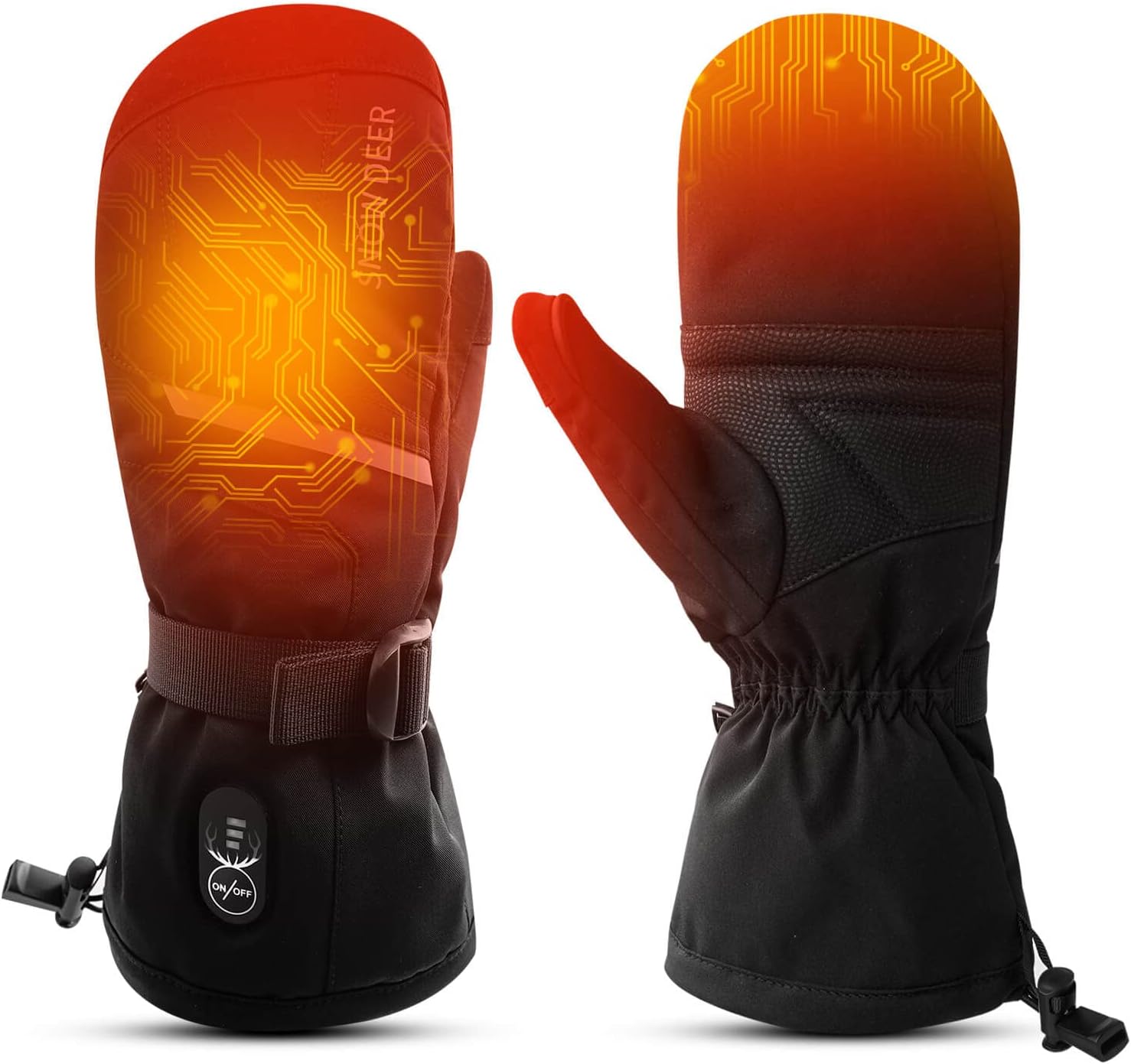 |
Snow Deer Rechargeable Battery-Heated Mittens Best Heated Mittens |
|
When warmth matters more than picking up small objects, this is the shape to buy. | Check Price on Amazon |
| 5 |  |
Wasoto Waterproof Rechargeable Heated Gloves Best Budget Waterproof |
|
Wet snow, slush and rain — without spending premium money to stay dry. | Check Price on Amazon |
| 6 |  |
YongGfte Rechargeable Fingerless Heated Gloves Best for Active Use |
|
Warm hands and free fingertips at the same time — a genuinely clever idea. | Check Price on Amazon |
| 7 | |
ORORO Heated Mittens Best Value Mittens |
|
A straightforward, well-executed mitten from a brand that lives in the heated-gear space. | Check Price on Amazon |
| 8 |  |
Fieldsheer Heated Glove Liner Best Heated Liner |
|
Turns the gloves you already love into heated gloves — the smartest upgrade path. | Check Price on Amazon |
| 9 |  |
Eddie Bauer First Ascent Guide Pro Smart Heated Gloves Best Smart Heated Gloves |
|
The polished, feature-rich option for people who want tech that stays out of the way. | Check Price on Amazon |
Section 01 — The Basics
How heated glove technology actually works
Before you can pick the right pair, it helps to understand what is happening inside them. Heated gloves are not magic — they are a surprisingly simple system done well, and once you see how the pieces fit together, the differences between models become much easier to judge.
The heating element
At the heart of every pair is a heating element: an ultra-thin, flexible wire or carbon-fiber filament that produces warmth when current passes through it. Modern elements are flat and bendy enough to be stitched into fabric layers without creating pressure points or stiff spots. In most gloves you will find them running along the back of the hand and extending down into the fingers, because that is where blood vessels sit closest to the skin and where cold bites hardest. Some designs also add coverage in the fingertips, which is where people usually feel the cold first.
The power source
Heating elements need electricity, so every pair in this guide uses rechargeable lithium-ion battery packs. Those packs are compact enough to slide into a dedicated pocket at the cuff or wrist, which keeps the weight low on your hand and makes the batteries easy to swap. A single charge gives you a stretch of warmth that varies with the heat setting you choose — think of it like a phone battery, where maximum brightness drains faster than a dim screen. Lower heat settings stretch the runtime considerably; the highest setting gives the most immediate warmth for the shortest window.
The control system
Most heated gloves let you cycle through several heat levels using a button or pad located on the back of the hand or the cuff, usually with a small light that tells you which mode you are in. That sounds like a minor detail until you are standing outside in a biting wind trying to find a control with numb fingers. The best designs put the button where your other gloved hand can find it instantly and give you clear visual feedback about the current setting.
Insulation still matters enormously
This is the part people get wrong. A heating element on its own will warm your hand and then lose most of that warmth to the air around you. Insulation and shell fabric are what keep the generated heat where it belongs. Think of the heating element as the radiator and the insulation as the walls of the house — one produces heat, the other makes it useful. This is exactly why layering matters so much in winter, and why comparisons like Thinsulate versus fleece gloves still apply even when you are buying a powered pair.
Why the format changes everything
Finally, the physical shape of the glove dictates how warm it feels. Fingers separated into individual stalls lose heat faster than fingers sharing one pocket. That is the entire reason mittens outperform gloves in raw warmth, and why a heated mitten is the closest thing to a portable hand heater. Liners, meanwhile, do not pretend to be weatherproof at all — their job is to add active heat to a shell you already trust. Understanding those three categories will save you a lot of guesswork. If you want the full technical breakdown, our guide to how heated gloves work goes even deeper.
Section 02 — Buying Guide
What to look for when buying heated gloves
Heated gloves range from inexpensive general-purpose pairs to serious technical equipment. The good news is that the things worth paying attention to are the same across every price bracket. Here is what genuinely separates a pair you will love from one that ends up in a drawer by February.
Heat coverage and placement
Not all heating layouts are equal. Some gloves heat only the back of the hand; others run elements down each finger and into the fingertips. If your hands tend to go numb at the tips first, prioritize fingertip coverage. If your whole hand cools down evenly, back-of-hand heating paired with good insulation is often plenty. More heat zones generally means a better experience, but it also draws more power, so there is always a balance.
Heat settings and control
Look for at least a few distinct heat levels rather than a simple on-off switch. Real-world conditions change constantly — a brisk walk needs less heat than standing still at an outdoor event — and being able to dial the output up and down is what makes the battery last. Controls should be easy to find by feel, easy to press with a gloved hand, and easy to read at a glance.
Battery life and charging
Think about your longest outing and work backwards from there. If you routinely spend hours outside, a pair with a longer effective runtime matters more than a pair with the highest possible heat output. Charging convenience counts too: removable battery packs are easier to charge indoors or swap for spares, while integrated systems are simpler and lighter. Either way, treat the batteries with a little care and they will serve you well for many seasons.
Shell, insulation and weather protection
The shell is your first line of defense against wind and moisture, and the insulation is what turns generated heat into lasting warmth. Leather shells break in beautifully and resist wind well; softshells prioritize movement and grip; technical waterproof membranes handle wet snow and slush. If you expect genuinely wet conditions, look closely at waterproofing claims and consider how a waterproof glove differs from a water-resistant one before you commit.
Fit and dexterity
A heated glove that fits poorly will feel colder than an unheated glove that fits perfectly. You want snug contact around the fingers without squeezing, enough room at the palm to close your hand comfortably, and a cuff that seals out spindrift. Bulk is the enemy of dexterity, which is why some people prefer a slimmer heated design layered appropriately rather than the thickest option available.
Extras that earn their keep
Small details add up: a goggle wipe, a nose wipe, a cinch at the wrist, a leash so you can pull a glove off without losing it, reinforced palms for grip and durability, and touch-friendly fingertips if you use a phone or camera constantly. None of these should drive the decision on their own, but a pair that gets them right simply feels better every single day.
Swipe to see more →
| Feature | Why it matters | What to check before buying |
|---|---|---|
| Heat zones | Determines where warmth actually reaches | Back of hand only, or fingers and fingertips too |
| Heat settings | Controls comfort and battery runtime | Multiple levels with a clear, easy-to-find control |
| Shell & insulation | Keeps generated heat trapped inside | Leather, softshell, or waterproof build to match your climate |
| Fit | Snug contact equals better warmth and control | True-to-size shape, adjustable cuff, no dead air space |
| Format | Mittens win on warmth, gloves win on grip | Choose based on what your hands do all day |
Section 03 — Best Overall
Savior Heat Battery-Heated Leather Gloves
The pair we keep reaching for when someone asks for one recommendation that covers the widest slice of winter life.
Savior Heat Battery-Heated Leather Gloves
There is something immediately reassuring about a heated glove that looks and feels like a proper leather glove rather than a piece of electronics you happen to be wearing. That is the trick the Savior Heat Battery-Heated Leather Gloves pull off. The leather shell gives them structure, wind resistance, and the kind of durability that only improves as the material breaks in to the shape of your hand.
Underneath that classic exterior sits the modern part: rechargeable battery power feeding heat into the areas that matter most. What makes this pair our overall pick is balance. It is warm without being bulky, refined enough to wear to dinner after a day in the cold, and practical enough to handle shoveling, commuting, driving, and long walks without complaint.
Key features
- Leather outer shell that resists wind and softens beautifully with use.
- Rechargeable battery heating with adjustable levels so you can match output to conditions.
- Heat coverage across the back of the hand and fingers, right where cold bites first.
- Discreet battery storage at the cuff that keeps weight off your fingers.
- Insulated interior that traps the generated warmth instead of letting it escape.
- Everyday-glove styling that does not announce itself as tech gear.
What we like
- Genuinely handsome leather build that ages well
- Strong all-around warmth for daily winter life
- Heat settings you can adjust on the fly
- Versatile enough for driving, walking and light outdoor work
- Battery placement keeps the hands feeling balanced
Keep in mind
- Leather needs occasional care to stay in top condition
- Not a substitute for a fully waterproof deep-winter shell
- Heated gloves are heavier than passive leather gloves
Performance in real conditions
Where this pair shines is consistency. On a cold morning commute, the leather cuts the wind immediately and the heating element warms the back of the hand before your fingers have a chance to stiffen up on the steering wheel. On a longer walk, you can drop to a gentler setting and let the insulation do more of the work, stretching the battery further. And because the gloves look like normal leather gloves, they transition effortlessly from a snowy sidewalk to a restaurant without the awkward “technical gear” look.
Leather does ask for a little maintenance. Wipe them down after exposure to road salt or slush, let them air dry away from direct heat, and condition the hide occasionally to keep it supple. Treat them well and they will outlast most fabric gloves in your collection.
Who it’s best for: Anyone who wants one heated glove to cover commuting, errands, dog walks, driving, and casual outdoor time. If you only buy one pair of heated gloves and you want it to look good while doing everything, start here.
Section 04 — Best for Extreme Cold
Gerbing G4 Heated Gloves
When “cold” stops meaning a chilly morning and starts meaning a full day working, riding, or waiting outside in brutal conditions.
Gerbing G4 Heated Gloves
Gerbing has been in the heated apparel world long enough that the name carries weight with people who genuinely depend on the technology — riders, outdoor workers, and anyone whose day does not stop when the temperature drops. The G4 Heated Gloves are built with that mindset: this is equipment, not a novelty.
The design leans toward coverage and protection. The heating system extends warmth across the hand and through the fingers, the outer shell is built to cut wind, and the gauntlet-style cuff seals the gap between glove and sleeve so cold air cannot sneak up your arm. It is the pair you want when the forecast is unkind and you cannot simply go indoors.
Key features
- Extended heating coverage through the back of the hand and into the fingers.
- Wind-resistant outer shell designed for sustained exposure rather than short trips.
- Rechargeable power system with adjustable heat levels.
- Gauntlet cuff that seals over jacket sleeves and locks warmth in.
- Protective construction with reinforced areas where gloves wear fastest.
- Design heritage rooted in heated apparel rather than adapted from casual gloves.
What we like
- Serious cold-weather coverage and wind protection
- Heat distribution that reaches the fingers
- Gauntlet cuff is excellent in wind and snow
- Built for long days rather than short outings
- Confidence-inspiring construction quality
Keep in mind
- More glove than a casual commuter needs
- Bulkier than slim everyday designs
- Best matched to genuinely harsh conditions
Performance in real conditions
The G4 earns its place in extreme cold because it attacks the problem from every angle. The shell handles the wind, the insulation traps what the heating element produces, the cuff stops drafts, and the heated coverage keeps working when ambient conditions would overwhelm a passive glove. For motorcyclists especially, where wind chill turns a cold day into a dangerous one, this combination is exactly what you want.
If you routinely face harsh conditions and passive gloves simply have not been enough, our guide on how to keep hands warm in extreme cold covers the layering and circulation strategies that pair perfectly with a glove like this one.
Who it’s best for: Riders, outdoor workers, and anyone who spends long, unbroken stretches outside in genuinely brutal weather. If your gloves need to perform like safety equipment rather than accessories, this is the category to buy into.
Section 05 — Best for Dexterity
Outdoor Research Sureshot Heated Softshell Gloves
For the people who need their hands working — gripping, adjusting, carrying, filming — and still need them warm.
Outdoor Research Sureshot Heated Softshell Gloves
There is a real tension in winter glove design: warmth wants bulk, and dexterity hates it. Most heated gloves resolve that tension by leaning toward warmth and accepting that you will fumble with zippers. The Sureshot goes the other way. Its softshell construction keeps the profile relatively trim and the fingers articulated, while the heating element handles the warmth that the reduced bulk would otherwise cost you.
That is the promise of a well-designed heated glove in a nutshell — you get to wear less insulation because you are carrying a heat source. Softshell fabric adds stretch and grip, which makes this pair feel natural for active use rather than merely warm.
Key features
- Softshell construction that stretches and moves with the hand.
- Heated back-of-hand coverage for fast warm-up in cold conditions.
- Articulated, dexterity-first cut that keeps fingers usable.
- Grip-friendly palm and fingers for poles, tools, and handlebars.
- Adjustable wrist closure for a secure, draft-free fit.
- Everyday-friendly weight and bulk that fits in a jacket pocket.
What we like
- Excellent hand feel and freedom of movement
- Softshell stretch makes grip feel natural
- Low bulk for a heated glove
- Great for active, hands-on winter days
- Adjustable cuff keeps the fit dialed in
Keep in mind
- Less raw insulation than a heavy mitten
- Softshell prioritizes movement over deep-winter bulk
- Best paired with a liner in the harshest weather
Performance in real conditions
This is the glove you forget you are wearing, which is the highest compliment a winter glove can earn. You can grip a ski pole, adjust a camera dial, handle keys, or tie a knot without the usual wrestling match. The heating element covers you during the still moments — the lift line, the trailhead, the tailgate — when a purely active glove would start to lose ground.
For people building a layering system, a pair like this pairs beautifully with the layering philosophy we outline in our guide to glove liners: a slim heat source inside, a protective shell outside, and maximum control in between.
Who it’s best for: Skiers, photographers, dog owners, parents, and anyone whose hands are busy all day. If you have ever pulled off a thick glove just to use your phone or fiddle with a zipper, this design solves that problem.
Section 06 — Category Deep Dive
Best heated mittens: Snow Deer vs ORORO
If your priority is raw warmth rather than finger-by-finger control, a heated mitten is the most effective design in the entire category. Here are the two we would shortlist.
The physics are simple and unforgiving. In a glove, each finger loses heat on its own, surrounded by its own pocket of air and its own stretch of fabric. In a mitten, the fingers share one chamber, sharing warmth and creating a larger pocket of still air for the insulation to protect. Add a heating element to that design and you get the warmest possible hand covering short of putting your hands in your pockets.
The trade-off is dexterity. You will not thread a zipper or pick up a coin in a mitten. But for standing at a rink, walking in deep cold, snow blowing the driveway, or waiting anywhere for any length of time, mittens win decisively. This is a debate we cover in depth in our mittens versus gloves for warmth comparison.
Swipe to see more →
| Product | Format | Heat System | Best for | Where to Buy |
|---|---|---|---|---|
| Snow Deer Rechargeable Battery-Heated Mittens | Mitten with insulated lining | Rechargeable, adjustable heat levels | Maximum warmth in still, deep cold | Check Price on Amazon |
| ORORO Heated Mittens | Weather-resistant mitten shell | Rechargeable, adjustable heat levels | Everyday value and outdoor chores | Check Price on Amazon |
Snow Deer Rechargeable Battery-Heated Mittens
The Snow Deer mittens do exactly what a mitten should do: they wrap the entire hand in one warm environment and then add active heat to that environment. The result is the most immediate, enveloping warmth of anything in this guide. The soft lining feels comfortable from the first wear, and the rechargeable battery system with adjustable levels lets you match output to how long you plan to be out.
These are the mittens to choose when stillness is the challenge — spectating, fishing through an ice hole, photographing wildlife, or simply standing at a bus stop while the wind does its worst.
Key features
- Mitten design that pools finger warmth into one insulated chamber.
- Rechargeable battery heating with adjustable heat levels.
- Soft, comfortable lining that feels good against the skin.
- Weather-ready outer shell for snow and wind.
- Easy-to-use controls that work with cold fingers.
- Secure cuff that keeps snow out and warmth in.
What we like
- Warmest-feeling format in the guide
- Soft lining is comfortable for long wear
- Adjustable heat helps manage battery life
- Great for static activities in deep cold
Keep in mind
- Limited fine dexterity compared to gloves
- Bulkier than glove alternatives
Who it’s best for: Anyone who values warmth over finger control. If your hands are mostly in your pockets anyway, a heated mitten will outperform every glove you have ever owned.
ORORO Heated Mittens
ORORO has built its reputation almost entirely around heated apparel, and that focus shows in the details. These mittens are straightforward, thoughtfully put together, and designed by people who clearly understand what makes a heated garment useful in daily life rather than just impressive in a product photo.
The weather-resistant shell handles everyday snow and wind, the rechargeable system keeps warmth flowing on demand, and the adjustable heat levels give you control over comfort and runtime. Nothing here feels over-engineered; it simply works.
Key features
- Mitten warmth profile for maximum heat retention.
- Rechargeable battery power with adjustable heat levels.
- Weather-resistant outer shell for snow, sleet and wind.
- Comfortable interior for all-day wear.
- Simple, reliable control scheme.
- Straightforward design from a dedicated heated-gear brand.
What we like
- Excellent everyday warmth in mitten form
- Adjustable heat keeps runtime flexible
- Weather-resistant build for real-world conditions
- From a brand focused on heated apparel
Keep in mind
- Mittens reduce finger independence
- Not designed for precision tasks
Who it’s best for: Shoveling, snow blowing, rink-side spectating, winter walks, and general outdoor chores where you need warmth far more than you need to pick things up.
Section 07 — Best Budget Waterproof
Wasoto Waterproof Rechargeable Heated Gloves
Cold is manageable. Cold and wet is miserable. This pair targets the second problem without demanding a premium budget.
Wasoto Waterproof Rechargeable Heated Gloves
Wet hands lose heat dramatically faster than dry ones, which is why waterproofing deserves more attention than most shoppers give it. The Wasoto gloves put a waterproof outer shell together with a rechargeable heating system and an insulated interior, creating a genuinely capable package for slushy commutes, wet snow, and the kind of damp cold that soaks right through fabric gloves.
They also make a compelling case as a first pair of heated gloves. If you are not sure how much you will use them, buying into active warmth without a premium price tag is a sensible way to find out.
Key features
- Waterproof outer shell built for wet snow, slush and rain.
- Rechargeable heating system with adjustable warmth levels.
- Insulated interior that traps heat once it is generated.
- Full-finger coverage for everyday winter tasks.
- Value-oriented build that covers the essentials well.
- Practical cuff closure to keep moisture from creeping in.
What we like
- Waterproof build for genuinely wet conditions
- Active heat plus insulation works extremely well
- Approachable entry point into heated gloves
- Good all-purpose shape for chores and commuting
Keep in mind
- Built for value rather than premium refinement
- Expect everyday durability rather than expedition grade
Performance in real conditions
The magic combination here is waterproofing plus heat. In dry cold, insulation alone can be enough. In wet cold, insulation gets damp, collapses, and stops doing its job — which is exactly when a heating element keeps you comfortable anyway. That makes these gloves particularly good for snow clearing, wet dog walks, and damp coastal winters where the air itself feels heavy.
If you plan to be out in soaking conditions regularly, our roundup of the best waterproof winter gloves is worth a read alongside this one, and our guide to the best gloves for snow shoveling covers exactly the kind of wet, repetitive work this pair handles well.
Who it’s best for: Anyone dealing with wet winter weather on a budget — wet commutes, slushy sidewalks, snow clearing, and outdoor chores where dampness is the real enemy.
Section 08 — Best for Active Use
YongGfte Rechargeable Fingerless Heated Gloves
Some people need warmth and finger freedom at exactly the same time. That is a surprisingly hard combination to find — and this is one of the cleverer answers.
YongGfte Rechargeable Fingerless Heated Gloves
There is a specific kind of winter frustration that only certain people understand: you need your fingertips for something — a phone screen, a camera, a small tool, a set of keys — but every time you take your glove off, the cold punishes you for it. Fingerless heated gloves attack that problem directly by keeping the palm and back of the hand warm while leaving the fingertips exposed for precise work.
The rechargeable heating element does the heavy lifting around the hand, and the fingerless design keeps you from ever needing to fully remove a glove mid-task. For quick, repetitive jobs, that is a genuine workflow improvement.
Key features
- Fingerless / convertible design that exposes fingertips when needed.
- Rechargeable battery heating across the hand.
- Lightweight construction that stays out of the way.
- Quick-access dexterity for phones, tools, keys and gear.
- Fast on-and-off transitions between tasks.
- Comfortable everyday fit for active wear.
What we like
- True fingertip dexterity without removing the glove
- Active heat where the hand loses warmth fastest
- Light and unobtrusive for busy hands
- Excellent for photography, tool use and device handling
Keep in mind
- Exposed fingertips are colder than a full-coverage design
- Best for active tasks rather than long stationary periods
Performance in real conditions
This design makes the most sense when your hands are moving. Adjusting a tripod, checking a phone, handling dog leashes and treat bags, working with small parts — these are the moments where a full glove becomes a barrier and a bare hand becomes painfully cold. The heated fingerless approach splits the difference effectively, keeping the core of the hand warm and ready while your fingertips do their work.
For anything longer than a few minutes of stillness, pair them with a heavier option or a shell. Used as intended, though, they solve a problem that very few gloves even acknowledge.
Who it’s best for: Photographers, mechanics, pet owners, tradespeople, and anyone whose work requires frequent, precise finger use in the cold.
Section 09 — Best Heated Liner
Fieldsheer Heated Glove Liner
The upgrade path that keeps your favorite outer gloves and simply adds heat to them.
Fieldsheer Heated Glove Liner
Not everyone needs a completely new pair of heated gloves. If you already own an outer glove that fits perfectly, feels great, and handles your local weather, the smartest move is often to add heat underneath rather than replace everything. That is exactly what the Fieldsheer Heated Glove Liner is for.
The slim, flexible construction slides inside your existing shell and adds battery-powered warmth right where your hand needs it. It is a modular approach to winter comfort, and it is remarkably effective because it lets you control two variables independently: the warmth source inside and the weather protection outside.
Key features
- Slim liner profile designed to layer inside an existing glove or mitten.
- Battery-powered heating for active warmth on demand.
- Flexible knit construction that moves naturally with the hand.
- Works with multiple outer shells for changing conditions.
- Low-bulk design that preserves dexterity.
- Modular system — upgrade warmth without replacing your whole glove setup.
What we like
- Turns gloves you already own into heated gloves
- Extremely versatile layering approach
- Maintains the dexterity of your outer glove
- Great for variable conditions across a season
Keep in mind
- You still need a suitable outer shell for weather protection
- Adding a liner can tighten the fit of snug gloves
Performance in real conditions
Layering is one of the oldest principles in cold-weather clothing, and a heated liner is the modern twist on it. On a mild cold day, you can wear the liner alone or under a light shell. On a brutal day, the same liner goes inside your heaviest pair, and suddenly your oldest gloves perform like premium heated gear. That flexibility is worth a lot over a full winter, especially in climates where one week feels like autumn and the next feels like the arctic.
Fit is the one thing to plan for. Make sure the outer glove has enough interior volume to accept a liner without compressing your fingers — our guide on how glove liners work explains how to get that layering relationship right.
Who it’s best for: Anyone with a favorite pair of winter gloves who wants to add heat without starting over, and people who value a modular system they can adapt to changing conditions.
Section 10 — Best Smart Heated Gloves
Eddie Bauer First Ascent Guide Pro Smart Heated Gloves
The polished, feature-rich option for people who want advanced heat management that never feels complicated.
Eddie Bauer First Ascent Guide Pro Smart Heated Gloves
The First Ascent line is Eddie Bauer’s technical, guide-driven side, and the Guide Pro heated gloves carry that DNA into a category where refinement matters more than most buyers realize. This is the pair for someone who wants premium materials, thoughtful construction, and intelligent heat management in one package that works just as well on a mountain trail as it does on a city street.
“Smart” here means the heat control is designed to be intuitive and responsive rather than something you fight with. The goal of good heated-gear technology should be invisibility — you simply feel comfortable and stop thinking about it — and that philosophy runs through this design.
Key features
- Smart heat control designed for intuitive, on-the-go adjustment.
- Premium mixed-material construction balancing durability and comfort.
- Heated coverage across the hand for fast, even warmth.
- Technical pedigree from a guide-focused product line.
- Trail-to-town styling that works across different settings.
- Thoughtful detailing in the fit, cuff and grip areas.
What we like
- Refined build quality and materials
- Heat management that feels effortless
- Versatile styling for outdoor and everyday use
- Technical construction from an experienced outdoor brand
Keep in mind
- More feature-rich than a basic winter glove
- Best suited to people who will use the tech regularly
Performance in real conditions
This pair suits the person who moves between worlds — a cold morning hike, a school run, a weekend at a cabin, a winter trip where luggage space is limited and every piece of gear has to earn its place. The construction feels solid, the heat is there when you want it, and the overall package is cohesive rather than a collection of gimmicks.
If your winter involves a lot of screen time outdoors, it is worth checking our guide to the best touchscreen gloves as well, since device-friendly fingertips are a feature many buyers only appreciate once they are standing in the cold trying to answer a message.
Who it’s best for: Anyone who wants a premium, feature-rich heated glove that performs across outdoor adventures and everyday winter life without feeling overly technical.
Section 11 — Ownership Guide
Fit, care and battery safety: how to make heated gloves last
Heated gloves are an investment in comfort. A little attention to fit, cleaning and battery habits will keep them performing like new for many seasons.
Getting the fit right
Fit is the single biggest factor in how warm a glove feels. Too tight and you restrict circulation — which ironically makes your hands colder, because warmth travels in the blood. Too loose and you create pockets of dead air that your body has to heat up first. The right fit is snug but not compressive, with your fingertips sitting comfortably near the ends of the fingers and no large empty space at the palm.
Sizing varies between brands and even between models within a brand, so measure rather than guess. Our step-by-step guide to measuring hand size for gloves takes the guesswork out of it, and our article on how winter gloves should fit explains what a correct fit actually feels like once they are on.
Washing heated gloves
Heated gloves contain electronics, so the usual “throw everything in the machine” approach does not apply. In most cases you will remove the batteries first, close all Velcro and zippers, and follow the manufacturer’s specific instructions — which may be hand washing, a gentle cycle in a laundry bag, or spot cleaning only. Never assume; check the label for your specific pair.
For the general principles that apply across winter gloves, our guide on how to wash winter gloves covers the safe methods and the common mistakes. The most important rule is simple: batteries out before any water goes near the glove.
Drying without damage
Heat is the enemy of technical fabrics, adhesives and heating elements. Never blast wet gloves with a radiator, hair dryer, or clothes dryer on high. Instead, remove the batteries, open the gloves fully, and let them air dry at room temperature, ideally with some airflow around them. Stuffing them with absorbent paper can speed things up gently. Our guide to drying wet gloves walks through the fastest safe methods.
Battery care and safety
- Charge before you store. Lithium-ion batteries prefer to be stored with a partial charge rather than completely flat.
- Keep them at moderate temperatures. Extreme heat and extreme cold both shorten battery life. Bring batteries indoors when gloves are not in use for long stretches.
- Use the charger supplied with the product. Mixing chargers from different devices is a common cause of problems.
- Inspect regularly. If a battery pack or cable looks damaged, swollen, or behaves oddly, stop using it.
- Don’t charge unattended overnight on flammable surfaces. Charge on a hard, flat surface away from bedding and clutter.
Reproofing and shell care
Over time, the durable water repellent finish on technical shells wears down, and water starts to soak into the outer fabric instead of beading off. That does not necessarily mean the glove has failed — it usually means the surface treatment needs refreshing. Learning how to waterproof gloves again is a cheap, satisfying bit of maintenance that extends the useful life of the shell significantly.
Section 12 — Buying by Activity
Matching heated gloves to what you actually do
The “best” heated glove is the one that matches your life. Here is how the picks in this guide line up with the most common winter activities.
It is tempting to buy the warmest-looking pair on the shelf and hope for the best. But warmth is only one variable. Dexterity, weather protection, bulk, cuff length, and battery strategy all interact with what your hands are doing. Someone standing still for three hours has completely different needs from someone working a shovel for forty minutes or riding a bike across town.
Swipe to see more →
| Activity | What matters most | Best format | Consider |
|---|---|---|---|
| Commuting & errands | Comfort, dexterity, all-day looks | Leather or softshell glove | Savior Heat, OR Sureshot |
| Shoveling & snow clearing | Waterproofing, grip, raw warmth | Waterproof glove or mitten | Wasoto, ORORO mittens |
| Riding & long exposure | Wind protection, coverage, runtime | Gauntlet-style heated glove | Gerbing G4 |
| Standing still in deep cold | Maximum heat retention | Heated mitten | Snow Deer |
| Precision work outdoors | Fingertip access and control | Fingerless or slim heated glove | YongGfte, Fieldsheer liner |
Commuters and everyday wearers
If your winter life is mostly urban — walking to transit, driving, running errands, waiting outside schools and rinks — you want something that looks natural, fits well, and warms up fast. Leather or softshell heated gloves are ideal here because they balance refinement with real protection. If your commute involves a lot of snow clearing on either end, look at our dedicated picks for snow shoveling gloves to see what works best for that specific chore.
Outdoor workers and tradespeople
Long hours outside change the calculation entirely. Durability, grip, cuff sealing, and reliable battery life matter more than styling. Heated gloves that pair well with a work-focused system — and good advice on winter work gloves — will serve you far better than a fashion-oriented pair that wears out in a month. Add a liner when temperatures drop sharply, and keep a spare battery charged if your day runs long.
Skiers, riders and winter athletes
For snowsports, dexterity and weather protection dominate. You need to grip poles, adjust bindings, and handle gear with cold, sometimes wet hands. A softshell heated glove or a heated liner under a technical shell gives you the best of both worlds. Our guides to the best ski gloves and how to choose ski gloves go deep on the specifics of that category, while our tips for keeping hands warm while working outside apply equally well to long days on the mountain.
Spectators, photographers and dog owners
If you spend long stretches standing or sitting in the cold, nothing beats a heated mitten. Your hands are not busy, so the dexterity trade-off costs you almost nothing, and the shared warmth chamber gives you the most heat per minute of battery life. Keep a fingerless pair in your pocket for the moments when you need to operate a camera or phone, and you have a genuinely complete system.
Reader Questions
Frequently asked questions about heated gloves
Everything people ask us most often, answered plainly.
How long do heated gloves last on a single charge?
It depends heavily on the heat setting you choose and how cold it is outside. Think of it exactly like a phone battery: the highest setting delivers the most warmth and drains fastest, while a lower setting stretches the runtime considerably. In mild conditions on a gentle setting, a charge can comfortably cover a long outing; on maximum output in deep cold, expect a shorter window. If you routinely spend many hours outside, look for a pair with swappable battery packs so you can carry a spare and keep going without waiting for a recharge.
Are heated gloves safe to wear?
Yes, when used as directed. Modern heated gloves use low-voltage rechargeable batteries and thin, flexible heating elements designed specifically for clothing. The main safety habits are simple: use the charger that came with the product, stop using any battery pack that looks damaged or swollen, don’t charge unattended on soft or flammable surfaces, and follow the manufacturer’s instructions for washing and storage. If you have reduced sensation in your hands or a medical condition that affects circulation or heat sensitivity, it is worth talking to a clinician before relying on heated gear.
Can I wash heated gloves in a machine?
Sometimes, but never with the batteries in. Always remove battery packs before any cleaning, close Velcro and zippers, and check the care label for your specific pair — some are hand-wash only, some tolerate a gentle cycle inside a laundry bag, and some are spot-clean only. Avoid fabric softener and high heat, both of which can damage technical fabrics and internal components. Our guide to washing winter gloves covers the safest methods in detail.
Which is warmer: heated gloves or heated mittens?
Mittens, almost always. Because fingers share one chamber inside a mitten, they keep each other warm and the insulation protects a larger pocket of still air. Gloves separate each finger, which costs you some heat retention but gives you far better control. Heated mittens therefore give you the most warmth per charge, while heated gloves give you the most usable hands. Choose based on what your hands actually do during the day — and see our full mittens versus gloves comparison if you are torn.
Do heated gloves work in extreme cold?
They work, and they work extremely well, but they are not a magic wand. In genuinely extreme conditions, the heating element is only one part of the system — insulation, wind protection, cuff sealing, fit, and your own circulation all matter just as much. The best approach in brutal cold is to combine a well-insulated heated glove or mitten with good layering habits and sensible movement. If you regularly face harsh conditions, our guide on keeping hands warm in extreme cold is worth reading before your next outing.
Can I use heated gloves for skiing or snowboarding?
Absolutely, and many people do — especially those whose hands get cold on lifts or in windy conditions. The main things to look for are waterproofing, good grip, cuff sealing, and enough dexterity to handle poles and bindings. Some skiers prefer heated liners under a technical shell rather than a fully heated glove, since it keeps the outer layer fully focused on weather protection. Whichever route you choose, make sure the fit works with your jacket sleeves and that you can operate the controls with the gloves on.
Are heated gloves really worth the money?
For most people who spend meaningful time outside in winter, yes. Passive gloves can only trap the heat you produce, and once your hands get cold, more insulation does not always help. Heated gloves add warmth actively, which lets you wear a thinner, more dexterous glove while feeling warmer than a bulkier unheated pair. The people who benefit most are those with poor circulation, those who stand still for long stretches, and anyone whose work or hobbies keep them outdoors regardless of temperature. Our detailed look at whether heated gloves are worth it breaks down the trade-offs.
What size heated gloves should I buy?
Buy the size that matches your measured hand, not your usual glove size in another brand. You want a snug fit without compression: fingers reaching close to the ends, no tight squeeze across the knuckles, and no large air pocket at the palm. Tight gloves restrict circulation and make hands colder, while loose gloves force your body to heat dead air first. Measure before ordering using our guide on measuring your hand size for gloves, and double-check the sizing notes for the specific model.
Do heated gloves work with touchscreens?
Some do and some do not, so it is worth checking before buying if phone use matters to you. Touch-friendly fingertips are a feature that sounds minor until you are standing in the cold trying to answer a message or use a map. If your chosen pair does not include them, a fingerless heated design or a slim liner with touch-friendly fingertips solves the problem without compromising warmth. We keep a running list of the best touchscreen gloves if this is a priority.
Can I replace the batteries in heated gloves?
In most designs, yes — the battery packs are separate components that slide into a cuff pocket and can be swapped or replaced. That is a real advantage, because it means you can carry a charged spare for long days and replace the packs when they eventually age rather than discarding the whole glove. Check how the battery connects before buying if easy replacement matters to you, and always buy replacement packs that are intended for your specific model.
Are heated gloves waterproof?
Some are, some are only water-resistant, and the difference matters more than people expect. A water-resistant glove handles light snow and brief contact with moisture; a waterproof glove is built for sustained wet conditions like heavy wet snow, slush, and rain. In wet cold, insulation loses effectiveness quickly once it gets damp, which is exactly where a heating element combined with a waterproof shell shines. If wet weather is your main challenge, read our explainer on waterproof versus water-resistant gloves before deciding.
How should I store heated gloves during the off-season?
Clean them according to the care instructions, let them dry completely, remove the batteries, and store everything in a cool, dry place away from direct sunlight. Batteries prefer a partial charge for long-term storage rather than being left completely flat or permanently connected to a charger. Avoid damp basements and hot attics, both of which shorten the life of fabrics and battery packs. Done properly, a good pair of heated gloves should give you many seasons of reliable warmth.
Should I wear a liner under my heated gloves?
You can, and in genuinely cold conditions it is a smart move — as long as the glove has enough interior room that the liner does not compress your fingers. A thin liner adds a layer of trapped air and gives you a dry, comfortable layer against your skin. The alternative approach is even more flexible: buy a dedicated heated liner and wear it under a shell you already trust. Either way, the principle is the same, and our guide to how glove liners work explains the layering logic.
Final Verdict
Which heated gloves should you buy?
After working through all nine pairs, the right choice comes down to one question: what do your hands actually do in winter?
If you want one pair that covers almost everything — commuting, driving, walking, light work, and looking good while doing it — the Savior Heat Battery-Heated Leather Gloves are the pick we would make. The leather build, adjustable heat, and everyday styling make them the most complete package in this guide.
If your winters are genuinely punishing and your gloves need to behave like equipment, the Gerbing G4 Heated Gloves bring the coverage and wind protection that serious cold demands. If your priority is usable fingers rather than maximum bulk, the Outdoor Research Sureshot Heated Softshell Gloves are the most natural-feeling heated gloves here.
For pure warmth, nothing beats a mitten: the Snow Deer Rechargeable Battery-Heated Mittens win on enveloping heat, while the ORORO Heated Mittens are the sensible everyday choice. Wet weather on a budget points to the Wasoto Waterproof Rechargeable Heated Gloves. Constant, precise finger work points to the YongGfte Rechargeable Fingerless Heated Gloves. If you love the gloves you already own, the Fieldsheer Heated Glove Liner is the smartest upgrade available. And if you want the most polished, feature-rich experience, the Eddie Bauer First Ascent Guide Pro Smart Heated Gloves deliver it.
Whichever pair you choose, buy for fit first, match the format to your activity, and take care of the batteries. Do those three things and cold hands stop being something you plan your winter around.