
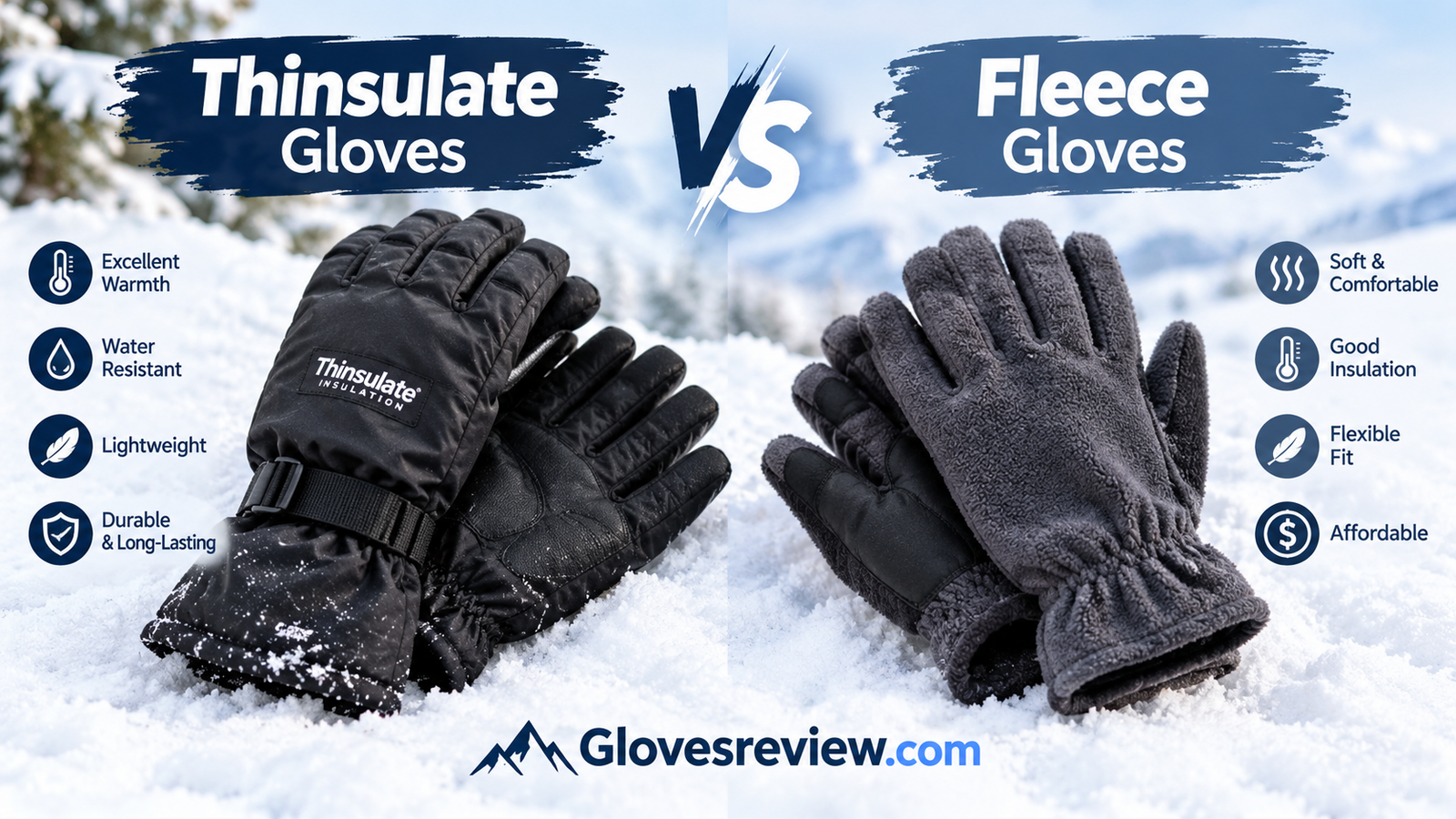
Thinsulate vs Fleece Gloves: Which One Actually Keeps Your Hands Warmer?
Two of the most common glove materials on the shelf, two very different ways of fighting the cold. Here is how they compare on warmth, wetness, wind, dexterity, durability, and price, so you can buy the right pair the first time.
The Short Answer
If you will be outside in genuinely cold air for long stretches, a Thinsulate-insulated glove with a weather-resistant shell will almost always keep you warmer. If you want something soft, light, breathable, and easy to wear for everyday errands, commutes, or as a liner, fleece is hard to beat. The rest of this guide explains why, and shows where each one quietly fails so you do not find out the hard way at the bus stop.
Standing in front of a wall of winter gloves is a strangely overwhelming experience. Every pair promises warmth. Half of them mention Thinsulate, a third mention fleece, and many mention both in the same breath. The labels are not lying, but they are not telling you the full story either, because these two terms describe different things. One is a brand of insulation. The other is a type of fabric. Comparing them is a bit like comparing a down jacket to a wool sweater: both can keep you warm, but they work differently, fail differently, and shine in different situations.
This guide breaks the comparison down in plain language. We will look at what each material is made of, how it actually holds heat, how it behaves when it gets wet or windy, how much it costs to wear in terms of bulk and lost dexterity, and how long it tends to last. Along the way you will find tables, pros and cons, and practical recommendations for real situations, from clearing a driveway to commuting on a freezing platform. If you are still narrowing down your options, our guides to the best winter work gloves and the best waterproof winter gloves are good companions to this one.
1. What Thinsulate and Fleece Really Are
Before comparing performance, it helps to be clear about what you are comparing, because the two names sit on different levels of a glove’s construction.
Thinsulate: a branded synthetic insulation
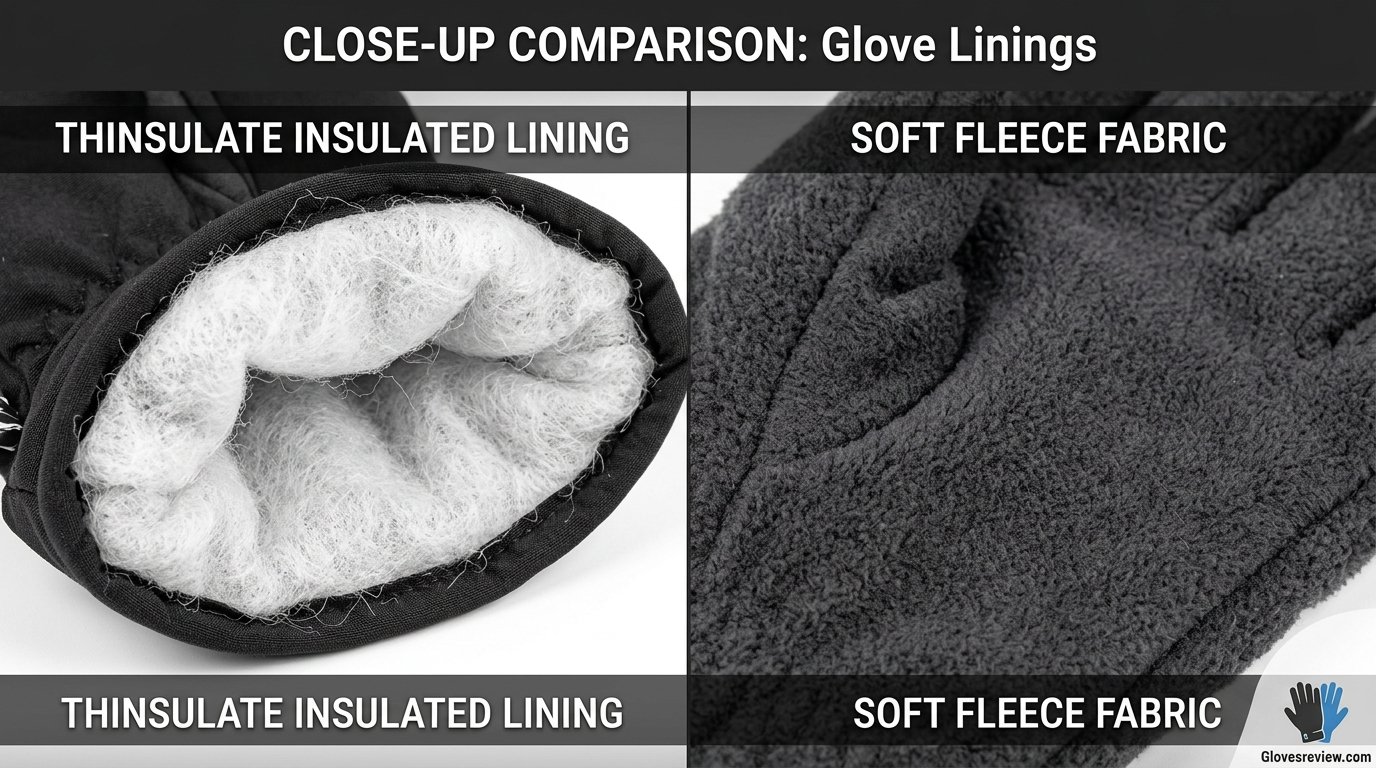
Thinsulate is a trademarked insulation made by 3M. It is built from very fine synthetic microfibers, typically polyester and polyolefin, arranged into a lightweight batting. Because the fibers are so fine, an enormous number of them can be packed into a thin layer, and the tiny gaps between them hold still air. Still air is what actually keeps you warm; the fibers are simply the scaffolding that stops that air from moving.
On a glove, Thinsulate is rarely the thing you touch. It is sandwiched between an outer shell (leather, nylon, polyester, or a waterproof laminate) and a thin inner lining. That is an important detail: when someone says “Thinsulate gloves,” they are describing the insulation in the middle, and the real-world performance also depends heavily on the shell and lining around it.
Thinsulate is also sold in different weights, usually described in grams of insulation per square meter. You will commonly see 40g, 60g, 100g, 150g, and 200g. Higher numbers generally mean more warmth and more bulk. A 40g glove is a cool-weather option; a 150g or 200g glove is meant for serious cold.
Fleece: a soft knit fabric
Fleece is a synthetic fabric, almost always polyester, that has been knitted and then brushed so the surface fibers stand up into a soft, fuzzy pile. That pile is what traps air. Fleece comes in many weights, from thin microfleece to thick, plush versions, and it can be used as the outer fabric of a glove, as the lining, or as a standalone liner you wear underneath a shell.
Unlike Thinsulate, fleece is a finished textile. A pair of simple fleece gloves can be just that: one layer of fabric, stitched into the shape of a hand. That makes them inexpensive, light, and comfortable, but it also means they lack the shell and membrane features that cold, wet, windy conditions often demand.
Browse insulated and fleece glovesSee current styles, sizes, and customer reviews
2. How Each Material Traps Heat
Every winter glove, no matter the brand, relies on the same principle: slow down the escape of the heat your hand produces. Your hand warms the thin layer of air closest to your skin. If that air stays put, you stay warm. If cold air or wind pushes it away, or if moisture conducts the heat out faster, you cool off quickly. The difference between Thinsulate and fleece lies in how well they hold that air in place.
Thinsulate’s approach: dense, tiny air pockets
Thinsulate’s microfibers create a huge number of very small air pockets in a very thin layer. Small pockets matter because air that cannot circulate does not carry heat away by convection. This is why a thin Thinsulate layer can match the warmth of a much thicker traditional fill. It also explains why Thinsulate gloves can feel surprisingly slim for how warm they are.
The fibers also absorb very little water. A damp Thinsulate layer loses some performance, but it does not collapse the way some natural fills do. That quality is a major reason the insulation is popular in gloves that are expected to face snow, sleet, and sweat.
Fleece’s approach: a lofty pile of fibers
Fleece traps air in the fluffy pile on its surface and between its knit loops. It works well, but the air pockets are larger and less uniform, and the fabric is easier for wind to move through. In still air, a thick fleece glove can feel remarkably cozy. In a breeze, the same glove can feel thin, because the wind penetrates the knit and pushes the warm air out.
Fleece also compresses over time. Wear and washing flatten the pile, and a glove that felt plush in its first season can feel noticeably thinner in its third. Thinsulate battings are more stable inside the glove, although they too can shift or clump if a glove is washed roughly.
Why the shell changes everything
Neither material works in isolation. A Thinsulate layer inside a thin, non-wind-resistant shell leaks heat. A fleece glove under a windproof shell performs far better than fleece alone. When you compare products, think of the glove as a system: shell, insulation, lining, and cuff. The insulation name on the label is only one part of the equation.
| Feature | Thinsulate | Fleece |
|---|---|---|
| What it is | Branded synthetic microfiber insulation | Brushed polyester knit fabric |
| How it holds heat | Dense, tiny air pockets in a thin batting | Air trapped in lofty pile and knit loops |
| Typically used as | Hidden insulation layer | Outer fabric, lining, or liner |
| Warmth per thickness | High | Moderate |
| Effect of wind | Depends on the shell around it | Wind passes through the knit unless backed by a membrane |
Common myths worth clearing up
Myth: thicker always means warmer. A thick glove that squeezes your hand can be colder than a thinner glove that fits well, because compressed insulation and restricted blood flow both reduce warmth. Loft needs room to work.
Myth: Thinsulate is a type of glove. It is an ingredient. Two gloves can both advertise it and perform very differently depending on weight, shell, and construction.
Myth: fleece is only for kids and casual wear. Fleece is widely used by hikers, runners, and mountaineers as a core layer, because it is light, breathable, and dries quickly. Its limits show up mainly in wind and wet, not in comfort or quality.
Myth: any waterproof glove keeps you warm. Waterproofing keeps water out; insulation keeps heat in. You need both for cold, wet days.
Compare insulated winter glovesFilter by insulation weight and shell type
3. Warmth Compared: What Happens in Real Cold
This is the question most readers care about most, and the honest answer is that it depends on the temperature, the wind, and how active you are. Still, there are consistent patterns.
Mild to cool conditions
When temperatures hover just above or around freezing and you are moving around, a good fleece glove is often all you need. Fleece is soft, light, and quick to warm up, and it breathes well enough that your hands do not overheat while you walk, run errands, or wait for a ride. A light Thinsulate glove in the 40g to 60g range is also comfortable here, with a slight edge when the air is damp.
Cold conditions
Once the thermometer sinks well below freezing, Thinsulate pulls ahead. A glove with 100g to 150g of Thinsulate insulation, paired with a weather-resistant shell, holds heat noticeably longer than a single layer of fleece. Fingers are the first thing to suffer in the cold because they have a large surface area compared with their volume, and any glove that cannot slow heat loss at the fingertips will let you down quickly.
Extreme cold
In extreme cold, neither material alone is enough. You need a heavily insulated glove or mitten, a windproof and waterproof shell, and ideally a liner. In that scenario, Thinsulate at 200g or more is a solid base, and a fleece liner underneath adds a flexible extra layer you can remove when conditions change. If you spend time in truly punishing weather, our guide on how to keep your hands warm in extreme cold covers the habits and gear that matter beyond material choice.
A practical warmth guide
The ranges below are rough starting points, not guarantees. Individual circulation, activity level, and wind all change the real result.
| Conditions | Fleece only | Thinsulate insulated |
|---|---|---|
| Cool, dry, light activity | Comfortable | Comfortable, possibly warm |
| Around freezing, calm | Fine for short periods | Comfortable for hours |
| Below freezing, breezy | Cold fingers, especially when still | Good with a wind-resistant shell |
| Deep cold, long exposure | Not enough alone | Good at higher weights, better with a liner |
Shop cold-weather glovesInsulated options for freezing temperatures
4. Wet, Wind, and Weather Resistance
Cold air is bad enough. Cold, wet, windy air is what really ruins a day outdoors. Moisture conducts heat away from your skin far faster than dry air, and wind strips away the warm layer your body works so hard to maintain.
How Thinsulate handles moisture
Thinsulate fibers are designed to resist absorbing water, so the insulation tends to keep working even when it is a little damp. That does not make a glove waterproof, though. If the shell lets water through, the insulation will eventually get saturated, and a soaked glove of any kind cools your hands quickly. For wet snow and slush, look for a glove that pairs Thinsulate with a waterproof membrane or a treated shell. Our breakdown of waterproof vs water-resistant gloves explains what those labels really mean on the shelf.
How fleece handles moisture
Fleece itself is polyester, which absorbs very little water, and it dries fast. Wet fleece still feels clammy and loses a good deal of its warmth, but it recovers quickly once you are somewhere dry. The bigger issue is that a plain fleece glove has no barrier. Rain, sleet, and wet snow soak straight through the knit, and wind passes through just as easily.
Wind: the fleece weakness
Standard fleece is not windproof. You can feel the difference immediately on a breezy day. Some fleece gloves add a windproof membrane or bonded layer to solve this, and those versions perform far better, but they also cost more and feel stiffer than classic fleece.
Thinsulate gloves are not automatically windproof either, but they are usually built with a denser shell fabric, which already blocks a lot of wind. Combine that with leather palms or a membrane, and you get a glove that handles gusty conditions well.
Thinsulate gloves: weather strengths
- Insulation keeps working when slightly damp
- Usually paired with sturdier, wind-blocking shells
- Available with waterproof membranes
Fleece gloves: weather weaknesses
- Wind passes through the knit
- No barrier against rain or wet snow
- Feels clammy and cold quickly when soaked
If your gloves do get soaked, do not leave them in a pile on the floor. Drying them the right way protects both the insulation and the lining, and our guide on how to dry wet gloves walks through methods that avoid shrinking, cracking, or melting the materials.
Looking for wet-weather protection?Waterproof insulated gloves for snow and sleet
5. Dexterity, Bulk, and Feel
Warmth is only half of what makes a glove good. The other half is whether you can actually use your hands while wearing it. A glove so thick that you cannot zip a jacket, fish out keys, or tap a phone is a glove you will end up taking off, which defeats the purpose.
Fleece: soft and flexible
Fleece is stretchy and conforming, so thin and mid-weight fleece gloves follow your finger movements naturally. Fine motor tasks like buttoning, opening a wallet, or handling a smartphone are far easier in fleece. Many fleece gloves also include touchscreen-friendly fingertips, which is a real convenience in daily life.
The tradeoff is grip. Smooth fleece can be slippery on wet or icy handles, which is why many fleece gloves add silicone dots or printed patterns on the palms.
Thinsulate: warm without much bulk, but shell dependent
Because Thinsulate packs warmth into a thin layer, a glove with lower to mid insulation weights can feel surprisingly nimble. The dexterity you get depends mostly on the shell and construction. A leather or synthetic shell with a pre-curved finger design can feel natural, while a stiff waterproof shell with extra padding can feel clumsy until it breaks in.
Heavier insulation, particularly in the 150g to 200g range, naturally limits finger feel. That is the unavoidable tradeoff for serious warmth. If you need precise movement in very cold weather, many people layer a thin fleece or synthetic liner under a lightly insulated shell, so they can remove the outer glove for quick tasks without exposing bare skin.
| Task | Fleece | Thinsulate |
|---|---|---|
| Using a phone | Easy, often touchscreen compatible | Varies; look for touchscreen fingertips |
| Zippers and small buckles | Easy | Easy at light weights, harder at heavy weights |
| Gripping tools or handlebars | Needs added grip material | Often better with leather or textured palms |
| Gripping a shovel or rope | Adequate with grippy palms | Typically better |
Small design details that change how a glove feels
Two gloves with identical insulation can feel completely different on your hand. Pre-curved fingers reduce the effort needed to hold a relaxed grip, which keeps your hand less fatigued during long days. Gusseted fingers add room where your knuckles bend. A soft, low-friction lining makes it easier to slide your hand in and out, particularly when your skin is damp. These touches are easy to overlook on a product page, but they are often what separates a glove you reach for every morning from one that stays in the drawer.
Try to picture your daily routine when you evaluate a glove. If you drive often, check that the palm is thin enough to feel the wheel. If you carry heavy bags or equipment, look for reinforced palms and a secure wrist closure. Details like these quietly decide whether you are happy with a purchase three months later.
Need warmth and finger control?Touchscreen-friendly insulated gloves
6. Breathability and Sweat Management
Hands sweat more than most people realize. Your palms and fingers have a high concentration of sweat glands, and sweat inside a glove is a hidden enemy: once it condenses on cold fabric, your hands feel clammy and lose heat fast. Breathability is therefore not a luxury feature. It is part of staying warm.
Fleece breathes well
Open knit structure lets moisture vapor escape, and polyester wicks sweat away from the skin instead of soaking it up. This is why fleece is such a popular liner and why fleece gloves feel pleasant during moderate activity like walking, hiking at an easy pace, or commuting on foot.
Thinsulate depends on the build
Thinsulate insulation itself is reasonably breathable, but a glove is only as breathable as its least breathable layer. Add a waterproof membrane and a dense shell, and vapor has a harder time leaving. That is not necessarily a problem if the glove is designed well, but it does mean a heavily insulated, fully sealed glove can get sweaty during hard work such as shoveling or chopping wood.
Managing sweat in practice
- Wear a thin moisture-wicking liner under insulated gloves for hard work.
- Take gloves off briefly during pauses, so trapped moisture can evaporate.
- Rotate between two pairs on long days and let the used pair dry.
- Avoid cotton liners, which absorb sweat and stay wet.
Add a wicking linerThin liners that work under insulated gloves
7. Durability and Care
A glove that falls apart after one winter is not a bargain, no matter how low the price. Both materials have strengths and weaknesses when it comes to longevity.
How fleece ages
Fleece is a soft fabric, and softness comes at a cost. It tends to pill, meaning small balls of fiber form on the surface, especially at friction points like the palm and fingertips. It also loses loft over time, so the plush feeling fades. Fleece resists abrasion poorly when used as an outer fabric, which is why work gloves almost never rely on it as the main surface.
On the positive side, fleece is easy to wash, dries quickly, and forgives rough treatment better than many insulated gloves.
How Thinsulate gloves age
The insulation itself is fairly durable, but the glove’s lifespan is determined by its shell, stitching, and lining. Leather and heavy nylon shells can last for many seasons with decent care. Cheaper shells wear through at the fingertips and seams, and the inner lining can bunch or tear, leaving the insulation exposed to shifting.
Cleaning without ruining them
Washing is where many people accidentally damage their gloves. Heat can shrink leather, melt synthetic coatings, and flatten insulation, and harsh detergents can strip water-repellent finishes. If you are unsure, follow the care label first, then check our step-by-step guide on how to wash winter gloves for safe methods by material type.
Care advantages
- Fleece: machine-washable, quick to dry
- Thinsulate with synthetic shell: often easy to hand wash
- Both: tolerate regular rotation well
Care risks
- Fleece: pilling and loft loss over time
- Thinsulate with leather: needs gentle cleaning and conditioning
- Both: heat drying can cause damage
Extending the life of any winter glove
- Let gloves dry naturally at room temperature, away from radiators and direct heat.
- Turn removable liners inside out so the interior can air out fully.
- Store gloves flat or loosely, not crushed at the bottom of a bag, so insulation keeps its loft.
- Repair small seam splits early, before they become holes.
- Rotate two pairs during the week so each gets a full day to recover.
These habits cost almost nothing, yet they can add a season or more to the life of a pair, and that is true whether the gloves are budget fleece or premium insulated models.
Built to last a few winters?Durable insulated gloves with reinforced palms
8. Best Gloves by Activity
The “better” material changes depending on what you are doing. Here is how the two stack up in the situations people ask about most.
Commuting and daily errands
For walking to the train, driving, and running quick errands, fleece is often the smartest choice. It is comfortable, cheap, and works well with a phone. If your commute includes long waits on an exposed platform in harsh weather, step up to a lightly insulated Thinsulate glove.
Snow shoveling and yard work
Shoveling is a mix of intense effort and wet, cold exposure. A water-resistant insulated glove with a grippy palm is ideal, and fleece-lined or Thinsulate gloves both work as long as the shell can handle wet snow. Choose moderate insulation, because you will generate plenty of heat from the work itself.
Work and job sites
Outdoor work calls for durable shells, reinforced fingertips, and enough insulation to handle long hours in the cold. This is Thinsulate territory, often with leather or coated palms. If your day involves tools and machinery, pay attention to dexterity and grip just as much as warmth. Our roundup of the best winter work gloves covers practical picks for exactly these jobs.
Skiing and snowboarding
Resort days demand waterproof construction, wrist closure, and stable insulation. Thinsulate is the standard here, typically paired with a waterproof membrane, and a fleece liner is a popular add-on for the coldest lifts.
Walking the dog and casual winter walks
Light activity means your hands do not generate much heat, so they cool quickly. A mid-weight Thinsulate glove or a thick fleece with windproofing both work well. Pick whichever you find more comfortable, and keep a spare in your pocket.
Running and cycling
Fleece or thin fleece-lined gloves are excellent for running because they breathe and stay light. For cycling, wind is the main enemy, so look for windproof fleece or a thin insulated glove with a protective shell.
| Activity | Better choice | Why |
|---|---|---|
| Daily commute | Fleece (or light Thinsulate) | Soft, affordable, easy to use |
| Snow shoveling | Water-resistant Thinsulate or fleece-lined | Moisture handling and grip |
| Outdoor work | Thinsulate | Durable shell, more insulation |
| Skiing / snowboarding | Thinsulate with waterproof shell | Waterproofing and steady warmth |
| Running | Fleece | Breathable and light |
| Cycling | Windproof fleece or light Thinsulate | Wind blocking matters most |
Find gloves for your activityShovel, work, ski, and commute styles
9. Sizing and Fit: The Overlooked Warmth Factor
Even the best insulation fails if the glove does not fit. A glove that is too tight compresses the insulation and restricts blood flow, which makes your hands colder. A glove that is too loose leaves large pockets of dead air that your hand cannot warm, and it slips when you grip.
Fit differences between materials
Fleece is stretchy, so it forgives sizing mistakes. If you land between sizes, it usually works either way. Thinsulate gloves are more structured, and the batting adds volume, so the right size matters more. Many insulated gloves also run slightly small because of the extra layers inside, so reading customer reviews about sizing is worthwhile.
Getting your measurements right
Measure the circumference of your dominant hand around the knuckles, excluding the thumb, and the length from the tip of your middle finger to the base of your palm. Compare those numbers with the brand’s size chart rather than trusting a generic small, medium, or large label. If you need a walkthrough, our guide on how to measure hand size for gloves shows exactly how to do it.
Fit checklist
- You should be able to make a full fist without the fabric pulling tight.
- Fingertips should reach the ends without being crushed.
- A small gap of air at the fingertips is good; large gaps are not.
- The cuff should seal against your sleeve or tuck under it, depending on your jacket.
Fit tips by material
With fleece, size to your hand and accept a snug, stretchy feel; the fabric relaxes with wear. With insulated gloves, try them on over the thin liner or sock-like glove you plan to wear, since an extra layer changes the fit. If you are buying online, order the size your measurements suggest and check the return policy, because the shell and insulation can make two brands feel very different in the same nominal size.
Check sizing before you buyBrowse gloves with detailed size charts
10. Price and Value
Money matters, and the price gap between fleece and Thinsulate gloves can be wide. But the cheapest option is not always the best value, and the most expensive is not always the warmest.
Where fleece wins on price
Basic fleece gloves are among the most affordable winter gloves you can buy. Because they are a single fabric, they are cheap to make, and you can often pick up several pairs for the cost of one premium insulated glove. That makes fleece great for keeping spares in the car, a backpack, and a coat pocket. It also makes them a low-risk choice for kids, who lose gloves at an astonishing rate.
Where Thinsulate earns its cost
Thinsulate gloves cost more because they have more going on: a shell, insulation, a lining, and often a waterproof membrane and reinforced palms. If you will wear them often in harsh weather, that cost spreads out over many seasons, and the performance difference is real. The extra money buys warmth that lasts, better moisture handling, and a glove that holds its shape.
Beware of label-only shopping
Some products mention Thinsulate in the title but use a very thin insulation weight, or pair it with a flimsy shell. Always check the insulation weight in grams, the shell material, and whether the glove has a waterproof or water-resistant treatment. A well-built 100g glove can beat a poorly built 200g one.
| Factor | Fleece gloves | Thinsulate gloves |
|---|---|---|
| Typical price level | Low | Low to high, depending on shell and membrane |
| Expected lifespan | One to a few seasons | Several seasons with good construction |
| Best value for | Spares, kids, mild weather | Daily winter wear, work, long exposure |
| Hidden costs | Replacing them more often | Higher upfront spend |
Compare prices side by sideFrom budget fleece to premium insulated gloves
11. Hybrids and Layering: Why You Do Not Have to Choose
The Thinsulate versus fleece debate makes it sound like you must pick a side. In practice, the warmest and most versatile setups use both, because the two materials complement each other.
Fleece-lined Thinsulate gloves
This is the most common hybrid. The interior is soft fleece for comfort and moisture wicking, the middle is Thinsulate for insulation, and the outside is a weather-resistant shell. You get the cozy feel of fleece against your skin with the heat retention of Thinsulate and the protection of a proper shell. If you are shopping for a single, do-everything winter glove, this is usually the category to focus on.
The liner-and-shell system
Wearing a thin fleece glove under an insulated or waterproof shell gives you flexibility. Warm day or high effort? Remove the shell and keep the liner. Cold snap? Wear both. Need to handle something fiddly? Take off the shell and work with the liner on, so your skin never touches freezing air. This system also makes it easier to dry things, since you can swap a damp liner for a fresh one mid-day.
Mittens versus gloves
Regardless of material, mittens are warmer than gloves because your fingers share heat and there is less surface area exposed. If you need maximum warmth and not much dexterity, a Thinsulate mitten with a fleece liner is hard to beat. If you want a compromise, look for lobster-style or convertible designs.
Common hybrid features worth looking for
- Removable liners for easier drying and washing
- Touchscreen-compatible fingertips on the fleece or liner layer
- Adjustable wrist straps to seal out cold air
- Nose wipes or soft thumb panels for outdoor comfort
- Pre-curved fingers for a more natural grip
Proofing the outer shell can also extend a hybrid system’s life. If your shell has begun soaking up water instead of beading it, our guide on waterproof winter glove options can help you decide whether to retreat to a new pair or restore the old one.
Three real-world setups
The city commuter. A fleece-lined, lightly insulated glove with touchscreen fingertips handles the walk to the station, the packed train, and the quick phone check. A spare pair of simple fleece gloves lives in the work bag in case of a cold snap or a lost glove.
The weekend outdoors person. A mid-weight Thinsulate shell for the main activity, a thin fleece liner underneath, and a pair of warmer mittens stashed in the pack for breaks. When temperatures drop or wind picks up, layers are added instead of buying something new.
The outdoor worker. A durable, insulated work glove with a grippy palm for most of the day, a second pair kept dry in the truck or locker, and a fleece liner for the coldest mornings. Rotating pairs keeps hands dry and extends glove life.
See fleece-lined insulated glovesThe best of both materials in one pair
12. How to Choose Your Pair
With all of that in mind, here is a straightforward way to decide. Work through these questions in order and you will land on the right material, weight, and style.
Step 1: Know your typical temperature
If you mostly face cool, mild winters, a good fleece glove or light Thinsulate glove will do. If you regularly deal with temperatures well below freezing, start with Thinsulate at 100g or more.
Step 2: Consider wet and wind
Do you face rain, sleet, or wet snow? Choose a glove with a waterproof or water-resistant shell. Do you face strong wind? Prioritize windproof construction over thickness. A thinner windproof glove often beats a thicker one that lets wind through.
Step 3: Match your activity level
High-output activities need breathability and lighter insulation. Low-output activities, such as standing at a bus stop or watching a game, need more insulation. If you do both, carry a liner or a spare pair.
Step 4: Decide how much dexterity you need
If you need to handle tools, devices, or small objects, favor lighter insulation, pre-curved fingers, and good grip. If you mostly keep your hands still, you can afford heavier insulation or mittens.
Step 5: Check the details
- Insulation weight in grams, not just the brand name
- Shell material and whether it is treated or laminated
- Cuff style, whether it fits over or under your jacket sleeve
- Palm material for grip
- Care instructions you can actually follow
Quick recommendation matrix
| If you want… | Choose |
|---|---|
| The warmest option for harsh cold | Thinsulate (100g to 200g) with waterproof shell and optional fleece liner |
| Something light for mild days | Fleece or 40g to 60g Thinsulate |
| Best comfort against the skin | Fleece-lined Thinsulate |
| Lowest cost | Basic fleece gloves, with a spare pair |
| Hard work in the cold | Thinsulate with a durable, grippy shell |
| Running or cycling | Windproof fleece or thin insulated glove |
Mistakes to avoid when buying
- Buying on brand name alone. Check the insulation weight and shell instead of trusting a single word on the label.
- Ignoring wind. Many people blame their gloves for being cold when the real culprit is a breezy day and a knit that lets air through.
- Picking the wrong size. Too tight or too loose both cost you warmth.
- Skipping spares. Hands sweat, gloves get wet, and a dry backup pair is often the best upgrade you can make.
- Overbuying insulation for active use. If you are working hard, an overly warm glove traps sweat and leaves your hands colder once you stop.
Avoid these errors and the choice between Thinsulate and fleece becomes much simpler, because you will be matching the material to the situation rather than guessing.
Ready to pick your pair?Browse top-rated winter gloves
Frequently Asked Questions
Is Thinsulate warmer than fleece?
In most cold-weather situations, yes. Thinsulate packs more warmth into a thinner layer and, when paired with a good shell, holds heat longer in freezing conditions. Fleece can feel just as cozy in mild, calm weather, but it loses ground quickly when wind and deep cold arrive.
Are fleece gloves warm enough for winter?
They can be, depending on where you live. In cool, dry, calm conditions, a thick fleece glove is often enough. In freezing temperatures or wind, fleece works better as a liner or when it has a windproof membrane. For harsh winters, an insulated glove is the safer choice.
What does the number on Thinsulate gloves mean?
The number, such as 40g, 100g, or 200g, refers to the weight of insulation per square meter. Higher numbers generally mean more warmth and more bulk. Treat it as a guide rather than an exact measure, because shell and construction also influence real-world warmth.
Are Thinsulate gloves waterproof?
Not automatically. Thinsulate is insulation, and it handles moisture better than many fills, but waterproofing comes from the shell or an added membrane. If you need to stay dry in wet snow or sleet, look specifically for gloves described as waterproof, not only insulated.
Can I wear a fleece liner under Thinsulate gloves?
Yes, and it is a smart combination. A thin liner adds warmth, wicks sweat, and lets you remove the outer glove for quick tasks without exposing bare skin. Just make sure the outer glove still fits comfortably, since too much bulk can squeeze your fingers and reduce circulation.
Which is better for snow shoveling?
A water-resistant insulated glove with a grippy palm is usually best. Moderate Thinsulate or a fleece-lined glove with a treated shell works well, since shoveling generates heat. Avoid plain fleece, which soaks through quickly in wet snow.
Do fleece gloves stop wind?
Standard fleece does not. Wind passes through the knit and carries heat away. Windproof fleece gloves with a membrane or bonded layer solve this, though they cost more and feel slightly stiffer.
Which material lasts longer?
Well-made Thinsulate gloves with durable shells generally last longer than basic fleece gloves, which tend to pill and lose loft. Longevity depends on construction and care, so good stitching, reinforced palms, and gentle washing all help either type last.
Can I machine wash Thinsulate and fleece gloves?
Fleece usually handles a gentle machine wash well. Thinsulate gloves vary; many prefer hand washing in cool water, especially if they have leather or membranes. Always check the care label, and avoid high heat when drying.
Are Thinsulate gloves good for kids?
They can be, especially for kids who play in the snow, since the insulation and shell keep hands warmer and drier. For younger kids who lose gloves constantly, a few inexpensive fleece pairs may be more practical, with an insulated waterproof pair for snow days.
Do mittens beat gloves in both materials?
For warmth, yes. Mittens keep your fingers together, which helps them share heat, and they expose less surface area to the cold. The tradeoff is dexterity. If you want warmth with some finger control, consider lobster-style designs or a glove-and-mitten combination.
What is the best option if I cannot decide?
Go with a fleece-lined, Thinsulate-insulated glove with a water-resistant shell. It blends comfort, warmth, and weather protection, and it covers the widest range of winter conditions in one pair.
Conclusion: Which One Should You Buy?
Thinsulate and fleece are not really rivals so much as tools for different jobs. Thinsulate is the stronger choice when the weather turns serious: it holds heat in a thin layer, copes with dampness better, and sits inside shells built to handle wind, snow, and work. Fleece is the friend of everyday comfort: soft, light, breathable, affordable, and perfect for milder days, active pursuits, and layering.
If you can only buy one pair, choose a fleece-lined glove with Thinsulate insulation and a weather-resistant shell. If you can buy two, add a basic fleece pair as a backup and a liner. Whatever you choose, check the insulation weight, look at the shell, get the size right, and treat your gloves well, and your hands will thank you every time the temperature drops.
Your warmest winter yet starts hereFind insulated, fleece-lined, and waterproof gloves